
Why do we still pretend a four-year degree is the only reliable proxy for intelligence? For decades, the diploma served as a gated entry point, a signal that a candidate possessed the discipline to survive a rigid curriculum. That signal is now white noise. We are witnessing a hard turn toward non-linear literacy—a mode of learning where knowledge is acquired in fragments, through audiovisual streams, peer-to-peer networks, and direct application, rather than a sequenced academic journey. The degree premium, once an ironclad guarantee of higher earnings and faster promotion, is beginning to fray.
The Death of the Credential Filter
The evidence is no longer anecdotal. In a recent survey of employer needs, the data shows that more than half of those attempting entry-level hiring rated work experience and demonstrated skills as important or very important (Source: NC Commerce, 2026). Experience is not just competitive; it is dominant. In fact, the value placed on experience is almost double that of the next most cited credential (Source: NC Commerce, 2026). This suggests a fundamental decoupling of formal education from professional utility. Employers are no longer asking what a candidate studied, but what they can actually produce on day one.
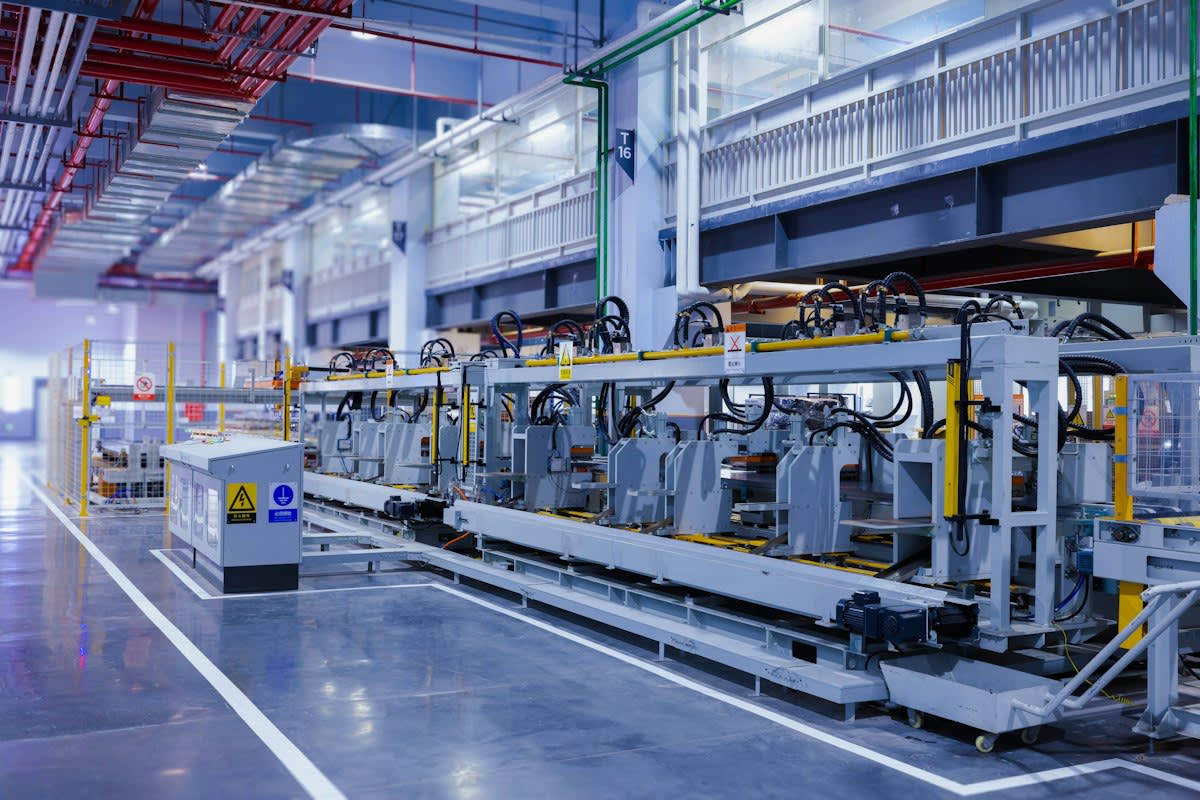
Nowhere is this more evident than in the industrial sector. Manufacturing employers have practically abandoned the degree as a requirement. In a stunning revelation, Manufacturing was the only sector where fewer than 10% of employers rated two-year and four-year degrees as important for entry-level hiring (Source: NC Commerce, 2026). Instead, these firms are prioritizing work experience and demonstrated skills above all else. This is not a temporary dip in hiring standards. It is a recognition that the speed of technical evolution in the field has outpaced the ability of universities to update their curricula.
| Employer Priority | Importance Level (Overall) | Manufacturing Sector Priority |
|---|---|---|
| Work Experience/Skills | Very Important (>50%) | Highest Priority |
| 2-4 Year Degrees | 13-30% | <10% |
| Other Formal Credentials | 13-30% | Low Priority |
This shift is not limited to blue-collar roles. Education and child care employers are following a similar pattern, with more than four in every five employers marking work experience and demonstrated skills as critical (Source: NC Commerce, 2026). This indicates a cross-sector agreement: the ability to perform is the only currency that holds value. When the cost of a degree rises while its utility in the eyes of the employer drops, the economic logic of the degree premium collapses.
The Mechanics of Non-Linear Literacy
How is this happening? The way we consume information has undergone a mutation. Modern learners, including those still within the university system, are adopting a hybrid approach to literacy. Research into pre-service teachers reveals a heavy reliance on online and audiovisual sources for information (Source: Frontiers in Psychology, 2026). This isn't just a preference for convenience; it is a division of labor between media. While two-thirds of these students still prefer printed books for deep study, they use digital streams for rapid information acquisition (Source: Frontiers in Psychology, 2026).
"Students relied heavily on online and audiovisual sources for information... [this] suggests a division of labour between media rather than a wholesale move away from print."— Research Findings from Frontiers in Psychology (2026)
This fragmented consumption pattern allows professionals to build 'just-in-time' knowledge. They don't spend four years learning a broad theory they might use once a decade; they learn the specific tool they need for the project they are starting tomorrow. This agility is the core of non-linear literacy. It is a web of knowledge rather than a ladder. The danger, of course, is whether this leads to superficiality. However, current research suggests that a preference for digital information does not automatically establish reduced concentration or superficial comprehension (Source: Frontiers in Psychology, 2026).

This new literacy creates a gap between how people learn and how institutions certify. Higher education is struggling to keep up. The traditional three-year or four-year degree is often seen as too slow, with time remaining the primary enemy of the academic model (Source: University Business). When the market demands a skill today, a degree that takes years to complete becomes a liability rather than an asset.
The Credentialing Bottleneck
If degrees are failing, why hasn't skills-based hiring completely taken over? Because we lack a trusted way to measure these non-linear achievements. Digital credentials were supposed to be the solution—blockchain-verified badges and micro-certifications that prove a specific skill. But these tools have hit a snag (Source: TD Magazine, 2026). The hurdles to adopting digital credentials are keeping skills-based hiring from accelerating at the pace the market demands (Source: TD Magazine, 2026).
Here lies the invisible friction of the modern hiring process. In the boardrooms of global firms, there is a quiet war between the Recruiter and the Hiring Manager. The Recruiter relies on the degree because it is an easy, binary filter that reduces a pile of 1,000 resumes to 50. The Hiring Manager, however, is the one who actually has to work with the new hire. They are the ones who have discovered that the candidate with a Master's degree from a prestigious school often lacks the practical grip required for the role, while the self-taught candidate with a portfolio of successful projects is far more effective. This internal dispute is where the degree premium actually dies—not in a policy memo, but in the frustration of a manager who is tired of hiring 'qualified' people who cannot do the job.
- Recruiters use degrees as a proxy for risk mitigation, fearing the 'uncredentialed' hire.
- Hiring managers prioritize 'proof of work' (portfolios, GitHub, case studies) over diplomas.
- Digital credentials lack the universal standardization of the degree, creating a trust gap.
- Manufacturing sectors have already shifted to a near-total reliance on demonstrated skill.
This lack of standardization creates a strange vacuum. We have the desire for skills-based hiring, but we are still using an analog filing system to track it. Until digital credentials overcome their current adoption hurdles, the transition will be messy. We will see more 'experience-first' hiring, but it will be uneven and dependent on the boldness of individual managers rather than company-wide policy.
Fact-Check & Accuracy Note
The research cited here draws from the 2026 NC Commerce Employer Needs Survey and Frontiers in Psychology. There is an ongoing academic debate regarding whether the shift toward audiovisual and online information consumption negatively impacts long-term cognitive retention. While the Frontiers study notes that digital preference does not inherently imply reduced concentration, longitudinal data on deep-reading capabilities remains a point of contention among educational psychologists.
The outcome is clear: the paper wall is crumbling. The competitive advantage of the degree is no longer a structural certainty. In a world where a manufacturing plant values a portfolio of solved problems over a four-year degree (Source: NC Commerce, 2026), the only staying power belongs to those who can prove their utility in real-time. The future belongs to the non-linear learner.