
Look at the headlines from this week, and you will see the same tired song: AI this, AI that. But if you look at the capital flows, a different story emerges. On Monday, June 29, 2026, real estate developer Omaxe announced a staggering INR 62 billion ($656 million) investment to build 19 hotels across 13 Indian cities. Here is the kicker: Omaxe does not run hotels. Neither does Adani Airport Holdings, which recently partnered with IHG Hotels & Resorts to develop five airport-linked properties. The real power in hospitality is no longer held by the operators, but by the people who own the land and the gates.
The Infrastructure Invasion
Why is this happening now? We are seeing a fundamental reorientation of how hospitality portfolios are built. Instead of relying on traditional hotel management, infrastructure conglomerates are integrating lodging into townships and mixed-use projects. In Uttar Pradesh, the focus has swung toward religious and business tourism, treating hotel rooms as an extension of public infrastructure rather than standalone luxury products. This is not a slow evolution; it is a land grab.
| Metric | Traditional Operator Model | Infrastructure Conglomerate Model (2026) |
|---|---|---|
| Primary Asset | Brand & Service | Land & Infrastructure |
| Growth Driver | Market Expansion | Mixed-use Integration |
| Investment Focus | Guest Experience | Strategic Site Capture (e.g., Airports, Townships) |
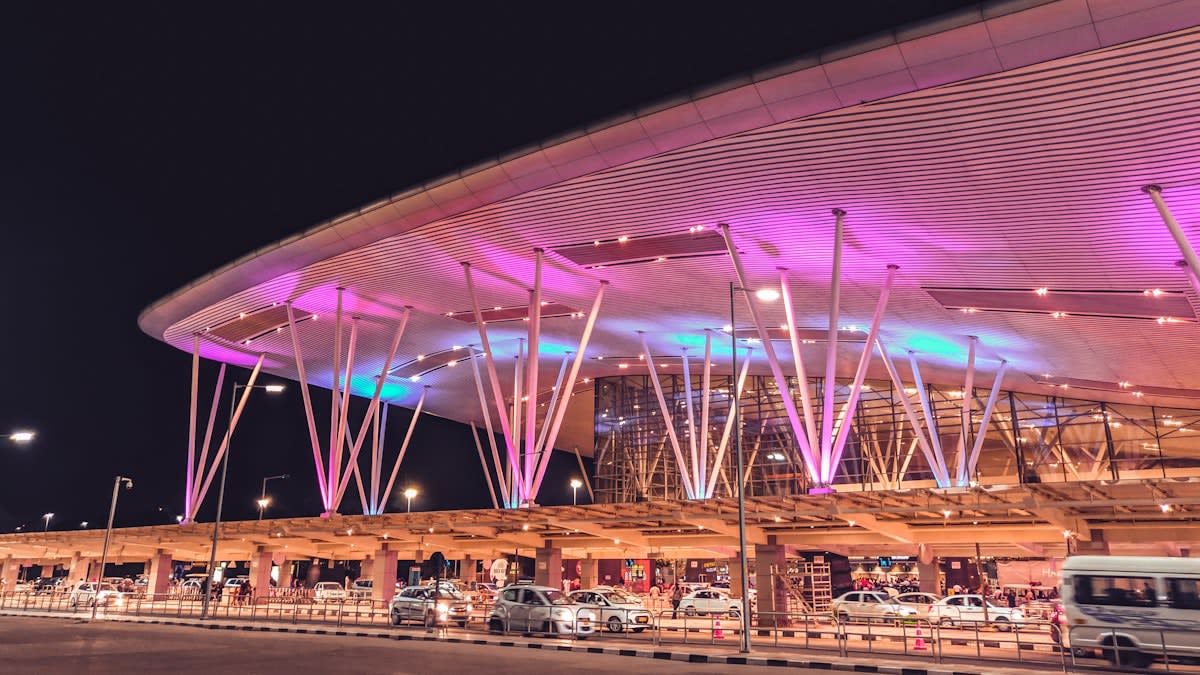
This move toward physical dominance mirrors a broader global exhaustion with purely digital solutions. While the industry spent the last year talking about virtual concierge services, the real money is moving into the concrete and steel of airport-linked hubs.
Stop Buying the Hype, Start Fixing the Plumbing
The obsession with AI as a magic wand is finally hitting a wall of operational reality. In the West Midlands, PP Control & Automation provides a masterclass in this. Instead of adopting AI for the sake of a press release, they identified specific operational constraints. The result? They recovered 36% of their engineering capacity. They didn't ask how to use AI; they asked where they were stuck.
"For organisations looking to move from experimentation to impact, the starting question should not be ‘how do we adopt AI’ instead it should be ‘where are we constrained, and what is the most effective way to remove that constraint?’"— Ian Knight, CIO of PP Control & Automation
The insurance sector is waking up to the same truth. As reported on June 29, many agencies are discovering that expensive automation platforms fail when workflows are inconsistent. Technology does not fix a broken process; it only accelerates the failure. The most profitable agencies in 2026 are those that cleaned up their data practices before buying the software.
The Reality Check
The Delta: Twelve months ago, the conversation was about 'digital transformation.' Today, the conversation is about 'operational foundations.' The winners have stopped treating tech as a strategy and started treating it as an amplifier.
The Death of Mass Tourism
Travel is becoming messier, and that is exactly why it is becoming more profitable. RateHawk’s latest analysis suggests that tourism distribution is moving away from centralized booking toward hyper-personalized, fragmented demand. We are seeing a surge in multigen stays, health-focused retreats, and journeys sparked by screen stories like The White Lotus or Emily in Paris.
- Screen-inspired travel: Narrow interest sparked by specific TV backdrops.
- Wellness Mainstreaming: Wellness is no longer a luxury add-on but a baseline expectation.
- Hyper-Personalization: Integrated systems that unify guest data across every department.
Marriott Marquis San Diego Marina is already feeling this. The priority for 2026 is not more tech, but more authenticity—immersive F&B and on-property activations that feel connected to the destination. The guest doesn't want a digital interface; they want a meaningful experience that just happens to be seamless.

The Billion-Transaction Frontier
Even in the digital payments space, the goal is no longer just 'going digital.' Dilip Asbe, CEO of the National Payments Corporation of India (NPCI), is eyeing a target of over a billion daily transactions. To get there, he isn't looking for a flashy new app; he is looking at voice models to onboard the next half billion users. This is AI applied to a specific, brutal problem: accessibility for the non-digitally literate.
When you step back, the pattern is clear. Whether it is Omaxe building hotels, PP Control recovering engineering hours, or NPCI scaling UPI, the strategy is the same: identify the physical or operational bottleneck and apply the most direct tool to break it. The era of 'AI for AI's sake' is over. The era of utility has arrived.