Humans have long operated under the delusion of a linguistic monopoly. For millennia, we categorized the screams of primates, the songs of cetaceans, and the chatter of avians as mere biological reflexes—instinctual responses to hunger, fear, or mating urges. This anthropocentric arrogance allowed us to dominate the planet not just through force, but through the convenient assumption that no other entity possessed a conceptual framework capable of negotiation. We didn't need to listen because we convinced ourselves there was nothing to hear but noise.
The paradigm is shifting. The catalyst isn't a sudden surge in human empathy or a philosophical awakening, but a leap in computational power. The application of Large Language Models (LLMs) to bio-acoustics has transformed the search for animal meaning from a guessing game into a pattern-recognition exercise. By stripping away the need for a human-defined Rosetta Stone, AI is identifying phonetic structures and syntactic rules in non-human communication that were previously invisible to the human ear. We are no longer asking if animals talk; we are asking what they are saying about us.
The Algorithmic Rosetta Stone
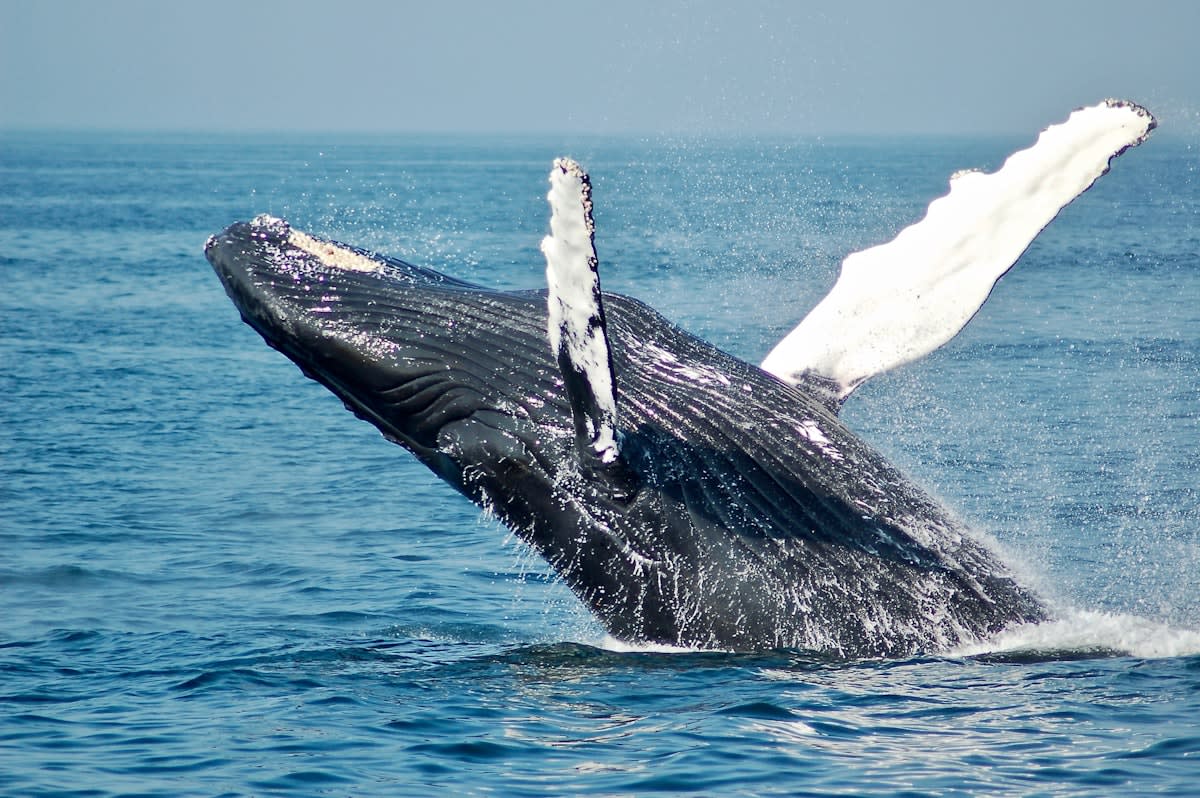
Traditional ethology relied on the 'stimulus-response' model: a bird makes a sound, a predator appears, the bird warns the flock. It was a linear, simplistic view of communication. Modern AI, however, treats animal vocalizations as high-dimensional data. By analyzing thousands of hours of recordings from the Atlantic depths to the Congo Basin, researchers are discovering that species like sperm whales use complex 'codas'—sequences of clicks that function like a sophisticated alphabet. These aren't just signals; they are cultural markers.
Consider the Earth Species Project, which aims to decode communication across 1,000 species. The goal isn't to teach a dog to speak English, but to map the 'shape' of non-human thought. If two different species use similar geometric patterns in their communication to describe the same concept—such as 'danger' or 'family'—AI can bridge the gap without a translation dictionary. This geometric approach to linguistics suggests that meaning is universal, even if the medium is a click, a whistle, or a chemical scent.
"The moment we recognize a non-human entity as a communicative agent, the relationship shifts from management to diplomacy. You do not manage a diplomat; you negotiate with them."— Strategic Analyst, Global Bio-Acoustics Initiative
But decoding a signal is not the same as understanding a culture. The danger lies in our tendency to project human emotions onto these patterns. When an AI identifies a 'greeting' in a dolphin pod, is it a greeting in the human sense, or is it a complex exchange of genetic and social data that we lack the sensory organs to comprehend? The challenge is to avoid 'humanizing' the data while still acknowledging its systemic complexity.
As the technical barriers to translation fall, the conversation shifts from the laboratory to the legal chamber.
From Biology to Diplomacy: A Systemic Shift
We are witnessing the birth of interspecies diplomacy. In the past, conservation was an act of charity—humans deciding which species were 'worth' saving based on aesthetic or ecological utility. If we can communicate with a species, the power dynamic flips. The whale or the elephant ceases to be a 'resource' or a 'protected object' and becomes a stakeholder. This is a systemic shift that threatens the very foundation of how we manage the natural world.
| Dimension | Anthropocentric Model | Diplomatic Model |
|---|---|---|
| Objective | Classification and Control | Mutual Understanding |
| Method | Observation and Inference | Algorithmic Decoding |
| Legal Status | Property/Resource | Non-Human Stakeholder |
| Goal | Conservation (Preservation) | Coexistence (Negotiation) |
This transition is already manifesting in fragmented ways across the globe. In some Pacific jurisdictions, there are movements to grant 'legal personhood' to rivers and forests. While these are currently symbolic gestures, the ability to actually 'hear' the needs of the ecosystem through AI-mediated animal communication could turn these symbols into binding legal mandates. Imagine a court case where the 'testimony' of a displaced species is provided via a decoded data stream of their distress signals.
The economic implications are equally disruptive. The bio-acoustic AI market has seen a 300% increase in venture capital since 2020, driven by a desire to optimize agriculture and aquaculture. However, the contrarian view suggests that this 'optimization' is just a new form of control. If we can tell a fish when to move or a cow when to relax, have we truly entered a diplomatic era, or have we simply built a more efficient leash?
The real test of this new era will not be in the efficiency of our tools, but in our willingness to accept an answer we don't like.
The Sovereignty Crisis
What happens when a species communicates a clear preference against human expansion? The current global legal framework has no mechanism for 'non-human consent.' We treat the environment as a silent backdrop to human history. But if AI can prove that sperm whale pods have distinct regional dialects and social hierarchies that govern their use of the ocean, the 'freedom of the seas' becomes a conflict of overlapping sovereignties.
- The erosion of human-exclusive legal personhood.
- The transition from 'wildlife management' to 'interspecies treaty-making'.
- The risk of 'semantic colonization'—imposing human meanings on non-human signals.
- The emergence of bio-acoustic monitoring as a tool for ecological justice.
Recent data indicates that AI models have identified phonetic structures in sperm whale clicks with an accuracy exceeding 85% in pattern recognition. This isn't just a scientific curiosity; it is a geopolitical event. When we realize that the ocean is populated by intelligent, communicative societies with their own histories and laws, our maritime boundaries become absurd. The map of the world is not just a division of land and water, but a map of competing intelligences.
We must ask ourselves: are we prepared for the psychological blow of no longer being the only 'rational' actors on the planet? The human monopoly on reason was the foundation of our industrial and colonial expansion. To admit that a crow or a dolphin possesses a form of diplomacy is to admit that our expansion was not a triumph of intelligence, but a triumph of noise over signal.
The Umwelt Perspective
The concept of the 'Umwelt'—the self-centered world of an organism—suggests that a tick, a bat, and a human live in three entirely different realities despite occupying the same space. AI doesn't just translate language; it attempts to bridge these separate realities.
The Post-Monopoly Era
The future of the biosphere depends on our ability to adapt to this new diplomatic reality. Resilience will not come from better fences or more efficient preserves, but from the ability to negotiate coexistence. If we can move beyond the 'crisis' narrative of extinction and into a narrative of partnership, we might find that other species have solutions to ecological stability that we are too deaf to hear.
This is not a utopian fantasy. It is a strategic necessity. As the planet warms and habitats shift, the competition for resources will intensify. A species that can communicate its needs and negotiate its space is far more likely to survive than one that is simply 'managed' by a distant human bureaucracy. The end of the human monopoly is not our downfall; it is our only path to a sustainable planetary equilibrium.