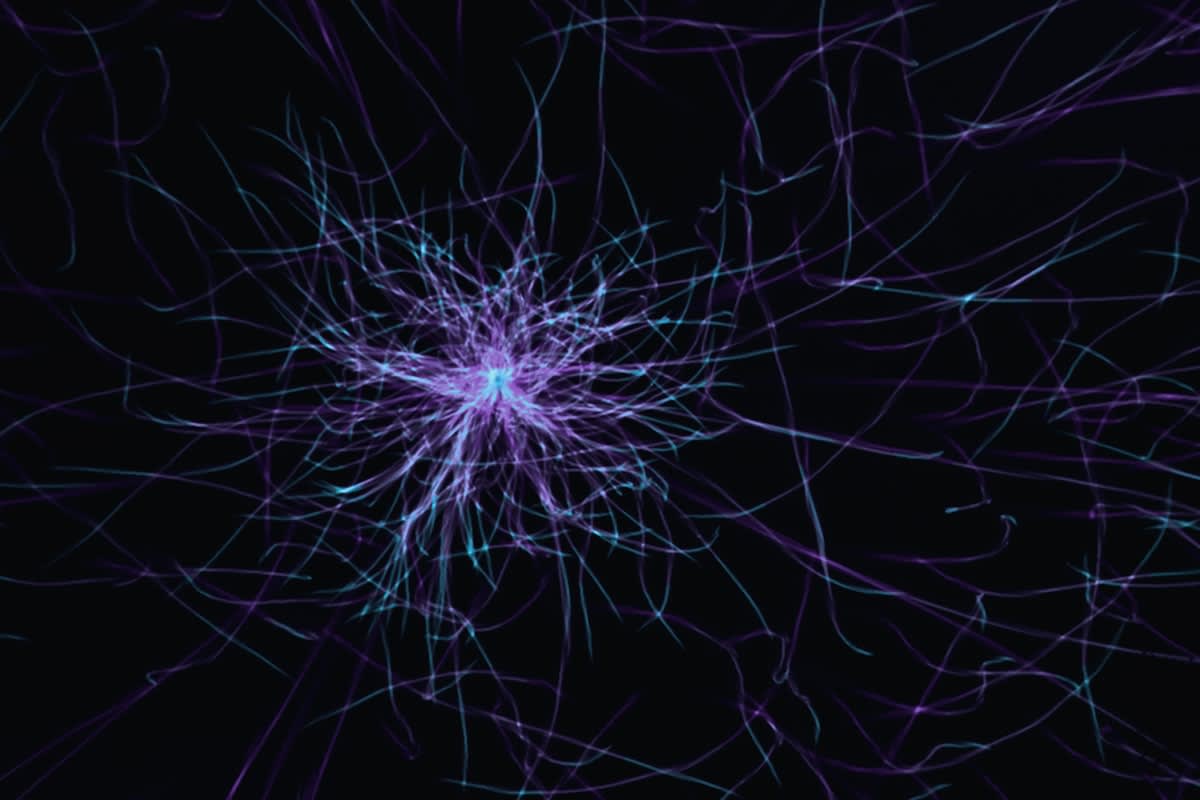
The modern professional is conditioned to believe that productivity is a linear function of focus. We treat the mind like a processor that must be overclocked, fearing any moment of stillness as a lapse in efficiency. But this obsession with constant engagement is a fundamental misunderstanding of cognitive architecture. The most potent breakthroughs rarely happen during the peak of intense concentration; they emerge in the gaps. Why do the most complex solutions suddenly appear while washing dishes or walking through a park? It is not a fluke of luck, but the result of a biological system finally getting quiet enough to hear itself think.
The Engine of Unconscious Synthesis
At the center of this shift is the Default Mode Network (DMN), a complex neural circuit that activates precisely when the brain is not focused on a specific, external task. For decades, this state was dismissed as idle time. In reality, the DMN is where the heavy lifting of creative synthesis occurs. When the focused brain steps aside, the DMN begins connecting ideas that previously seemed entirely unrelated. It is the biological mechanism that transforms raw data into insight. Rest, therefore, is not the opposite of productivity; it is simply a different modality of work.
"Rest was never the opposite of productivity, it was just running a different kind of work. The default mode network doesn't switch off when you stop performing, it switches on and starts connecting things your focused brain was too busy to notice were related."— Analysis of Default Mode Network Dynamics
This systemic shift is moving away from the 'always-on' mentality toward a rhythm of oscillation. High-performers are now engineering 'low-stimulation zones' to force the DMN into gear. By deliberately removing the noise of notifications and the pressure of deadlines, they create a vacuum that the brain naturally fills with divergent thinking. This is not about relaxation in the traditional sense, but about the strategic deployment of boredom to solve high-stakes problems. The goal is to move from a state of execution to a state of insight.
The Mechanics of Insight
The 'Aha!' moment is not a random spark. It is the measurable result of insight intensity, which predicts accuracy in divergent tasks and strongly influences how we perceive our own creativity.
Kinetic Cognition: The Power of the Walk
If the DMN is the engine, then physical movement is the ignition. The data suggests that sitting still is often the enemy of creative output. Stanford researchers discovered a staggering divergence in performance based on posture: walking increased creative output by 60% compared to sitting. This isn't just about fresh air or a change of scenery. The act of walking generates a significant increase in divergent thinking, allowing the mind to make new connections that remain dormant in a seated, focused position.
Creative Output Comparison: Sitting vs. Walking
Executive Insight
+18.4%
YTD Growth
Consider the global implications of this. In the high-density corporate hubs of Tokyo, London, or New York, the traditional office environment—characterized by sedentary desks and constant digital interruptions—is essentially a creativity killer. By remaining seated and switching tabs every few minutes, workers are suppressing the DMN and relying solely on executive function. The shift toward 'walking meetings' or dedicated low-stimulus periods is a rational response to this biological bottleneck. It is an architectural adjustment to the workday to accommodate the way the human brain actually solves problems.
Is it possible that our current definition of a 'productive workday' is actually an obstacle to high-level output? When we spend eight hours indoors, seated, and tethered to a screen, we are effectively locking ourselves out of the 60% boost in creativity that walking provides. The strategic analyst sees this not as a lifestyle choice, but as a competitive disadvantage. Those who engineer their environment to include these kinetic, low-stimulation zones are operating with a cognitive edge over those who believe that more hours at a desk equals more value.
The Genetic Divergence of Focus and Execution
Adding another layer of complexity is the genetic reality of how we work. New research from 23andMe, involving over 20,000 participants, reveals a surprising plot twist: the ability to 'stay focused' and the ability to 'get stuff done' may not originate from the same place in our DNA. This suggests that executive function is not a monolithic skill. Some individuals may possess a high genetic aptitude for deep focus but struggle with the actual execution of tasks, while others may be master executors who lack the biological predisposition for prolonged concentration.
| Cognitive State | Primary Driver | Core Function | Optimal Environment |
|---|---|---|---|
| Focused Mode | Executive Function | Task Execution & Detail | High-Stimulus/Structured |
| Default Mode (DMN) | Unconscious Synthesis | Pattern Recognition & Insight | Low-Stimulus/Kinetic |
This genetic distinction explains why a one-size-fits-all approach to productivity fails. For the person genetically wired for execution but not focus, the pressure to 'concentrate harder' is a futile exercise. Instead, the strategy should be to leverage the DMN. By creating low-stimulation zones, these individuals can bypass the struggle of forced focus and allow their brains to synthesize solutions in the background. The architecture of their day must reflect their genetic blueprint, rather than a corporate ideal of the 'focused worker'.
Why does this matter for the global workforce? Because we are moving into an era where the ability to execute a known task is becoming commoditized. The real value now lies in the ability to connect unrelated dots—to find the divergent solution that no one else sees. If the DNA for focus and execution are different, then the most successful individuals will be those who can strategically oscillate between these states, rather than trying to force themselves into a single, permanent mode of operation.
The Paradox of Quiet: When Boredom Turns Toxic
However, engineering low-stimulation zones is not without risk. There is a precarious balance between strategic boredom and psychological distress. For some, the brain hates quiet more than it hates stress. When the external world goes silent, the DMN doesn't always produce creative insights; it can also trigger regret loops, anxiety rehearsals, and memories of failure. In these instances, the 'quiet' does not lead to synthesis, but to a spiral of negative rumination.
- Memory and fear activation
- Regret loops and anxiety rehearsal
- Increased impulse for risk-taking
- Potential for addiction or aggression
This creates a paradox: the very state required for high-level creativity is also the state where the mind is most vulnerable to its own demons. The difference between a 'creative breakthrough' and an 'anxiety attack' often depends on the context of the low-stimulation zone. This is why the 'kinetic' element—walking, for instance—is so critical. Movement provides just enough external stimulation to keep the brain from sliding into negative loops while still leaving enough cognitive space for the DMN to operate. It is a form of active meditation.
The strategic analyst views this not as a reason to avoid boredom, but as a reason to refine its architecture. The goal is not total silence, but 'optimal under-stimulation.' By pairing low-cognitive-load tasks (like washing dishes or walking) with the need for a solution, high-performers create a safe harbor for the DMN. They avoid the abyss of total void while escaping the prison of constant focus. This is the sophisticated application of behavioral psychology to professional performance.
The Future of Cognitive Architecture
We are witnessing a systemic rejection of the 'industrial' model of the mind. For a century, we treated the brain like a factory line: input, process, output. But the biological reality is more like an ecosystem, requiring periods of fallow and regrowth to remain fertile. The engineering of low-stimulation zones is the first step toward a more resilient, biologically aligned form of productivity. It acknowledges that the most valuable work often happens when we are not 'working' at all.
As we integrate these findings, the definition of a high-performer will change. It will no longer be the person who can focus for twelve hours straight, but the person who knows exactly when to stop focusing. The competitive edge will belong to those who can orchestrate the tension between the focused brain and the wandering mind. By deliberately designing spaces for boredom, they aren't wasting time—they are optimizing the only tool that can truly innovate.