
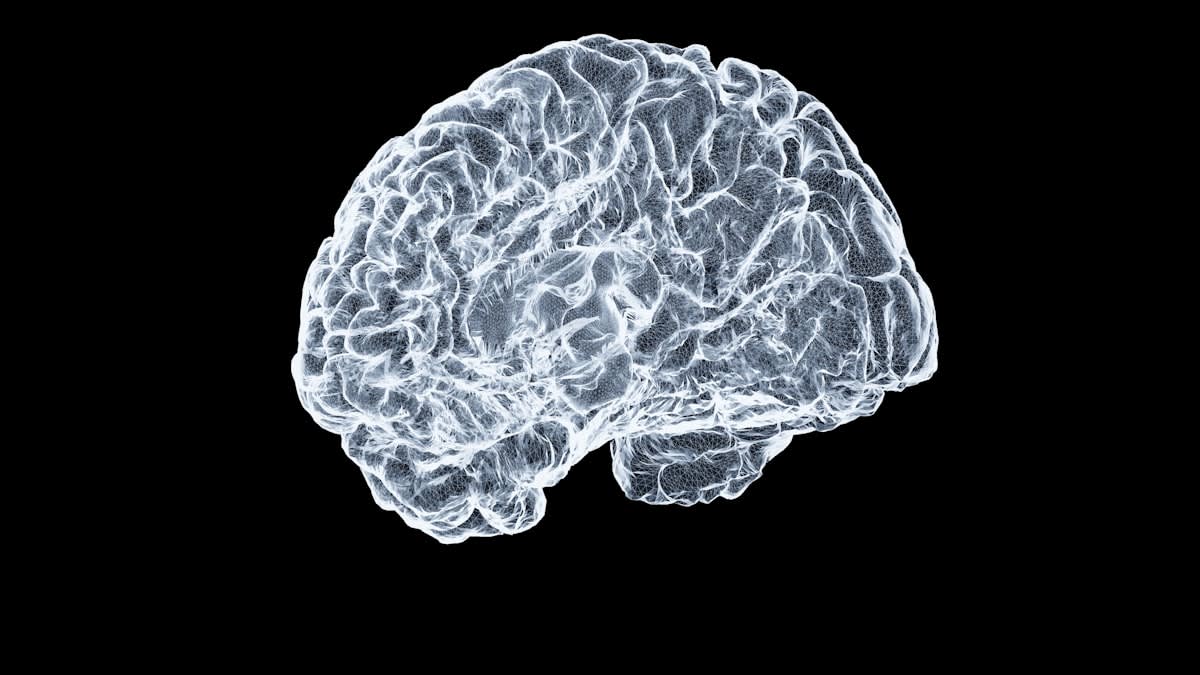
You think you see the world as it is. You don't. Your brain is not a camera recording a scene; it is a prediction engine. Every second, your mind generates a probabilistic model of reality and compares it against incoming sensory data. When the data contradicts the model, you experience a prediction error. Most people react to this error with emotion—frustration, denial, or fear. The master practitioner, however, treats this error as the most valuable data point in the room. This is the essence of the Bayesian Brain: the ability to systematically update your internal map of the world as new evidence arrives, without letting your ego steer the ship.
Prerequisites for Bayesian Thinking
Before you can apply Bayesian updating to your life, you need a specific mental toolkit. This isn't about complex calculus, though the underlying math is rigorous. It is about a shift in posture. You must move from a binary mindset—where things are either true or false—to a probabilistic mindset, where everything is a matter of confidence intervals. If you are unwilling to assign a percentage of certainty to your beliefs, you cannot update them. You need a notebook, a willingness to be proven wrong, and the discipline to separate your identity from your hypotheses.
- Probabilistic Mindset: Replacing 'I know' with 'I am 70% confident'.
- Emotional Detachment: Viewing a corrected belief as a win, not a loss.
- Data Rigor: The ability to distinguish between a signal (meaningful data) and noise (random fluctuation).
- Intellectual Humility: Acknowledging that your 'prior' is always incomplete.
Why does this matter? Because the cost of stubbornness is systemic failure. Whether you are managing a supply chain in Tokyo or navigating a diplomatic crisis in Brussels, the inability to update your beliefs based on evidence leads to catastrophic misalignment. The Bayesian approach provides a mathematical guardrail against the most common human errors, such as confirmation bias and the sunk cost fallacy.
The Step-by-Step Guide to Updating Your Beliefs
The process of Bayesian updating can be distilled into four actionable steps. The goal is to move from your Prior (what you believed before) to your Posterior (what you believe now) by filtering new evidence through a lens of likelihood. This is how the most effective decision-makers in high-stakes environments operate.
- Define Your Prior: Explicitly state your current belief and assign it a probability. For example, 'I believe there is a 60% chance this new market entry in Nairobi will be profitable within two years.'
- Identify the New Evidence: Isolate a single, verifiable piece of data. This could be a quarterly sales report, a customer survey, or a competitor's move. Avoid 'gut feelings' here; look for hard metrics.
- Calculate the Likelihood: Ask yourself, 'If my belief were true, how likely is it that I would see this specific evidence?' and conversely, 'If my belief were false, how likely is this evidence?' This prevents you from overreacting to a single outlier.
- Update to the Posterior: Combine your prior and the likelihood to reach a new probability. If the evidence was highly unlikely under your old belief but very likely under a different one, your confidence in the original belief must drop.
Let's apply this to a real-world scenario. Imagine a project manager who believes their team is highly efficient (Prior: 80% confidence). They then notice a project is two weeks behind schedule (Evidence). A non-Bayesian manager might either ignore the delay (confirmation bias) or panic and assume the team is incompetent (emotional reaction). The Bayesian manager asks: 'How likely is a two-week delay if the team is efficient?' (Maybe 20% due to external factors) and 'How likely is it if they are inefficient?' (Maybe 70%). The evidence pushes the confidence in the 'efficient' belief down, but not to zero. The update is measured, not manic.
"The brain is a prediction machine that seeks to minimize surprise. Every perception is a hypothesis, and every sensation is a test of that hypothesis."— Karl Friston, Professor of Cognitive Neuroscience at University College London
This mechanism is not just a psychological trick; it is the biological foundation of intelligence. According to the Free Energy Principle, the brain works tirelessly to reduce the gap between its internal model and the external world (Source: Nature Reviews Neuroscience, 2010). When we refuse to update our beliefs, we are essentially fighting our own biology, creating an internal state of high stress and cognitive dissonance.
The Practitioner's Perspective: Where the Theory Hits the Ground
In my years implementing these frameworks in corporate environments, I've seen that the biggest hurdle isn't the math—it's the ego. In the boardroom, 'updating your belief' is often misinterpreted as 'admitting you were wrong,' which in many cultures is seen as a sign of weakness. I recall a specific instance in a Sao Paulo-based logistics firm where the leadership refused to update their prior on a failing legacy system despite overwhelming evidence. The debate wasn't about the data; it was about who had championed the system five years prior. The friction occurs when the social cost of updating a belief exceeds the perceived cost of being wrong.
True practitioners debate the 'weight' of the evidence. We argue over whether a piece of data is a 'black swan' or a representative sample. The real work happens in the Likelihood phase. Is this one failed product launch in Indonesia a sign of a bad strategy, or was it a localized anomaly? If you overweight the evidence, you become erratic. If you underweight it, you become stagnant. Finding the equilibrium is the mark of a master.

Common Pitfalls and How to Avoid Them
Even the most disciplined thinkers fall into traps. The most dangerous is Base Rate Neglect. This happens when you focus so much on the new evidence that you completely forget the prior probability. For instance, if a medical test for a rare disease (occurring in 0.1% of the population) comes back positive, many people immediately assume they have the disease. They ignore the base rate (the prior) and over-index on the test result (the evidence).
| Pitfall | The Error | The Bayesian Correction |
|---|---|---|
| Base Rate Neglect | Ignoring the general probability in favor of specific new data. | Always start with the population average as your baseline prior. |
| Confirmation Bias | Only seeking evidence that supports the current prior. | Actively hunt for evidence that would make your prior improbable. |
| Over-Updating | Changing your entire worldview based on one outlier. | Assess the likelihood of the evidence appearing by chance. |
Another common error is the 'Certainty Trap.' If you set your prior to 0% or 100%, no amount of evidence can ever change your mind. Mathematically, if the prior is 0, the posterior will always be 0. This is why dogmatism is the enemy of intelligence. To remain Bayesian, you must always leave a sliver of doubt—even if it is only 0.01%—to allow for the possibility that the world has changed or you were fundamentally mistaken.
Fact-Check & Accuracy Note
Key claims regarding the Free Energy Principle and the brain as a prediction engine are sourced from the work of Karl Friston and published research in Nature Reviews Neuroscience (2010). The discussion on Base Rate Neglect is a cornerstone of cognitive psychology, extensively documented in Tversky and Kahneman's research on heuristics and biases (1974). The application of these principles to decision-making is an ongoing debate in the fields of neuroscience and behavioral economics.