
The Velocity of Value: Beyond the Price Gap
For decades, arbitrage was a game of simple mathematics: buy low in one market, sell high in another. But the delta has shifted. We are witnessing the rise of behavioral arbitrage, where the 'gap' being traded isn't a price difference between two exchanges, but a cognitive difference between how a human perceives value and how the market actually functions. This isn't just about speed; it is about the systematic exploitation of human psychological limitations. Why do we see this now? Because the infrastructure of the global economy has finally caught up to the nuances of cognitive science.
High-Frequency Trading (HFT) provided the first blueprint for this shift. By 2016, HFT already accounted for approximately 40% of spot FX transactions, utilizing triangular arbitrage across currency pairs like EUR/USD, USD/JPY, and EUR/JPY to correct pricing discrepancies in milliseconds. These systems don't just trade; they manipulate the perception of market health. Through high order-to-trade ratios—where orders are submitted and canceled almost instantly—HFTs create a veneer of liquidity that signals abundance to human traders, even when the actual executed volume is a fraction of the noise. It is a masterclass in trading the perception of availability.
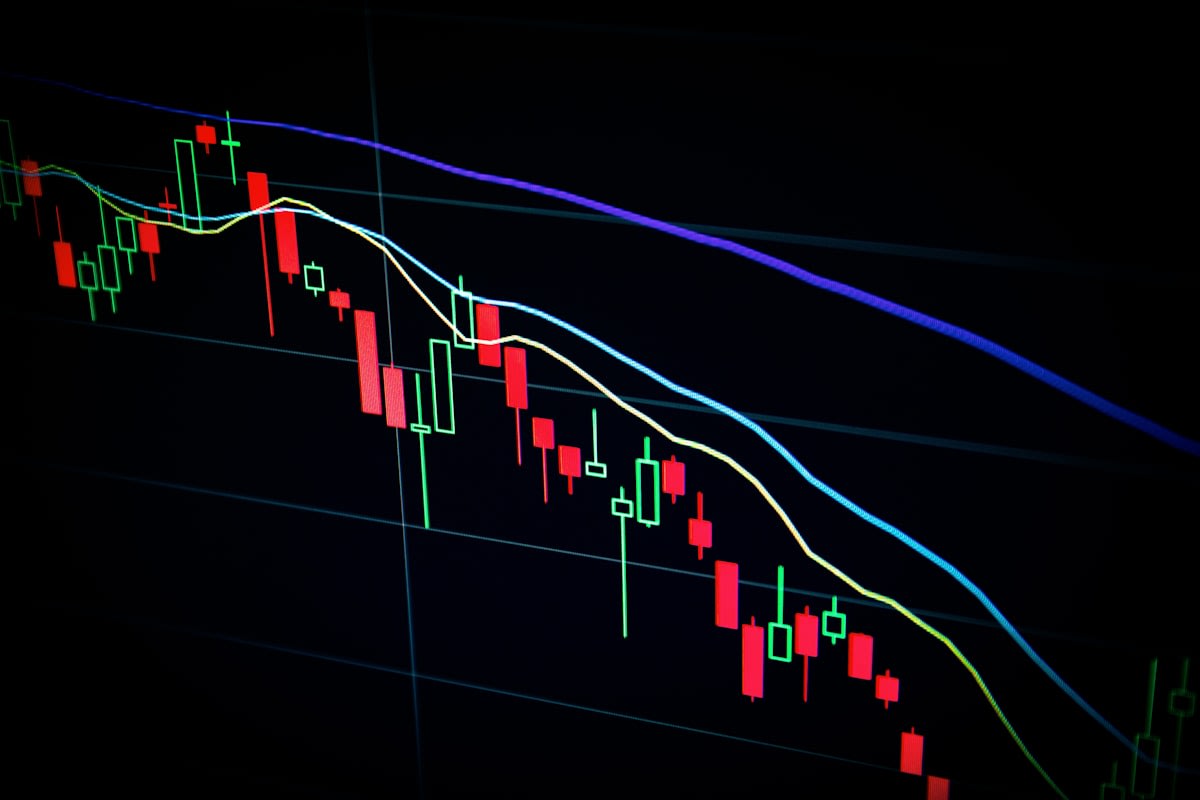
This speed-driven competition has fragmented the markets, yet it serves a paradoxical purpose. While it exploits the slow reaction times of human investors, it also maintains a level of price consistency across different platforms. The HFT engine effectively scrubs the market of the 'easy' arbitrage, forcing the next generation of traders to look deeper—into the psychology of the event itself rather than the price of the asset.
The Event-Driven Playbook: Trading Uncertainty
When the speed gap closes, the strategy shifts to the event gap. Event-driven strategies thrive on the tension between an announcement and its resolution. Take the 2016 acquisition of Time Warner by AT&T. AT&T proposed a price of US$107.50 per share, a significant premium over the market price. However, regulatory scrutiny stretched the deal over nearly two years. Merger arbitrageurs didn't bet on the company's growth; they bet on the eventual convergence of the market price and the offer price, essentially trading on the market's uncertainty and hesitation.
This is where behavioral arbitrage becomes surgical. Activist investing takes this a step further by identifying underperforming companies and forcing changes in management or corporate strategy. The arbitrage here is the gap between a company's current operational reality and its potential value if cognitive biases in leadership are corrected. Similarly, convertible arbitrage exploits the discrepancy between bond and equity pricing, betting that the market is mispricing the relationship between two different asset classes of the same company.
| Strategy | Cognitive Blind Spot | Primary Trigger | Outcome Goal |
|---|---|---|---|
| Merger Arbitrage | Risk Aversion/Uncertainty | Acquisition Announcement | Price Convergence |
| Activist Investing | Management Inertia | Operational Underperformance | Shareholder Value Increase |
| Convertible Arbitrage | Asset Class Mispricing | Bond-Equity Discrepancy | Price Alignment |
Is this simply clever investing, or is it a systemic exploitation of the 'limits to arbitrage'? According to the research of Shleifer and Vishny (1997), markets do not always correct themselves immediately. This lag is the breeding ground for behavioral arbitrage. The profit isn't found in the asset, but in the time it takes for the collective human consciousness to accept a new reality.
The Attention Economy: Monetizing the Mind
The most aggressive frontier of behavioral arbitrage isn't found on a trading floor, but in the palm of your hand. The attention economy operates on the fundamental truth that human cognitive resources are finite. When our attention is allocated to one task, the resources for others vanish. Tech platforms have turned this limitation into a commodity. By using algorithms and psychological triggers, they capture engagement not by providing value, but by exploiting the cognitive blind spots that make us susceptible to distraction.
These platforms leverage a suite of cognitive biases to ensure we stay locked in. The Bandwagon effect and the Availability cascade create a sense of urgency and conformity, while Confirmation bias ensures we only see information that reinforces our existing beliefs. This creates echo chambers that are not accidental but are engineered for maximum retention. We are no longer the customers; our cognitive biases are the assets being traded.
"In social media's battle for our attention, real connection becomes the casualty."— Rappler (2020)
This shift entered 'hyperdrive' during the 2010s, as the integration of neuroscience and data analytics allowed platforms to map the human reward system with terrifying precision. The result is a feedback loop where the user's limited cognitive capacity is systematically drained, creating a vacuum that the platform fills with more targeted, bias-driven content. This is the ultimate form of arbitrage: trading the user's biological limitations for platform growth.

The Structural Guardrails and the Path Forward
To understand why these gaps persist, we must look at Agency Theory, pioneered by Jensen and Meckling in 1976. This theory posits that managers and shareholders often have conflicting incentives. In the context of behavioral arbitrage, this conflict creates the very blind spots that traders exploit. When a manager's incentive is stability rather than growth, they ignore the operational inefficiencies that an activist investor will eventually monetize. The arbitrage is the difference between the manager's incentive and the shareholder's interest.
However, the boom in behavioral arbitrage doesn't have to be a zero-sum game. The resilience of the global economy depends on our ability to adapt to these shifts. By recognizing the Availability heuristic or the Negativity bias, investors and consumers can build cognitive defenses. The goal is not to eliminate the arbitrage—which is nearly impossible given our biological hardware—but to move toward a state of informed adaptation.
The Big Shift
The shift from price-based arbitrage to behavioral arbitrage marks the transition from the Industrial Economy to the Cognitive Economy. Profit is no longer about who has the most capital, but who understands the human glitch most deeply.
As we move forward, the divide will grow between those who are traded and those who trade. Whether it is a currency pair in the spot FX market or a user's attention on a social feed, the underlying mechanism is the same: the identification of a cognitive blind spot and the rapid execution of a trade against it. The question for the global audience is no longer how to avoid these traps, but how to leverage this understanding to build more resilient systems of value.