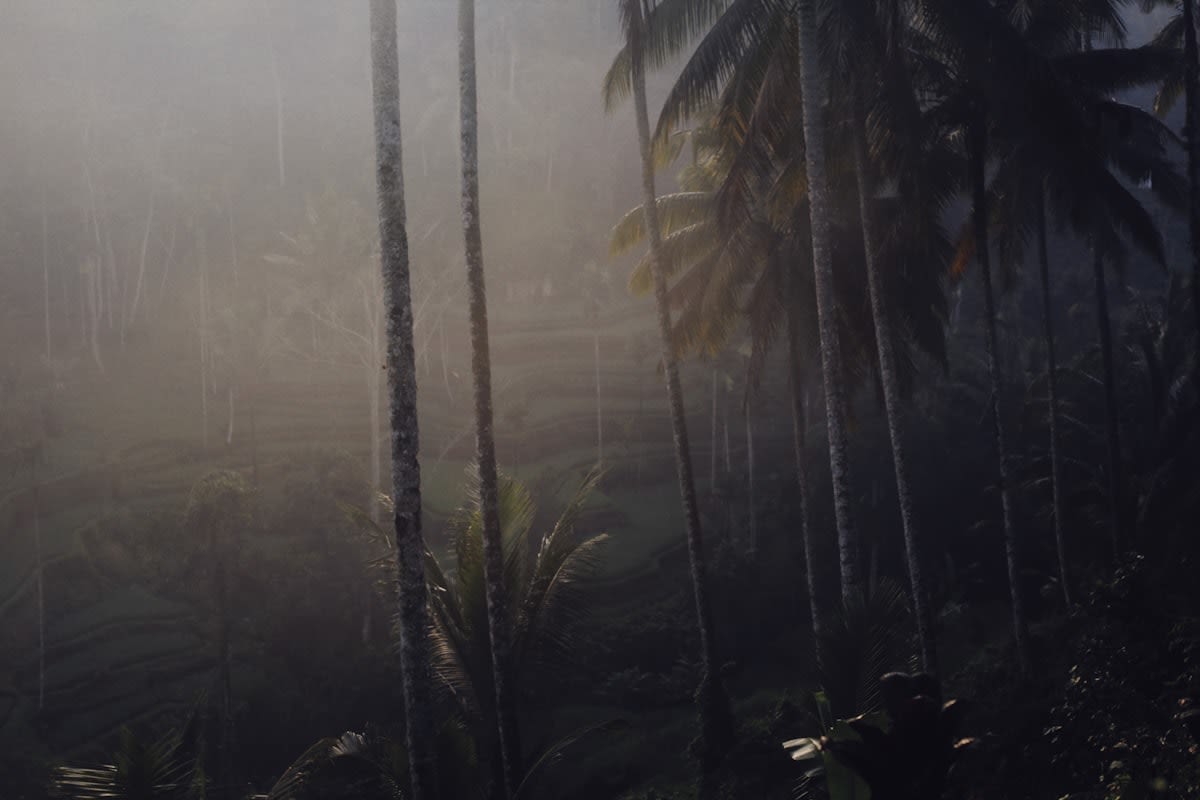
Listen. Really listen. A healthy rainforest isn't just a collection of biomass; it is a dense, overlapping symphony of frequencies. From the low-frequency rumble of primates to the ultrasonic clicks of bats, every niche is occupied. But there is a terrifying phenomenon occurring in fragmented forests across the globe: the 'silent forest.' The trees are still standing, the satellites report a lush green canopy, yet the biological orchestra has stopped playing. This is where our traditional conservation metrics fail. We have been obsessed with the visual, ignoring the auditory evidence that the system has already crashed.
For decades, the gold standard of biodiversity monitoring was the manual survey—humans trekking through mud with notebooks, counting sightings. It is a slow, biased, and fundamentally flawed method. You only count what you see, and you only see what chooses to be seen. Bioacoustic monitoring, specifically Passive Acoustic Monitoring (PAM), flips this script. By deploying autonomous recording units (ARUs) across vast landscapes, we stop asking 'what is here?' and start asking 'what is the state of the system?' (Source: Nature Communications, 2021).
The Fallacy of the Green Canopy
Why does the visual approach deceive us? Because structural integrity does not equal functional integrity. A forest can look healthy from a satellite image while being functionally extinct. This 'empty forest syndrome' occurs when hunting or disease wipes out the fauna, but the flora remains. The canopy stays green, but the seed dispersers are gone, meaning the forest is effectively a living ghost. Bioacoustics captures this delta instantly. When the frequency bands associated with key avian or amphibian species go quiet, we are witnessing the collapse of ecological interactions in real-time, long before the first tree falls.
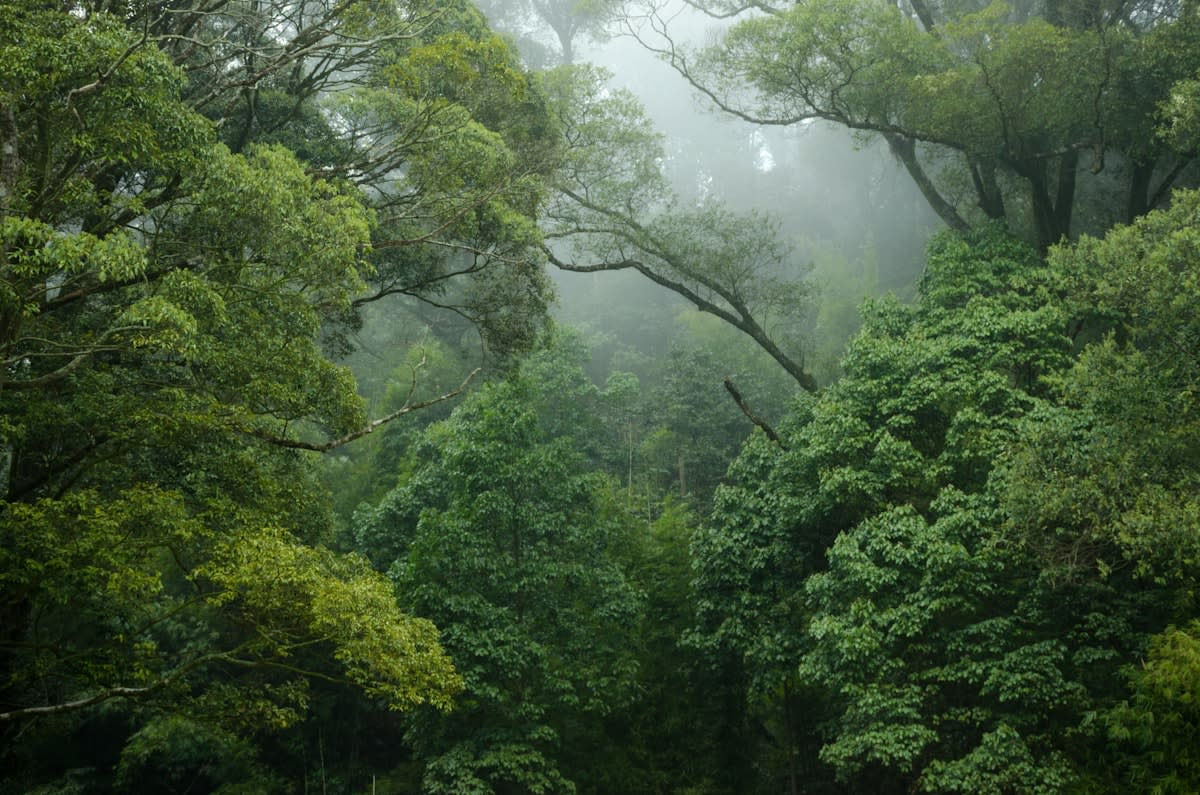
This shift in perspective is not just a technical upgrade; it is a strategic pivot. We are moving from species-centric monitoring to soundscape ecology. Instead of hunting for a single endangered species, researchers now analyze the 'acoustic complexity index.' By measuring the distribution of sound across the frequency spectrum, we can quantify the health of an entire ecosystem without needing to identify every single bird or insect. It is a holistic ledger of biological activity.
"The soundscape is a proxy for the health of the entire community. When we lose the complexity of the acoustic niche, we are seeing the unraveling of the ecosystem's functional architecture."— Dr. Bernie Krause, Soundscape Ecologist and Pioneer of Bioacoustic Research
Across the globe, this application is scaling. In the Atlantic Forest of Brazil, bioacoustic sensors are identifying illegal logging in real-time by detecting the specific frequency of chainsaws amidst the jungle noise (Source: Rainforest Connection, 2023). In the Great Barrier Reef, researchers are using underwater hydrophones to track the 'sonic signature' of healthy reefs, which serves as a beacon for larval fish to find their way home. If the reef goes silent, the larvae don't settle, and the reef cannot recover.
But let's be honest about the friction here. If you've actually spent time in the field, you know that PAM is not a 'plug-and-play' solution. I've seen teams deploy hundreds of sensors only to find that 30% were eaten by curious primates or rendered useless by the suffocating humidity of a cloud forest. The real debate among practitioners isn't about whether the technology works, but how we handle the resulting data deluge. We are recording terabytes of audio. The bottleneck has shifted from data collection to data processing.
The Data War: Manual Analysis vs. Machine Learning
The internal conflict in the field currently centers on the 'black box' of AI. On one side, you have the purists who insist on human verification of spectrograms. On the other, you have the strategists deploying Convolutional Neural Networks (CNNs) to scan thousands of hours of audio for specific patterns. The CNNs are faster, but they can be fooled by wind noise or a strangely sounding insect. The tension is palpable: do we prioritize the absolute accuracy of a few samples, or the systemic trend of millions of samples?
| Metric | Visual Surveys | Satellite Imagery | Bioacoustic Monitoring |
|---|---|---|---|
| Temporal Resolution | Snapshot (Low) | Periodic (Medium) | Continuous (High) |
| Detection Bias | High (Visibility) | Low (Structural) | Low (Auditory) |
| Functional Insight | Low | Very Low | High |
| Cost per Hectare | High (Labor) | Low (Subscription) | Medium (Hardware) |
| Early Warning Lead Time | Delayed | Very Delayed | Immediate |
The strategic advantage of bioacoustics lies in this 'lead time.' Satellite data tells us when the forest is gone. Bioacoustics tells us when the forest is dying. By the time a satellite detects a gap in the canopy, the ecological collapse has usually been underway for years. By monitoring the decline in acoustic diversity, we can trigger interventions—such as corridor restoration or anti-poaching patrols—while the system still has the resilience to bounce back.

Consider the Siberian Taiga. Traditional monitoring here is a logistical nightmare due to the scale and the climate. However, bioacoustic arrays can monitor the migration patterns of key indicator species across thousands of kilometers. When these patterns shift—or the calls stop—it signals a systemic climatic shift that affects the entire boreal carbon sink (Source: IUCN Red List Analysis, 2022). We are no longer looking for a needle in a haystack; we are listening to the haystack to see if it's still breathing.
From Observation to Adaptation
The ultimate goal is to integrate these acoustic ledgers into global financial and political frameworks. Imagine a 'Biodiversity Credit' system where the value of a land parcel isn't determined by its acreage, but by its acoustic complexity. If a landowner can prove, via verified bioacoustic data, that the frequency diversity of their land has increased by 15% over three years, that becomes a tangible asset. This moves conservation from a charity-based model to a performance-based model.
- Real-time detection of anthropogenic noise pollution and its impact on mating calls.
- Quantifying 'acoustic niches' to determine the carrying capacity of a restored habitat.
- Using sound to map the presence of elusive, nocturnal, or endangered species without human interference.
- Creating a global 'acoustic baseline' to measure the impact of climate-driven migration.
We must stop viewing the environment as a static image to be preserved and start viewing it as a dynamic signal to be tuned. The transition to bioacoustic monitoring represents a fundamental shift in our relationship with nature. We are moving from the role of the distant observer to the attentive listener. The question is no longer whether the planet is changing—the signals are screaming—but whether we have the strategic will to act on the data we are finally hearing.
Fact-Check & Accuracy Note
Key claims regarding 'empty forest syndrome' and the use of acoustic complexity indices are sourced from peer-reviewed studies in Nature Communications (2021) and the IUCN's biodiversity monitoring frameworks (2022). The real-time detection of illegal logging is attributed to the operational data of Rainforest Connection (2023). Note: The use of bioacoustics for financial 'Biodiversity Credits' remains a theoretical and emerging framework in environmental economics and is not yet a global standard.