
The last ten days of June 2026 have delivered a jarring duality. On one side, we are discovering that the human body is aging faster than the calendar suggests. On the other, the machinery to decode this decay is becoming faster, cheaper, and more invasive-free. We are no longer just observing the decline; we are witnessing a collision between accelerated biological aging and a genomic arms race.
The Chronological Lie
Data released on June 22 in Nature Medicine reveals a disturbing trend: younger generations are experiencing a wider gap between their chronological age and their biological age. Analyzing a massive dataset of over 150,000 adults from the UK Biobank, researchers found that this accelerated biological aging is not a benign quirk. It is a precursor. This biological acceleration is now being linked to a rise in early-onset lung, gastrointestinal, and uterine cancers.
"Our findings suggest that some younger adults may be experiencing these biological changes earlier than expected, and that this could be linked to the rising rates of cancers seen in younger generations."— Yin Cao, Associate Professor at Washington University School of Medicine
The So What?
The ripple effect is immediate. If biological age is a more accurate predictor of cancer than the date on a passport, current screening protocols for under-50s are effectively obsolete.
While the biological clock accelerates, the tools to read it are undergoing a violent disruption. For years, the gene sequencing market was a one-player game dominated by Illumina. That changed on June 29.
Roche Breaks the Sequencing Monopoly
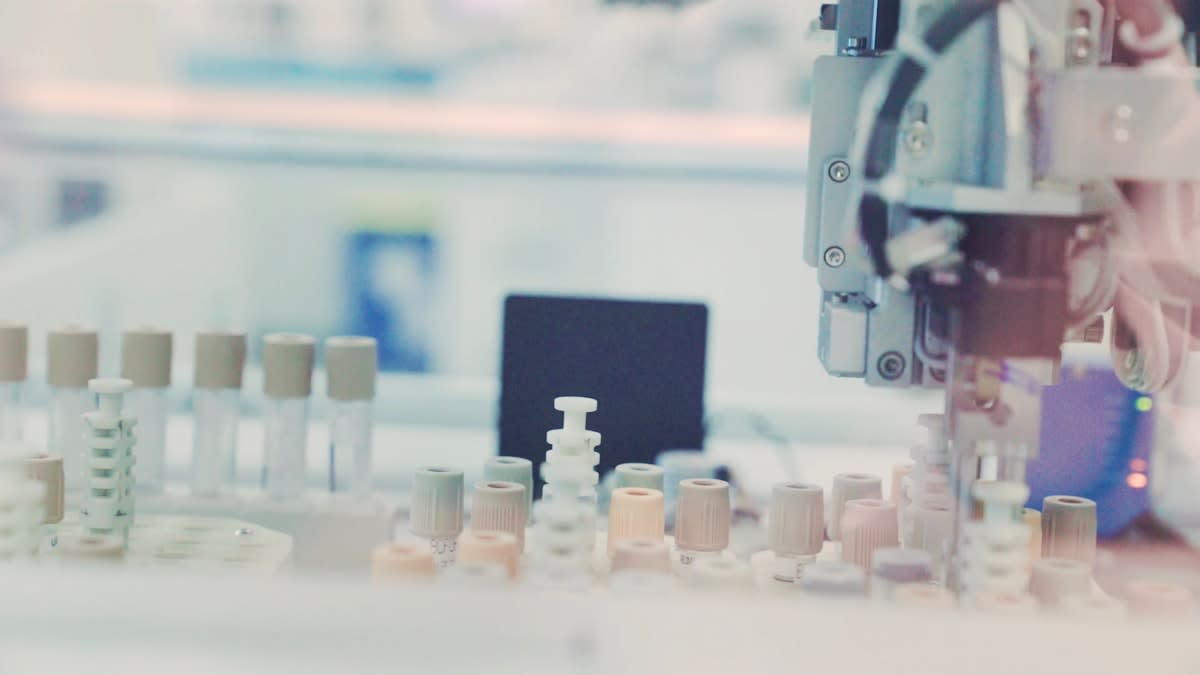
Roche has officially launched Axelios 1, a direct assault on Illumina's NovaSeq X. The delta here is speed and accessibility. Axelios 1 enables same-day, whole-genome sequencing for research workflows. While currently limited to research use and not diagnostics, the move signals a strategic pivot toward cost efficiency and scalability that was previously deemed unfeasible by the academic community.
| Feature | Illumina NovaSeq X | Roche Axelios 1 |
|---|---|---|
| Market Position | Established Standard | New Challenger |
| Turnaround Time | Standard NGS | Same-day Whole Genome |
| Primary Use | Diagnostic & Research | Research Use Only (Initial) |
Precision is moving from the lab to the fluid. We are seeing a shift in how we access the most guarded parts of the human body: the brain.
Bypassing the Scalpel
On June 30, the Genomic Testing Cooperative (GTC) highlighted the expanded role of its Liquid Trace platform. Following an NCCN update, cerebrospinal fluid (CSF)-based molecular profiling is now recommended for patients with inoperable high-grade gliomas and glioblastomas. This is a critical win for patients where a tissue biopsy is too risky or physically impossible.
- Eliminates need for high-risk surgical biopsies in fragile patients.
- Combines cfDNA and RNA analysis for a comprehensive molecular profile.
- Provides a viable path for sequencing when tumor location prevents traditional access.
But if we can sequence the decay, can we stop the clock? The research suggests nature already has a mechanism for this, though it remains elusive for humans.
The Diapause Paradox
A Nature report from June 29 explored diapause—a dormant state found in various invertebrates and vertebrates that effectively hits the pause button on the aging clock. By preserving the organism in a non-aging state, diapause conserves youthful biological time. Parallel to this, a new approach to retarget the large serine recombinase Bxb1 now enables the precise insertion of large DNA payloads, offering a potential tool for the kind of genetic engineering required to manipulate these biological switches.
We are staring at a future where the biological clock is accelerating, but our ability to read, bypass, and potentially pause that clock is accelerating faster. The question is no longer if we can intervene, but who will own the platforms that make it possible.