
The current obsession with generative biology treats the cell as a programmable computer. If you can model the protein folding, you can program the outcome. This logic fueled Chai Discovery's recent $400 million Series C, catapulting the company to a $3.8 billion valuation just two years after its inception. By utilizing the Chai-3 model, the firm claims to transform drug discovery from a transactional trial-and-error process into a predictable engineering discipline. But this predictability exists only in the digital vacuum. The moment a de novo molecular design leaves the GPU and enters a living system, it encounters biological friction—the stubborn, chaotic physical realities that do not follow a codebase.
Why does a perfectly designed antibody fail in a living organism? Because the cell is not just a factory; it is a waste-management nightmare. When we attempt to scale synthetic biological processes, we often ignore the debris. In the digital model, an output is a clean string of data. In the cytoplasm, an output is a physical object that must be transported, folded, and eventually cleared. If the clearance mechanism fails, the entire system crashes. This is the fundamental disconnect between AI-driven molecular design and biological execution.
The Cellular Trash Problem
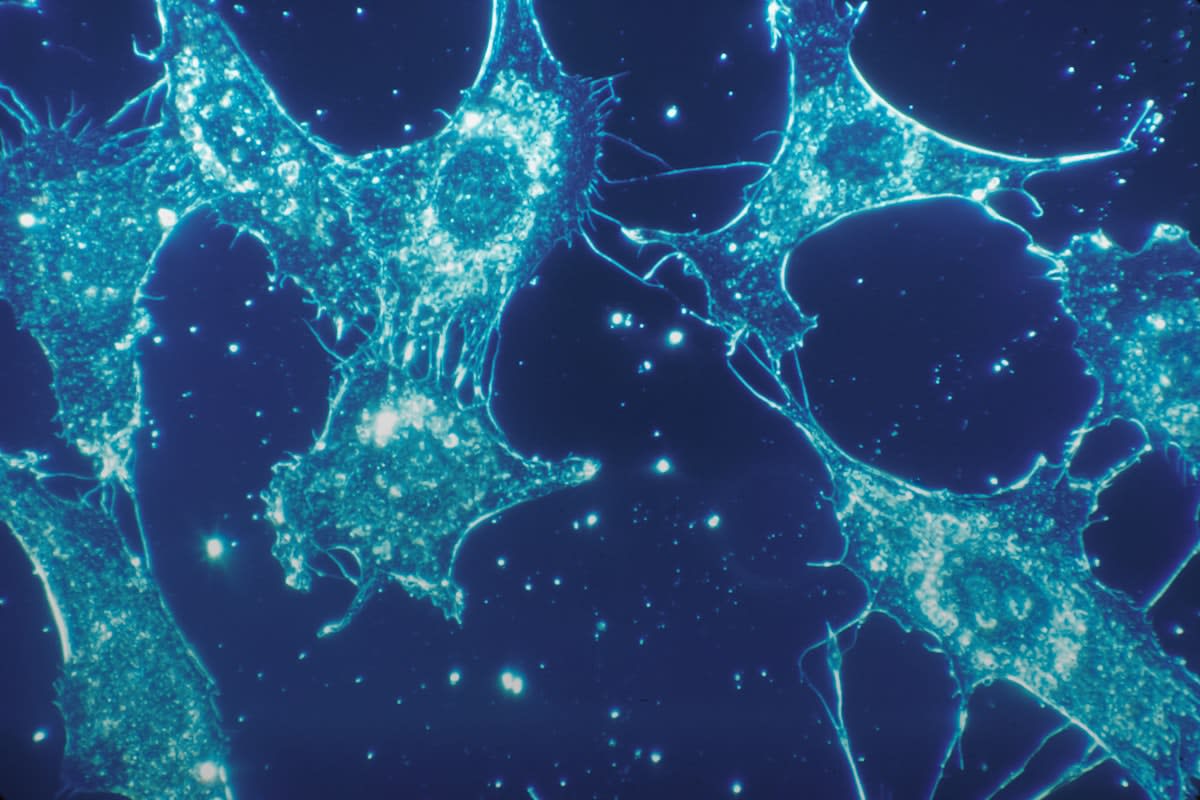
Consider the invisible friction of splicing byproducts. Research involving the Faculty of Synthetic Biology at Shenzhen University of Advanced Technology has highlighted a critical failure point: lariat RNAs. These are seemingly useless byproducts of pre-mRNA splicing. In a theoretical model, these are ignored as noise. In reality, if lariat RNAs are not cleared efficiently, they act as precursors to 21 and 22-nucleotide small interfering RNAs. These fragments then target defense-committed genes, effectively dampening the organism's immunity during viral infections. The system is sabotaged not by a lack of design, but by its own garbage.
"Lariat RNAs, if not cleared, act as precursors of small interfering RNAs that target defence-committed genes and dampen immunity during viral infection."— Nature Portfolio
Does this not expose the flaw in the current synthetic biology trajectory? We are spending billions to optimize the 'signal'—the protein, the antibody, the gene—while ignoring the 'noise' of the biological environment. If synthetic life is to scale, we cannot simply design better molecules; we must design better waste-disposal systems. The friction is not in the creation, but in the cleanup. Until we can program the clearance of splicing byproducts with the same precision we use to design the proteins themselves, synthetic life will remain a boutique laboratory curiosity rather than an industrial reality.
The Hardware Ceiling
The friction extends beyond the cellular level into the macroscopic infrastructure of bio-manufacturing. The whey protein industry provides a stark illustration of this ceiling. Despite booming demand for whey protein concentrate (WPC) and isolate (WPI), processors are hitting a wall. The bottleneck isn't a lack of raw milk; it is the physical limitation of membrane systems, pasteurisers, and evaporators. Even when software optimizes the flow, the physical hardware remains the limiting factor. You cannot 'patch' a pasteuriser to run 20% faster if the thermal dynamics of the fluid forbid it.
| Dimension | Digital Design (AI) | Physical Execution (Bio-Friction) |
|---|---|---|
| Scaling Speed | Exponential (Compute-led) | Linear (Hardware-led) |
| Error Handling | Code Debugging | Metabolic Waste Clearance |
| Constraint | Algorithm Complexity | Thermal/Membrane Capacity |
| Optimization Goal | Binding Affinity | Throughput Stability |
This hardware friction is precisely why vertical integration is becoming the only viable strategy for high-growth bio-ventures. Daniel Ek’s Neko Health is a prime example. By securing $700 million in Series C funding, Neko is not just building clinics; it is engineering its own proprietary imaging hardware and clinical software. Why? To insulate its pipeline from legacy equipment supplier bottlenecks. Neko understands that relying on third-party hardware is a recipe for stagnation. When you control the hardware, you control the friction.
The Verticality Advantage
Neko Health's strategy moves the bottleneck from the supplier to the internal engineering team, allowing for a vertical business model that scales across Sweden, the UK, and now Manhattan.
The demand for this vertical approach is evident in Neko's 350,000-person international waitlist. This is not merely a marketing success; it is a symptom of a broken legacy system. The traditional medical model is reactive and fragmented. Neko’s approach—synthesizing biomarkers into a high-definition biological map in under 60 minutes—attempts to bypass the friction of traditional healthcare bureaucracy. However, even this model faces a physical limit: the need for an 'unhurried' doctor to interpret the data. The human element remains the final, irreducible bottleneck.
Bypassing the Genetic Tax
If the friction of genetic manipulation is too high, the logical move is to stop manipulating genes altogether. This is the philosophy driving the Institute for Bioengineering of Catalonia (IBEC). Rather than attempting the high-friction process of genetic editing to restore sight, IBEC scientists developed prosthe6—light-activated small molecule drugs. By using photopharmacology, they can reversibly control drug activity using light, mimicking the function of photoreceptor cells in blind mice without the need for implanted devices or genetic alterations.
This represents a strategic retreat from the 'rewrite the code' mentality. Instead of trying to fix the broken genetic script—which often introduces new, unpredictable friction—IBEC is implementing a molecular 'overlay.' By reactivating the retinal circuit at the same level as the lost photoreceptor cells, they are working with the existing biological architecture rather than fighting against it. It is a move from invasive reconstruction to precise modulation.

Is this the blueprint for the next decade of synthetic biology? We are seeing a shift away from the hubris of total redesign toward a more nuanced interaction with existing biological systems. The goal is no longer to replace the biology, but to navigate its frictions. Whether it is the use of light-activated molecules in Spain or the predictive AI manufacturing being explored at Northeastern University, the focus is moving toward managing variability.
From Reactive to Predictive Manufacturing
The final frontier of biological friction is the manufacturing of cell and gene therapies (CGT). Conventional technology struggles with the inherent variability of living cells. As researchers at Northeastern University College of Science have argued, the CGT sector is currently trapped in a reactive cycle—fixing problems after they occur in the bioreactor. To scale, the industry must move toward predictive manufacturing, using AI to anticipate variability before it ruins a batch.
Projected Reduction in Manufacturing Failures via Predictive AI
Executive Insight
+18.4%
YTD Growth
This predictive shift is the only way to bridge the gap between the de novo designs of companies like Chai Discovery and the physical reality of a clinic. If AI can design a perfect antibody, but the manufacturing process is too variable to produce it consistently, the design is worthless. The real value is not in the molecule, but in the ability to control the friction of its production.
We are entering an era where the competitive advantage in biotechnology will not be held by those with the best algorithms, but by those who can most effectively manage biological and hardware friction. The winners will be the vertical integrators, the photopharmacologists, and the predictive manufacturers. They are the ones who realize that biology is not a computer—it is a physical system, and in physics, friction always wins unless you build the system to account for it.