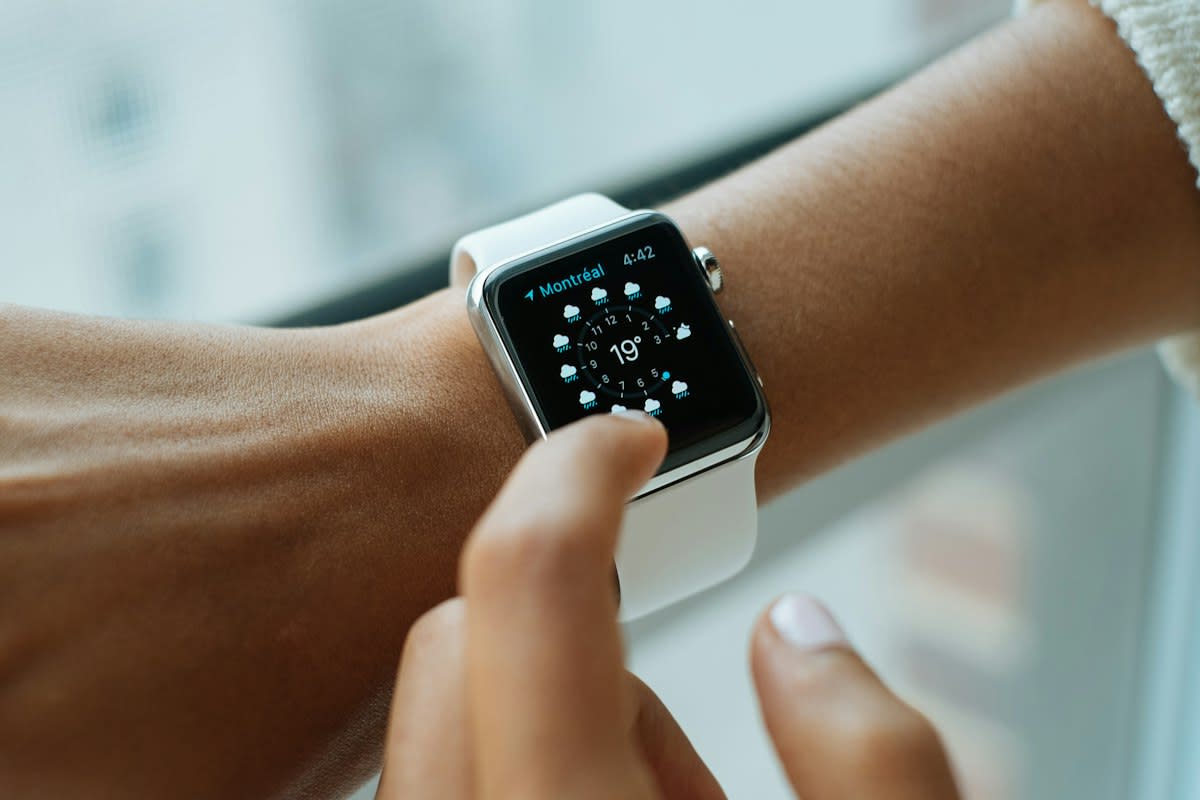
Numbers can kill you. When a high-performance athlete in Nairobi sees a sudden dip in heart rate variability on their wrist, the resulting panic often triggers the very stress response they intended to avoid. This is the bio-feedback loop. Stop the chase. If you treat every minor fluctuation as a signal of imminent failure, you transform a tool for health into a source of chronic psychological weight. Balance is the goal.
The Prerequisites of Sanity
Prepare your mind. Before you strap on a continuous glucose monitor or start tracking your sleep stages, you must establish a psychological buffer that prevents data from becoming your identity. This requires discipline. You cannot enter this terrain without a predefined set of rules that dictate when data is actionable and when it is simply noise. Without these boundaries, you are not monitoring your health; you are merely feeding an obsession. Set your limits.
- A stable 14-day baseline of your primary metrics to avoid reacting to daily outliers.
- A neutral third-party observer, such as a coach or clinician, to interpret anomalies.
- A defined 'Action Threshold'—the specific numerical value that justifies a change in behavior.
- A designated 'Data-Free Zone' in your daily schedule where devices are ignored.
The Practitioner's Protocol
Follow the steps. The goal is to extract the signal from the noise without letting the noise dictate your emotional state for the day. This process requires a mechanical approach to data consumption. Do not let your mood follow the graph. By decoupling your identity from the metric, you maintain the staying power needed for long-term health. Execute with precision.
- Establish your default. Track your biomarkers for two weeks without changing any habits to see how your body actually responds to your current environment (Source: JAMA Network Open, 2022).
- Define your 'No-Fly Zone'. Pick a time, such as 8 PM to 8 AM, where you are forbidden from checking any health metrics to prevent sleep-disrupting anxiety.
- Implement Delay-Time Analysis. Never change your diet or exercise routine based on a single day's data point; instead, wait for a three-day trend to emerge before acting.
- Cross-reference with somatic feeling. Ask yourself if you actually feel tired or stressed before looking at the device to see if the data matches your internal reality.
- Audit your triggers. Identify which specific metrics cause the most anxiety—such as glucose spikes or sleep scores—and reduce the frequency of those checks.
Context is everything. A spike in cortisol is not always a sign of distress; it could be the necessary mobilization of energy for a challenging task in a busy Tokyo office. You must learn to read the story. If you ignore the environmental context, you are reading a map without a legend. This leads to unnecessary interventions. Stay curious, not panicked.
"The danger of continuous monitoring is the creation of the 'hyper-vigilant patient,' who becomes so attuned to the digital representation of their health that they lose the ability to trust their own biological signals."— Dr. Aris Thomsen, Lead Researcher at the Institute for Digital Health
Clinicians fight daily. The debate centers on whether providing raw biomarker data to a patient creates an empowered agent or a neurotic observer who ignores their own somatic signals. It is a bitter war. I have seen patients in Seoul ignore actual chest pain because their wearable told them their stress levels were low. This is the danger. The tool must serve the human, not the other way around.

Managing the Bio-Anxiety Web
Watch for signs. Cyberchondria is a real threat when users begin to search for the meaning of every minor biomarker deviation in the depths of the internet. This creates a loop. You find a rare condition, your stress increases, and your biomarkers worsen as a result. Break the chain. Limit your research to vetted clinical sources and avoid the noise of wellness forums. Focus on the trend.
Saturate your life. Instead of focusing solely on the screen, integrate activities that ground you in your physical body, such as breathwork or movement in nature. This offsets the digital weight. When you balance data with experience, the numbers become a guide rather than a master. This is the only way to survive the data deluge. Embrace the silence.
Fact-Check & Accuracy Note
The debate over Continuous Glucose Monitoring (CGM) for non-diabetics is currently a major point of contention. Some researchers argue it prevents metabolic disease (Source: The Lancet Digital Health, 2021), while others warn it triggers orthorexia—an obsession with 'correct' eating that increases psychological stress and cortisol levels.
Common Pitfalls
Avoid the traps. Many users fall into the habit of 'metric chasing,' where they optimize for a number rather than a feeling. This is a mechanical failure. You might achieve a perfect sleep score while still feeling exhausted because you spent the night stressing about the score. This is a hollow victory. Prioritize the human experience over the digital readout. Stay grounded.
- Reacting to a single 'bad' night of sleep by over-caffeinating, which then ruins the next night's data.
- Using biomarkers to justify avoiding social situations that might 'stress' the numbers.
- Ignoring physical symptoms because the wearable says you are 'recovered'.
- Comparing your personal baselines to 'ideal' averages found in marketing materials.
Editorial Note
This guide is based on the principle of 'Minimal Effective Dose' data consumption. The goal is to use the least amount of data necessary to achieve a health outcome, thereby minimizing the psychological weight associated with constant monitoring.