
The medical establishment is witnessing a decisive break from the era of invasive sampling. For decades, the tissue biopsy remained the undisputed gold standard, a necessary but brutal prerequisite for any serious diagnosis. However, as of July 2026, the momentum has swung toward blood-based biomarker testing. The catalyst is not merely scientific curiosity but commercial viability. When Anthem Blue Cross and Blue Shield established commercial coverage for LucentAD Complete on July 1, 2026, it signaled that the industry no longer views blood-based assessments as experimental. This move validates the use of multi-analyte algorithmic tests to evaluate Alzheimer's disease, effectively moving the diagnostic frontline from the surgical suite to the phlebotomy chair.
This transition creates an immediate urgency for healthcare providers in Southeast Asia, where infrastructure varies wildly between urban hubs and rural provinces. The ability to triage patients using a five-analyte ATN(I) algorithmic blood test reduces the burden on specialized pathology labs and lowers the barrier to early intervention. Why wait for a high-risk surgical biopsy when a blood draw can provide the initial clinical decision-making data? This efficiency is not just a convenience; it is a necessity in regions where access to tertiary care is limited and the patient volume is overwhelming.
"Indonesia is not only the biggest healthcare market in the region; it is one of the first Southeast Asian markets to allow stem cells to be administered as part of therapy."— Wei Siang Yu, Founder and Executive Chairman of Borderless Healthcare Group, Inc.
The Regulatory Arbitrage in Southeast Asia
Indonesia is positioning itself as the regional laboratory for the future of longevity medicine. By opening a regulatory window for stem cell therapies, Jakarta is creating a magnet for providers who find the legal frameworks in Malaysia and Thailand too opaque or restrictive. This permissive environment does more than just attract stem cell clinics; it fosters an ecosystem where preventive healthcare and non-invasive diagnostics can flourish. While Singapore maintains a strict prohibition on certain stem cell therapies, Indonesia is betting that a more open approach will grant it an early advantage in the longevity market.
The strategy here is the creation of a longevity continuum. Patients are no longer viewed as temporary visitors to a clinic but as lifelong clients moving through a journey that spans from pre-arrival screening to clinic-based therapy and resort-style recovery. Within this model, liquid biopsies are the perfect entry point. They provide a low-friction method for high-net-worth individuals to monitor their health without the trauma of repeated tissue sampling, aligning perfectly with the luxury-oriented longevity services Indonesia is currently scaling.
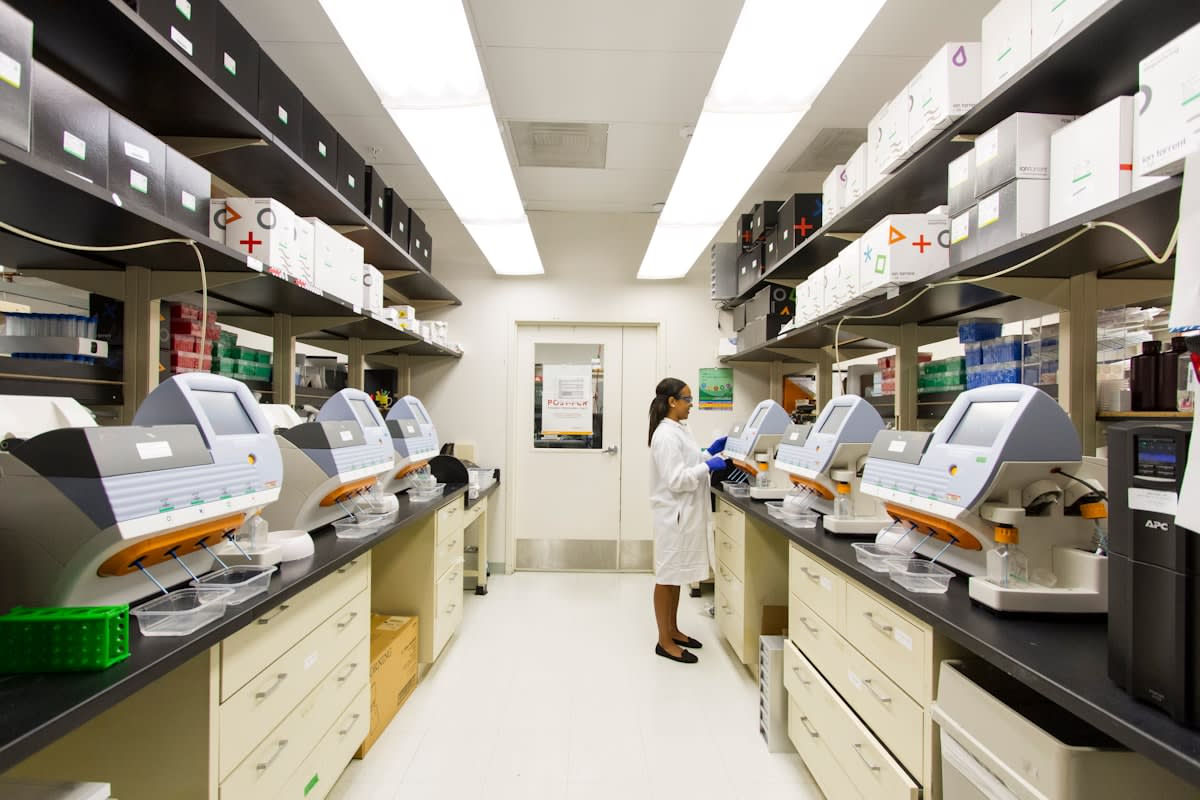
Does this mean the traditional biopsy is obsolete? Hardly. The reality is a diversification of tools. In Australia, the Queensland Institute of Medical Research Berghofer is proving that tissue biopsies are simply evolving. Their STimage tool uses machine learning to find faint cancer markers in routine tissue slides, predicting patterns of gene activity in breast, skin, and kidney cancers. By digitizing the H&E-stained sample and uploading it to a secure cloud server, they are extracting molecular-level insights from standard tissue that were previously invisible to the human eye.
The Delta: 2025 vs. 2026
Twelve months ago, the conversation around blood-based biomarkers was dominated by academic papers and small-scale trials. The delta between then and now is the arrival of commercial insurance coverage and regulatory clarity. In 2025, a blood test for Alzheimer's was a luxury for the few or a data point for a study. By July 2026, it has become a covered medical policy for eligible members of major insurers. This shift converts a scientific breakthrough into a scalable clinical tool, forcing hospitals to update their triage protocols almost overnight.
| Metric | Traditional Tissue Biopsy | Liquid Biopsy / Biomarker Testing |
|---|---|---|
| Invasiveness | High (Surgical/Needle) | Low (Blood Draw) |
| Turnaround Time | Days to Weeks | Hours to Days |
| Regulatory Status (SEA) | Standard Practice | Rapidly Expanding (e.g., Indonesia) |
| AI Integration | Image-based (STimage) | Algorithmic (LucentAD) |
| Patient Burden | Significant / High Risk | Minimal / Low Risk |
The integration of AI is the common thread across both modalities. While liquid biopsies use algorithms to parse five different analytes for a single diagnosis, tissue biopsies are using AI to identify rare cancer cells at earlier stages. The competition is not between blood and tissue, but between manual observation and algorithmic precision. The winner is the patient, who now benefits from a tiered diagnostic approach: blood tests for screening and triage, and AI-enhanced tissue biopsies for definitive surgical mapping.
Precision Oncology and the ASCO 2026 Signal
The trends revealed at ASCO 2026 further underscore this movement toward precision. The consistency shown by Novartis's Pluvicto in treating metastatic hormone-sensitive prostate cancer highlights a broader trend in radiopharmaceuticals. These treatments require precise targeting, which in turn demands more precise diagnostics. When clinicians can use blood-based markers to monitor the efficacy of DNA damage repair inhibitors or radiotherapeutics, the need for repeated, invasive tissue biopsies to check for tumor shrinkage diminishes.
This creates a feedback loop. As drugs like Pluvicto move into earlier-stage treatments, the demand for non-invasive monitoring increases. We are seeing a convergence where the drug, the diagnostic, and the regulatory environment all point toward a less invasive future. The ability to track a patient's response to therapy through a simple blood draw, rather than a repeat biopsy, changes the patient experience from one of constant trauma to one of continuous monitoring.

Southeast Asia is uniquely positioned to leapfrog the legacy systems of the West. Just as many nations in the region skipped landlines for mobile phones, healthcare systems in Indonesia and Vietnam may skip the heavy reliance on centralized pathology hubs in favor of distributed, blood-based screening centers. The regulatory openness seen in Indonesia's stem cell market is a harbinger of this agility. By embracing longevity medicine and the associated diagnostic tools, the region is not just following global trends—it is creating a new blueprint for preventive care.
The ultimate trajectory is clear: the tissue biopsy will remain for the final confirmation, but it will no longer be the first door a patient walks through. The blood draw is becoming the primary gatekeeper. With the backing of commercial insurance and the acceleration of AI-driven analysis, the monopoly of the needle is ending. The question for Southeast Asian providers is no longer whether to adopt these tools, but how quickly they can integrate them into a fragmented healthcare landscape before their neighbors seize the market.