
The End of the Symptomatic Era
For decades, the medical community played a losing game of catch-up with dementia. We waited for the patient to forget their keys, lose their way home, or struggle with a familiar name before we dared to suggest a diagnosis. This reactive model was fundamentally flawed because by the time cognitive decline becomes observable, the brain has already undergone years of irreversible structural decay. We weren't diagnosing a disease; we were documenting a collapse. The arrival of high-precision blood biomarkers, specifically p-tau217, flips this script entirely. We are no longer looking for symptoms; we are looking for the molecular fingerprints of a process that begins long before the first memory slips.
This is not a marginal improvement in testing. It is a systemic pivot. By identifying phosphorylated tau proteins in the blood with an accuracy rate often exceeding 90%, clinicians can now spot the biological precursors of Alzheimer's disease up to 20 years before a patient exhibits a single clinical symptom. Imagine the asymmetry of that information. A 50-year-old professional in Singapore or a retiree in Berlin could discover they are biologically on a trajectory toward dementia while they are still at the peak of their cognitive powers. The diagnostic window has expanded from a few months of decline to two decades of anticipation.
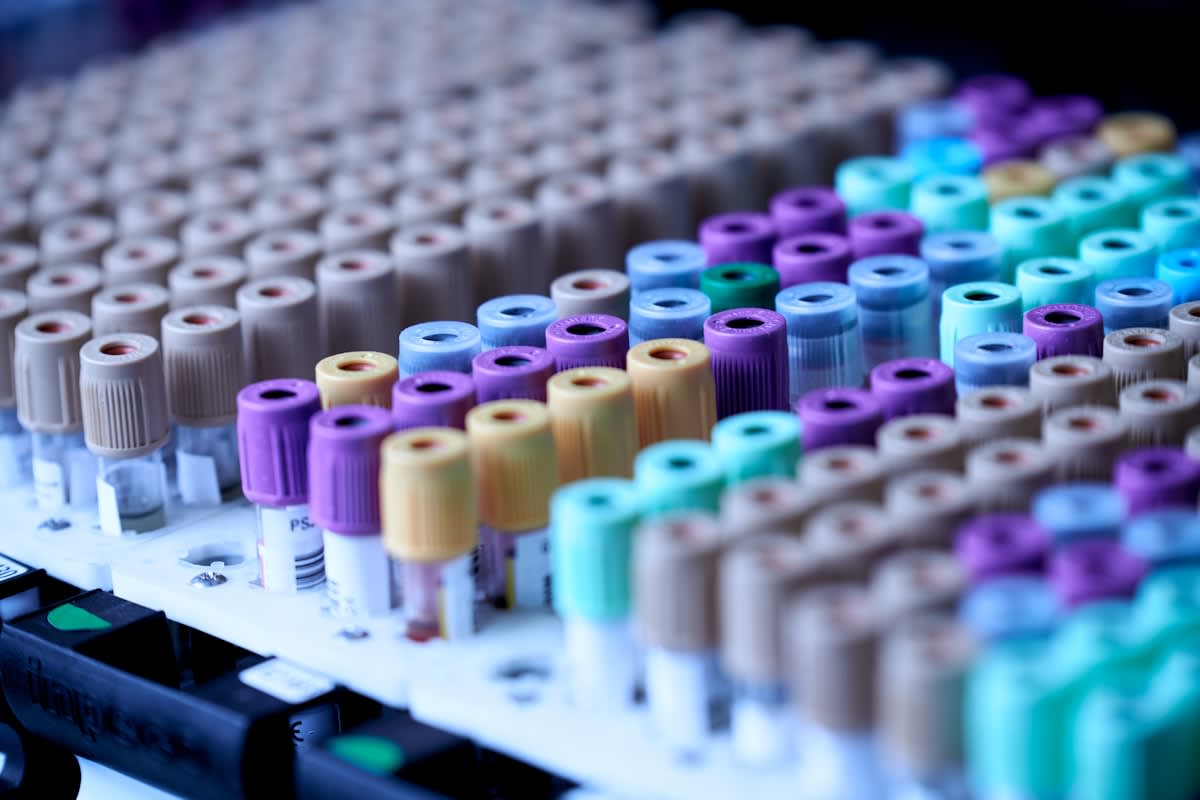
Why does this 20-year lead matter? Because the entire pharmaceutical and caregiving industry is built on the 'symptomatic' model. Drugs were designed for people who were already sick. Now, we are entering the era of the pre-symptomatic patient. This shift forces us to ask a terrifying but necessary question: what do you do with a diagnosis when there is nothing yet to treat? The opportunity lies in the ability to implement aggressive lifestyle interventions and precision therapies during the window where the brain is still resilient, rather than trying to salvage a ruined architecture.
The Infrastructure of Anticipation
The logistical implications are staggering. Traditional diagnosis relied on PET scans costing upwards of $5,000 or invasive lumbar punctures that patients dreaded. These were bottlenecks that limited diagnosis to the wealthy or the severely impaired. A blood test, costing a fraction of a scan—potentially under $500—turns a rare medical event into a scalable screening tool. When you move from a high-friction, high-cost test to a low-friction blood draw, you don't just find more cases; you change the entire population's relationship with the disease.
| Metric | Symptom-Based Diagnosis | Biomarker-Based Diagnosis |
|---|---|---|
| Detection Timeline | At onset of cognitive decline | 15-20 years pre-symptomatic |
| Primary Tool | Cognitive tests / MRI | p-tau217 Blood Assay |
| Cost Barrier | High (PET scans $5k+) | Low (Scalable blood draw) |
| Accuracy | Variable (Subjective) | High (>90% for p-tau217) |
| Clinical Goal | Palliative / Symptom Management | Preventative / Disease Modification |
This transition creates a massive data asymmetry. We are about to see a surge in people who are 'biologically positive' but 'clinically normal.' In some cohorts, up to 30% of elderly individuals who score perfectly on cognitive tests actually harbor the amyloid pathology associated with Alzheimer's. We are essentially discovering a hidden population of patients. This isn't a crisis of disease, but a crisis of categorization. How does a healthcare system manage a million people who are not sick but are guaranteed to become sick?
"We are moving from a world where we treat the fire after the house has burned down to a world where we can smell the smoke decades before the first spark."— Strategic Analysis of Neuro-Diagnostics
Global Friction Points and the Patient-in-Waiting
The rollout of this technology will not be uniform, and the friction points will be cultural as much as medical. In Japan, where the super-aged society is already straining social services, early biomarkers could be the only way to prevent a total collapse of the caregiving infrastructure. By identifying risk 20 years early, the state can shift resources toward preventative community-based care. Conversely, in the fragmented private insurance markets of the United States, this data becomes a liability. Will insurers use a p-tau217 result to hike long-term care premiums for a 45-year-old who is currently perfectly healthy?
Then there is the psychological toll: the creation of the 'Patient-in-Waiting.' For twenty years, an individual may live with the knowledge of their inevitable decline. This is a profound shift in the human experience. We have historically viewed aging as a gradual slide into the unknown. Now, we are introducing a countdown clock. The resilience of the human spirit will be tested not by the disease itself, but by the anticipation of it. This requires a total overhaul of psychiatric support, moving it from the end-of-life phase to the middle-of-life phase.

Does the ability to predict the future justify the anxiety of knowing it? The contrarian view suggests that the medicalization of the pre-symptomatic phase might do more harm than good if we don't have a definitive cure. However, the strategic opportunity is too large to ignore. Early detection allows for the optimization of the 'cognitive reserve.' If we know a patient is at risk, we can mandate aggressive cardiovascular health, sleep hygiene, and cognitive stimulation—interventions that are far less effective once the neurons have already vanished.
The Economic Re-calibration
From a market perspective, the blood biomarker is a catalyst for a new sector of the economy: the Pre-Dementia Management Market. We are seeing a shift in capital allocation away from late-stage palliative care and toward early-stage biological monitoring. This includes everything from specialized nutrition to AI-driven cognitive tracking. The economic value is no longer in the 'cure'—which remains elusive—but in the 'extension' of the healthy lifespan.
- Life Insurance Volatility: Potential for new underwriting categories based on biological risk rather than current health.
- Workforce Planning: Corporate wellness programs may integrate biomarker screening to manage long-term productivity and succession planning.
- Pharmaceutical Pivot: Drug trials are shifting to 'secondary prevention,' targeting people with biomarkers but no symptoms, drastically increasing the eligible trial population.
- Healthcare Budgeting: Shift from high-cost acute hospitalization to low-cost longitudinal monitoring.
The Strategic Shift
The real disruption isn't the test itself, but the collapse of the 'healthy' vs 'sick' binary. We are entering a spectrum of biological risk where 'health' is defined by the absence of a biomarker, not the presence of a function.
Ultimately, the 20-year warning provided by p-tau217 is a tool for empowerment, provided we have the systemic courage to use it. We can either treat this as a looming catastrophe of 'pre-patients' or as an unprecedented opportunity to redefine the second half of human life. By decoupling the biological onset of disease from the clinical onset of disability, we gain the only thing that truly matters in medicine: time. The challenge now is not the science of the blood test, but the sociology of the result.