The Era of the Invisible Clinic
For a decade, wearables were glorified pedometers. They told us how many steps we took and gave us a rough estimate of our sleep, but they lacked the authority to change a clinical outcome. That era ended this year. We have entered the age of the invisible clinic, where medical-grade diagnostics are woven into the fabric of daily life. The shift is not merely about better sensors; it is about the transition from wellness tracking to clinical intervention. Why wait for a quarterly appointment when your hardware is monitoring your vitals every second?
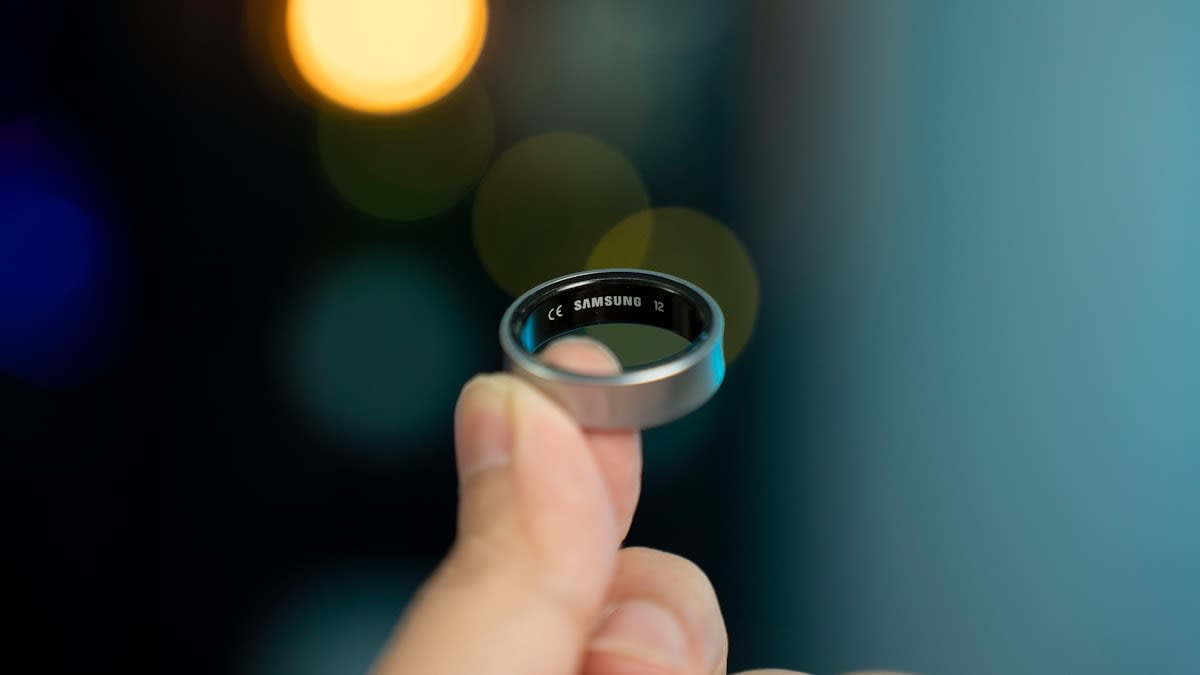
Samsung's launch of the Galaxy Ring epitomizes this pivot. Priced at USD 399, the device moves beyond basic activity tracking to offer AI-enhanced health capabilities, including continuous monitoring, sleep assessment, and menstrual cycle tracking. It is a calculated move into the premium smart ring segment, reflecting a broader industry trend toward multi-form-factor health tracking. By shrinking the tech into a ring, the industry is removing the friction of wearability, ensuring that the data stream never breaks.
The Market Shift
The Delta: Twelve months ago, the 'smart ring' was a niche accessory for biohackers. Today, with the entry of giants like Samsung and massive infrastructure investments, it has become a primary gateway for clinical-grade data collection.
This expansion isn't limited to rings. We are seeing a strategic diversification of how biosensing is delivered. Sennheiser has partnered with Polar Electro to embed biosensing directly into premium audio earbuds. This means your heart rate and health metrics are now being captured by the devices you already use for entertainment. When the sensor is embedded in the ear or the finger, the data becomes more consistent and the user's effort drops to zero.
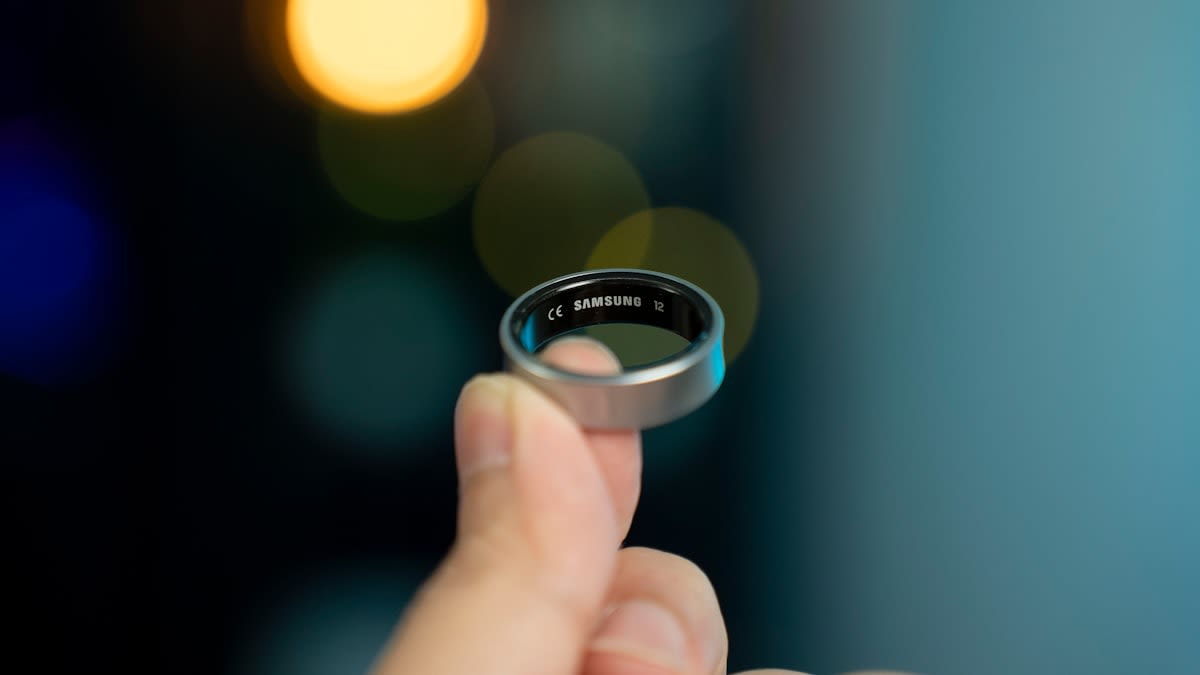
The capital flowing into this sector proves this is more than a trend. In 2024, Ultrahuman committed USD 35 million to build a dedicated wearable ring manufacturing facility in Indiana. This level of infrastructure investment suggests that the industry is preparing for mass-market adoption of clinical rings, moving away from small-batch prototypes toward global scale. The goal is clear: omnipresent monitoring.
Crossing the Regulatory Rubicon
Hardware is easy; regulation is hard. The real battleground for clinical wearables is the transition from 'fitness' claims to 'medical' claims. In the United States, making medical-grade cardiac claims requires FDA 510(k) clearance, a process that typically takes 12 to 18 months. The Circular Ring 2 cleared this bar in 2025, signaling that the regulatory friction is beginning to ease for high-fidelity devices. This clearance transforms a gadget into a medical tool.
Look at the case of Aktiia. Their continuous blood pressure monitoring wristband recently gained Health Canada approval. Using Optical Blood Pressure Monitoring (OBPM), the device eliminates the need for a cuff, delivering up to 800 measurements per month. These readings are not just for the user; they are shared directly with physicians via a companion app. This is the end of the 'white coat effect,' where blood pressure spikes only in the doctor's office, and the beginning of true cardiovascular management.
The accuracy of these devices is finally catching up to the gold standards of the hospital. A 2025 systematic review of 107 clinical studies involving roughly 100,000 participants found that finger-based photoplethysmography (PPG) achieves a heart rate correlation of r² = 0.996 against ECG gold standards for resting measurements. When the correlation is that high, the argument for bulky, stationary equipment begins to crumble.
| Market Segment | 2024 Valuation | 2035 Projection | CAGR |
|---|---|---|---|
| Medical Device Technologies | USD 487.5 Billion | USD 882.1 Billion | 5.5% |
| Elderly & Disabled Assistive Devices | USD 24.2 Billion | USD 41.8 Billion | 5.1% |
The financial trajectory is staggering. The broader medical device technologies market is projected to surpass USD 882.1 billion by 2035. This growth is fueled by the integration of the Internet of Medical Things (IoMT) and remote patient monitoring. We are no longer talking about a few million people wearing watches; we are talking about a global infrastructure where the medical device is a constant companion, not a periodic destination.
This shift is particularly critical for high-risk populations. The market for elderly and disabled assistive devices is expected to exceed USD 41.8 billion by 2035. For these users, wearables like the mCareWatch 241, launched by KORE and mCare Digital, provide continuous patient monitoring that can detect deterioration in real-time. This moves the needle from reactive treatment—treating a stroke after it happens—to proactive prevention.
Beyond the Wrist: Bioelectronics and Textiles
If the ring is the current frontier, the next is the garment. We are seeing the rise of textile wearables, such as smart shirts that can acquire multimodal physiological signals. These garments can track single-lead Electrocardiograms (ECG) and Respiration (RSP) simultaneously. In experimental settings, these have been used to monitor drivers under cognitive load and emotional arousal, proving that clinical data can be captured during high-stress, real-world activities without hindering the user.
"The future lies in AI-powered closed-loop wearable bioelectronics for personalized and autonomous healthcare."— Nature Sensors
What does 'closed-loop' actually mean? It means the device doesn't just monitor; it reacts. By linking molecular-level recognition via microfluidic biosensors with computational signal interpretation, next-generation wearables will be able to diagnose and potentially trigger a response autonomously. We are moving toward point-of-care diagnostics that happen in the background of your life, managed by deep learning models that validate and interpret data in real-time.
Even the most ambitious patents are pushing the boundaries of what a single finger can tell us. Huami's patent for the Amazfit Helio Ring 2 details the ability to capture ECG and body composition from a single finger. While the hardware may be ready, the regulatory timeline remains the bottleneck. However, the technical possibility exists: a single piece of jewelry that can provide a comprehensive metabolic and cardiac snapshot.
The Paradigm Shift
The end of reactive medicine means the 'patient' becomes a 'monitored user.' The healthcare system shifts from a model of crisis management to one of continuous optimization.
The convergence of AI, robotics, and wearable sensors is reshaping the healthcare landscape. As we integrate cloud computing and digital health platforms, the distance between the sensor on the skin and the decision in the clinic disappears. We are witnessing the dismantling of the traditional medical model. The future is not a better hospital; it is a world where the hospital is everywhere, and the check-up never ends.