
We are currently witnessing a silent migration of human intelligence. From the corridors of biotech research in the UK to entry-level copywriting desks in New York, the habit of cognitive offloading—delegating our thinking, synthesis, and memory to AI—is no longer a convenience; it is a default setting. While the efficiency gains are seductive, the cost is a gradual erosion of our executive functions. When we stop exercising the muscles of critical thought, we do not just lose the skill; we lose the cognitive flexibility required to adapt to novel situations. Is the speed of an AI-generated bid worth the atrophy of the strategic mind that should be directing it?
The Prerequisites for Cognitive Recovery
Before initiating a cognitive audit, you must accept a fundamental truth: cognitive growth requires friction. The digital ecosystem is designed to remove all friction, which is precisely why our attention spans have cratered. To reclaim your brain, you need more than a digital detox; you need a systematic reintroduction of mental effort. This process is not about rejecting technology but about establishing a hierarchy where human judgment remains the primary driver and AI serves as the secondary accelerator.
- A commitment to 'Cognitive Friction': Choosing the harder mental path for critical tasks.
- An awareness of your 'Offloading Baseline': Identifying which mental tasks you have outsourced.
- A dedicated environment for deep work, free from the 47-second distraction cycle.
- The willingness to embrace anticipatory anxiety as a signal for curiosity rather than a trigger for rumination.

Step-by-Step: The Cognitive Audit Protocol
- Map Your Offloading Points: Document every instance where you use AI for synthesis, drafting, or decision-making. For example, if you are applying for grants like the BBSRC or STFC DeepTech Catalyst Bio, distinguish between using AI for formatting and using it for the core scientific hypothesis. The latter is an offloading danger zone that threatens the integrity of the intellectual bid.
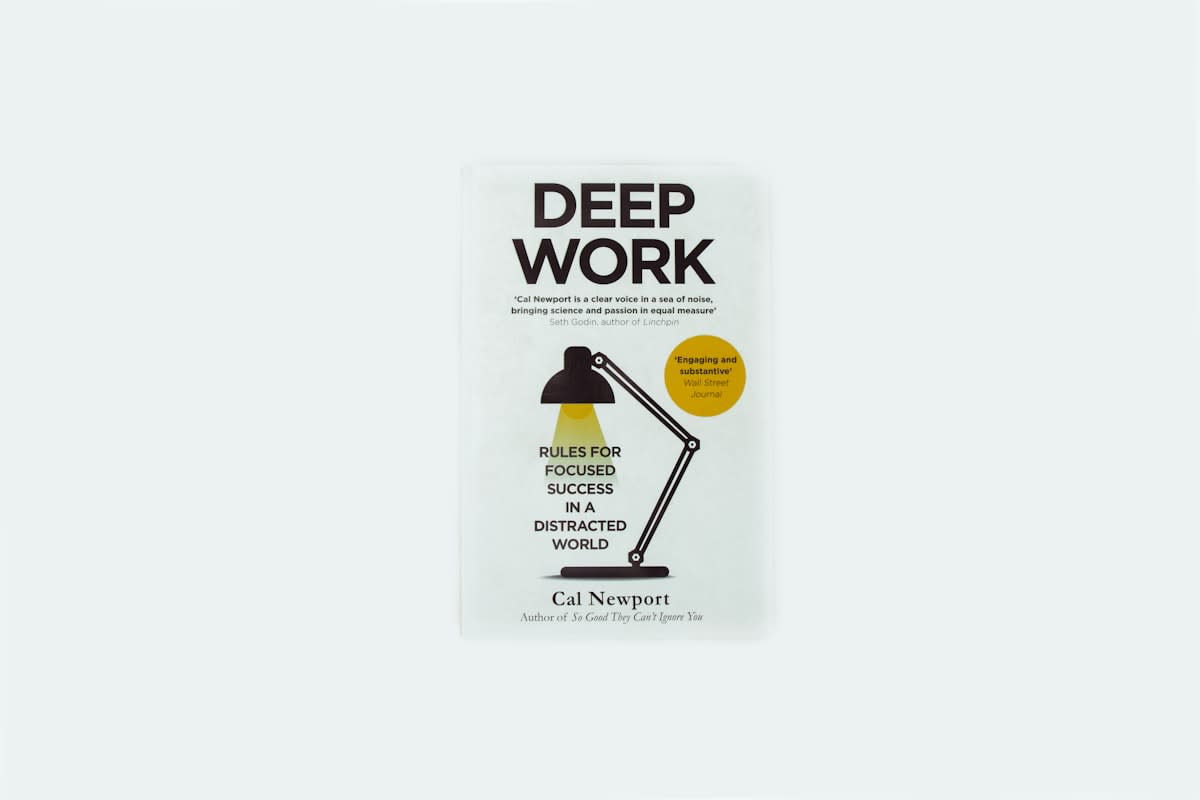
- Execute Attention-Span-Maxxing: Combat the digital average of 47 seconds of attention. Set a timer for 20 minutes of uninterrupted, deep reading of a complex text. Resist the impulse to switch tabs or check notifications. As Gloria Mark notes, focus is a muscle that can be strengthened, but only through genuine cognitive effort.
- Stress-Test Your Cognitive Flexibility: Practice switching between disparate tasks or learning new rules in a controlled environment. Research from Texas A&M University suggests that cognitive flexibility—the ability to adapt to novel situations—is a more critical early indicator of brain health than simple memory loss. Intentionally disrupt your routine to force your brain to find new pathways.
- Audit Your Soft-Skill Portfolio: Identify tasks that AI cannot replicate. Focus your energy on strategic vision, high-stakes decision-making, and relationship building. If you are in an entry-level role, stop competing with AI on data entry or basic copywriting; instead, demonstrate your ability to direct the AI process and quality-check the output for human nuance.
- Convert Anxiety into Exploration: When you feel anticipatory anxiety regarding AI's impact on your career, pivot from rumination to experimentation. Use the anxiety as a prompt to explore new AI tools, but do so with the goal of enhancing your unique human skills like critical thinking and communication.
The transition from a passive consumer of AI to a master practitioner requires a shift in how we perceive 'work.' For too long, we have equated productivity with the speed of output. However, the real value in the modern economy is shifting toward the ability to interpret, fact-check, and provide a human lens to machine-generated content. The person who can run a streamlined AI operation while identifying exactly where the machine failed is infinitely more valuable than the person who simply knows how to prompt.
Flexibility vs. Memory
Cognitive flexibility is the brain's executive function governing our ability to switch tasks and adapt to new rules. While we often fear memory loss, the loss of flexibility is often the earlier, more subtle tell of cognitive decline.
Consider the current plight of Gen Z graduates. Many are finding entry-level roles in accounting, copywriting, and social media coordination vanishing because AI can handle the repetitive, junior-level tasks. The solution is not to ignore AI, nor to compete with it at being a machine. The solution is to compete at being human. This means mastering judgment, trust, and the ability to make hard choices in real-world situations—areas where AI remains fundamentally deficient.
| Task Category | The Offloading Habit (Risk) | The Cognitive Recovery Approach (Growth) |
|---|---|---|
| Content Creation | Prompting AI to write the entire first draft. | Outlining manually; using AI for brainstorming; editing for human voice. |
| Research/Analysis | Accepting AI summaries as absolute truth. | Cross-referencing AI outputs with primary sources; hunting for hallucinations. |
| Strategic Planning | Asking AI for a 'strategy' or 'roadmap'. | Developing a vision based on human relationships and intuition; using AI to optimize logistics. |
| Attention Management | Switching tasks every 47 seconds. | Practicing deep-work blocks of 60-90 minutes on a single complex problem. |
The danger of the 'sidekick' mentality is that we may stop questioning the sidekick. When AI handles the data entry or the basic accounting, we lose the granular understanding of the underlying system. This creates a fragility in our professional expertise. To mitigate this, practitioners should periodically perform 'manual overrides'—completing a task from scratch without digital assistance to ensure the underlying cognitive skill remains intact.
Common Pitfalls in Cognitive Recovery
Many attempt to reclaim their focus through superficial means—such as app blockers or 'digital detox' weekends. These are temporary fixes that do not address the underlying neurological habit. The real pitfall is the 'head-in-the-sand' approach, where individuals pretend AI doesn't exist. This is a losing strategy. The goal is not to avoid the tool, but to avoid becoming a dependency of the tool.
- The Efficiency Trap: Mistaking a faster output for a better thought process.
- The Prompt Dependency: Losing the ability to structure a thought without a prompt box.
- Rumination Loops: Allowing anticipatory anxiety about AI to paralyze action rather than fuel curiosity.
- Over-reliance on Summaries: Sacrificing the nuance of a full text for the speed of a bulleted list.
Ultimately, the cognitive audit is an act of resilience. In a world where the average digital attention span has shrunk to 47 seconds, the ability to concentrate for hours is a competitive advantage. The ability to remain cognitively flexible in the face of rapid technological shifts is a survival skill. By intentionally reintroducing friction and prioritizing human judgment over machine efficiency, we ensure that our brains remain the architects of our lives, not just the operators of our software.