
The Paradox of Modern Efficiency
Why does it feel like we are working harder despite the tools designed to save us time? For the modern founder or executive, the introduction of AI hasn't actually reduced the workload; it has simply stripped away the low-stakes 'buffer' tasks that once provided mental breathing room. We used to spend hours on administrative drudgery, which, while boring, allowed the brain to idle. Now, as reported by mental strength coaches in August 2026, founders are finding their workdays consist entirely of decisions that actually matter. When every single hour of your day is a high-stakes choice, the result isn't productivity—it is a surge in burnout and a crushing sense of loneliness.
Overthinking is not a character flaw; it is a symptom of a taxed executive function. When your brain is forced to switch between complex, high-pressure problems without recovery, your cognitive flexibility—the ability to shift thoughts or actions in response to changing environments—begins to degrade. You find yourself looping on the same problem, unable to see the exit. To break this cycle, you don't need more 'productivity hacks.' You need a structural blueprint to rebuild your brain's capacity for flexibility and decision-making ease.

Prerequisites: Preparing Your Mental Terrain
Before implementing the tactical steps of this blueprint, you must accept a fundamental truth: your brain is a biological organ, not a software package. It requires specific environmental inputs to maintain the flexibility needed for high-level reasoning. If you are operating in a state of permanent urgency, no amount of willpower will stop the overthinking. You need to establish a baseline of stability before you can expect agility.
- Awareness of your 'invisible work'—the mental load you carry that isn't on your calendar.
- A commitment to non-negotiable recovery windows to prevent the 'high-stakes only' burnout loop.
- Willingness to engage in 'deliberate play' to prime executive functions.
- A basic daily schedule that prioritizes biological rhythms over digital demands.
Once these prerequisites are in place, we can move from passive survival to active cognitive optimization. The following steps are grounded in recent neurological and psychological research, focusing on the intersection of physical movement, routine, and strategic planning.
Step 1: Prime Your Brain with Deliberate Play
Cognitive flexibility is not a static trait; it is a muscle. Research published in Frontiers in Psychology in July 2026 highlights that physical activity programs targeting executive functions—specifically inhibitory control, working memory, and flexibility—yield the best results when they include cognitively engaging elements. This is what experts call 'deliberate play.' It is not enough to simply go for a run or lift weights; you need activities that force your brain to shift rules, adapt to new sets, and make real-time decisions.
Think of team games or enriched physical education. When you engage in a sport that requires you to change your strategy mid-play based on an opponent's move, you are training your brain in task-switching and mental set adaptation. Five key studies cited in the Frontiers review demonstrate that these interventions, especially those delivered over several weeks, lead to clearer gains in cognitive flexibility. By introducing these demands into your life, you prime your brain to handle the 'rule shifting' required in high-stakes business decisions.
"Cognitive engagement refers to the activation of mental processes such as attention, reasoning, or decision-making during physical activity."— Frontiers in Psychology, 2026
To implement this, replace one stagnant gym session a week with a dynamic, decision-based activity. Whether it is a complex team sport or a strategic game that requires physical movement, the goal is to force your brain to pivot. This biological priming reduces the friction you feel when you return to your desk to tackle a complex problem.
Step 2: Stabilize the Internal Clock to Reduce Noise
Overthinking often thrives in an environment of chaos. When your wake-up time, eating habits, and sleep patterns are erratic, your brain enters a state of 'social jet lag,' which disrupts your internal clock and increases emotional volatility. According to a study from the University of Missouri reported in July 2026, a predictable daily routine is a surprisingly powerful tool for reducing depression and physical pain, even for those struggling with insomnia.
Why does this matter for high-stakes decisions? Because a stable routine automates the mundane, freeing up your limited supply of executive function for the tasks that actually require it. When you don't have to decide when to eat or when to wake up, you save that cognitive energy for the board meeting or the pivot strategy. The researchers found that consistent times for waking, eating, socializing, and sleeping were linked to better well-being regardless of the actual quality of sleep.
| Routine State | Cognitive Impact | Decision Outcome |
|---|---|---|
| Erratic / Social Jet Lag | High baseline anxiety, fragmented attention | Overthinking, decision paralysis |
| Predictable / Anchored | Lowered emotional noise, conserved energy | Decisive, flexible, resilient |
The goal here is not rigid perfectionism, but the creation of anchors. By stabilizing the periphery of your life, you create a safe harbor that allows your mind to venture into high-risk decision territory without the fear of total collapse.
Step 3: Dismantle the Mental Load via Backward Planning
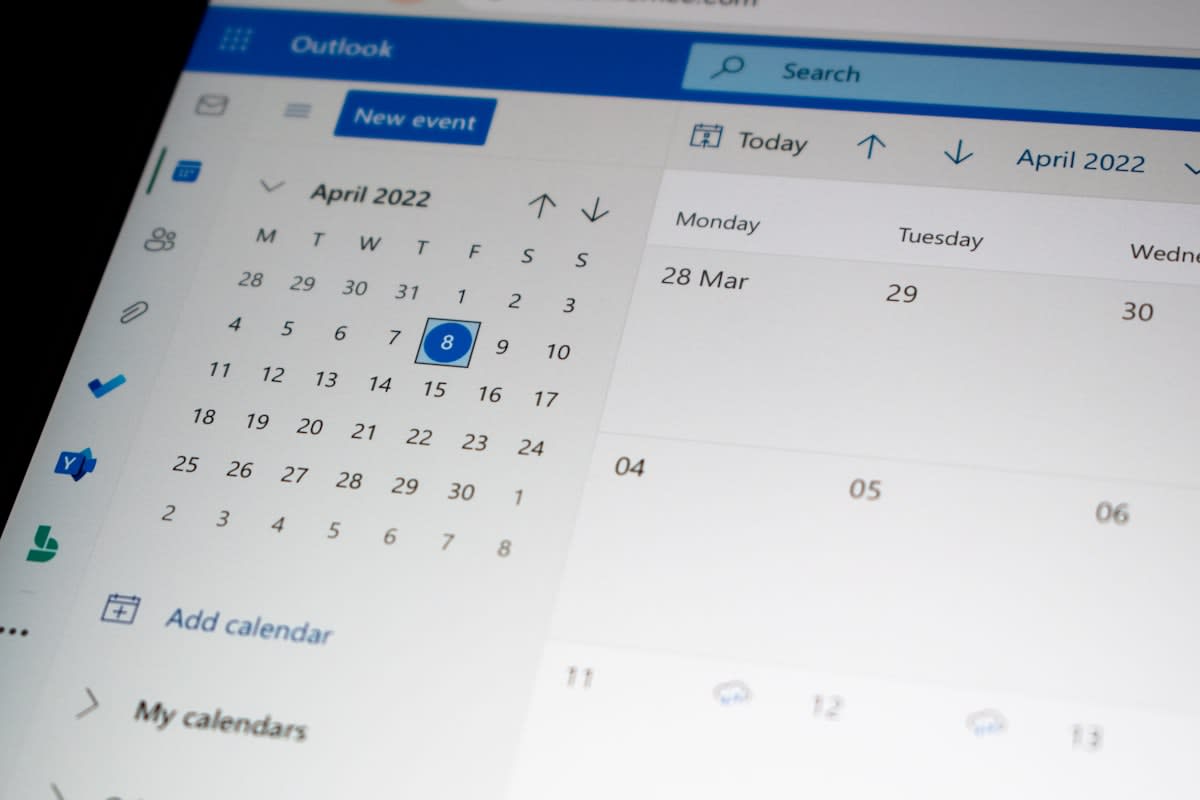
Much of what we call 'overthinking' is actually just the brain struggling to juggle the 'invisible work'—the mental load of anticipating a dozen different variables at once. In the field of education, teachers face this daily, juggling classroom dynamics and lesson plans. The solution, as suggested in Education Week in July 2026, is backward planning. Instead of reacting to the week as it happens, you identify the 'big event' and plan backward from that point to anticipate tasks before they become crises.
- Identify the 'Apex Event': Pinpoint the high-stakes deadline or decision point (e.g., a product launch in May).
- Map the Dependencies: List every invisible task required to reach that event (e.g., vendor contracts, team alignment, testing).
- Block the Buffer: Assign these tasks to specific months or weeks long before the deadline, ensuring they are not competing with other high-stakes windows.
- Anticipate the Friction: Identify potential disruptions (holidays, market shifts) and build 'slack' into the timeline.
When you backward plan, you shift the mental load from your active working memory to a trusted system. This prevents the 'scramble' that leads to panic-driven decisions. You are no longer wondering if you forgot something; you know exactly where you are in the process. This clarity is the antidote to the looping thoughts that characterize overthinking.
Step 4: Pace Your Decision Density
Finally, you must address the 'AI Paradox.' If you are using AI to automate your easy work, you must consciously re-insert 'low-stakes' time into your day. You cannot operate at 100% decision density for eight hours a day without burning out. The mental strength coaches working with founders in 2026 have observed that the lack of breaks between critical decisions is what leads to the surge in burnout. Your brain needs periods of 'low-cognitive demand' to reset.
The Social Buffer
Loneliness is a silent driver of burnout. When you remove the administrative tasks that often involved collaboration, you isolate yourself. Ensure your decision-making process includes social touchpoints to maintain emotional resilience.
To implement this, schedule 'zero-stakes' blocks. This is time where no critical decisions are allowed. Whether it's a walk without a podcast, a mundane chore, or a social coffee, these gaps prevent the cognitive fatigue that makes a simple decision feel like a mountain. By pacing your decision density, you ensure that when a high-stakes moment arrives, you have the mental bandwidth to handle it with ease.
Common Pitfalls to Avoid
- The Optimization Trap: Trying to 'optimize' your recovery time into another high-stakes task. Recovery must be low-demand.
- Ignoring the Biological Base: Attempting to use backward planning while maintaining an erratic sleep/wake cycle. The routine must come first.
- Over-reliance on AI: Letting AI handle the thinking rather than the execution. You must remain the architect of the decision, or your cognitive flexibility will atrophy.
- Mistaking Activity for Progress: Filling your day with 'busy work' instead of the deliberate, cognitively engaging play required to prime the brain.