
The End of the Biological Treasure Hunt
For nearly a century, the pharmaceutical and chemical industries operated on a model of discovery. Scientists combed through the vast, chaotic libraries of nature, hoping to find a protein or enzyme that happened to perform a desired task, which they would then painstakingly optimize. This was essentially a high-stakes treasure hunt. We were limited by what evolution had already seen fit to create, treating the natural world as a static catalog of solutions. But this paradigm is collapsing. We are witnessing a systemic pivot from discovery to design, where the goal is no longer to find a molecule that works, but to specify the function and build the molecule to match.
Why does this shift matter? Nature is an incredible engineer, but it is a conservative one. Evolution optimizes for survival and reproduction, not for carbon sequestration or the targeted neutralization of a synthetic pathogen. The sequence space of proteins is virtually infinite; for a small protein of 100 amino acids, there are 20^100 possible combinations. Nature has explored a negligible fraction of this space. By breaking free from the constraints of evolutionary history, de novo design allows us to access the other 99.9% of potential molecular architectures. We are no longer editing the book of life; we are writing entirely new chapters in a language we finally understand.
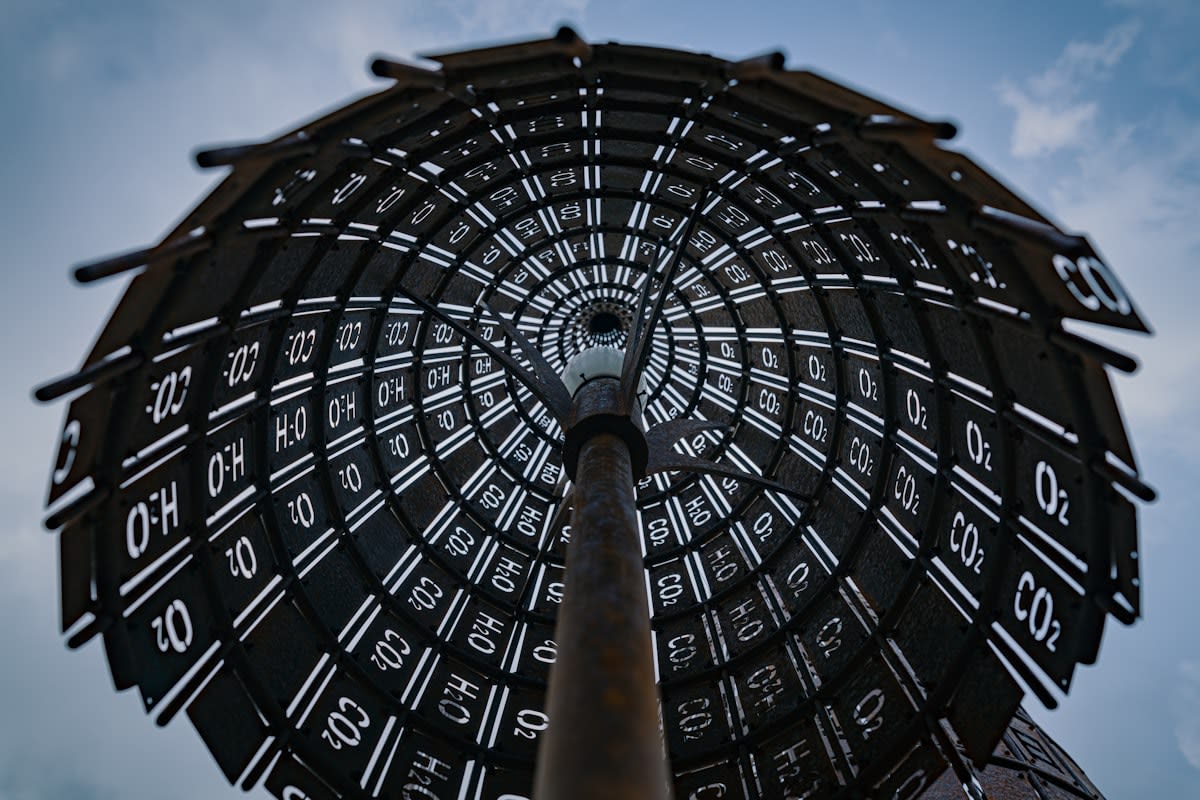
This isn't just a localized victory for a few labs in the United States or Europe. From the biotech hubs in Singapore to the emerging synthetic biology clusters in Brazil, the democratization of these tools is accelerating. When you move the bottleneck from the physical laboratory—which requires expensive reagents and years of wet-lab screening—to the computational cloud, you flatten the global playing field. The ability to design a protein on a laptop and have it synthesized by a provider in another continent transforms biotechnology into a software problem. The competitive advantage is shifting from those who own the most biological samples to those who possess the most sophisticated design algorithms.
"We have spent fifty years trying to guess how proteins fold. Now, we are telling them how to fold. That is the difference between being a student of nature and being its architect."— Industry Perspective on Generative Biology
The technical catalyst for this revolution is the convergence of three distinct computational breakthroughs: AlphaFold's prediction accuracy, ProteinMPNN's sequence design, and RFDiffusion's structural generation. For years, the folding problem—predicting a protein's 3D shape from its sequence—was the industry's great wall. Once that wall fell, the inverse problem became solvable: if we know the shape we need to block a virus or capture a gas molecule, we can calculate the sequence that will produce that shape. This trinity of tools has reduced the design cycle from years of trial-and-error to a matter of days of computation followed by a single round of validation.
This acceleration creates a profound economic ripple effect. Consider the cost of enzyme development for industrial applications. Traditionally, finding a heat-stable enzyme for detergent or textile manufacturing required screening thousands of extremophiles from volcanic vents or deep-sea trenches. Now, a designer can simply specify the required thermal stability and catalytic site in a digital environment. This removes the geopolitical and logistical dependency on rare biological sources, shifting the value chain toward intellectual property and computational precision.
To understand the scale of this transition, we must compare the legacy approach of biological discovery against the new era of de novo synthesis.
The Architecture of Synthesis: Discovery vs. Design
| Feature | Traditional Discovery (Legacy) | De Novo Design (Future) |
|---|---|---|
| Source Material | Existing natural organisms | Computational blueprints |
| Search Space | Limited to evolutionary history | Virtually infinite sequence space |
| Development Timeline | 3-7 years (screening/tuning) | Weeks to months (design/validate) |
| Precision | Approximate (nature's 'good enough') | Atomic-level specification |
| Cost Driver | Wet-lab labor and sampling | Compute power and synthesis |
The table above highlights a fundamental truth: we are moving from a probabilistic model to a deterministic one. In the legacy model, success was a matter of luck—finding the right organism in the right place at the right time. In the de novo model, success is a matter of geometry and physics. By treating proteins as programmable matter, we can create binders that attach to targets with a precision that nature never required. This has immediate implications for oncology, where a synthetic protein can be designed to bind to a specific mutation on a cancer cell while ignoring healthy tissue with 100% specificity.
Beyond medicine, the implications for planetary resilience are staggering. We are seeing the birth of synthetic enzymes designed specifically to break down PET plastics or capture atmospheric carbon at rates that dwarf natural biological processes. Nature's enzymes evolved to recycle carbon over millennia; we need them to do it in decades. By designing proteins that can operate in non-natural environments—such as high-acidity industrial waste streams or extreme temperatures—we are building a toolkit for an industrial ecology that nature never intended.
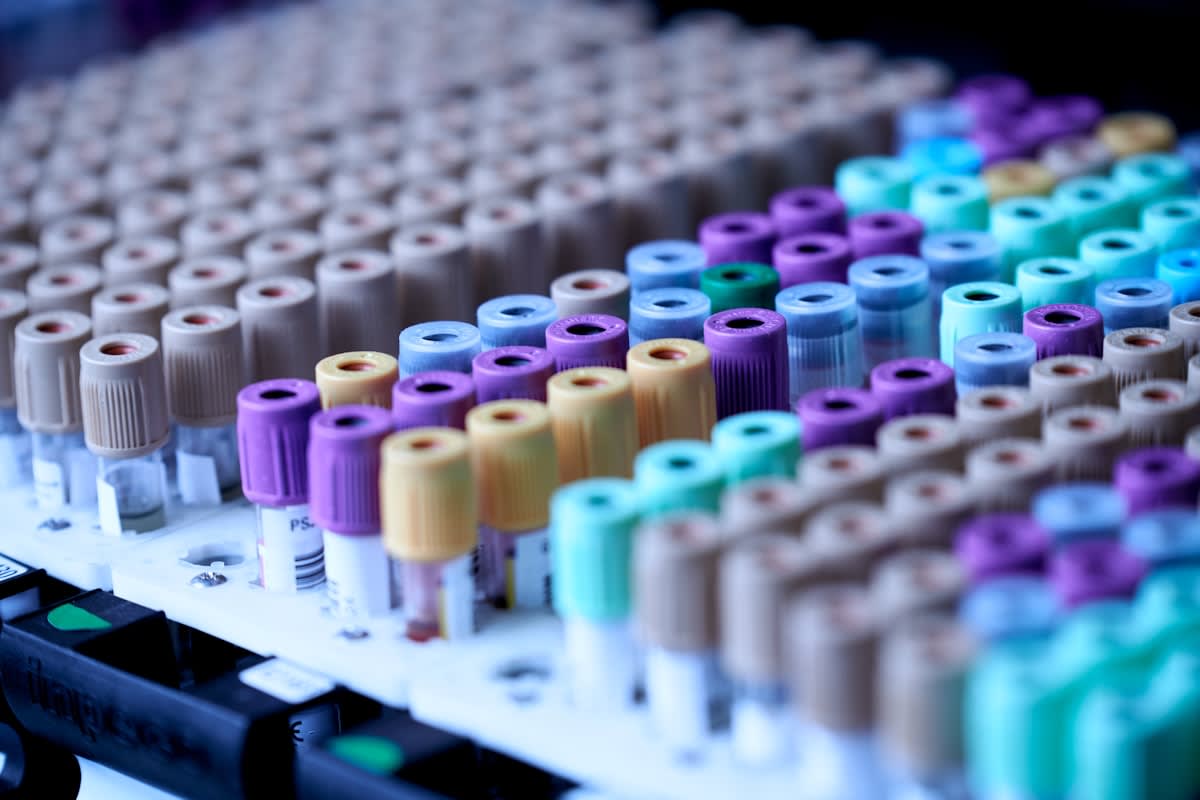
However, the contrarian view suggests that this capability introduces a new systemic risk: the decoupling of biological function from biological context. When we create proteins that have never existed in nature, we are introducing novel agents into complex ecosystems. While the focus remains on therapeutic and industrial utility, the ability to design proteins from scratch means we can create molecules that bypass all known natural defenses. This isn't a reason for alarm, but a call for a new global governance framework for molecular architecture. We need a digital registry for synthetic proteins, similar to how we track chemical precursors.
The Efficiency Leap
The real disruptor isn't the AI itself, but the elimination of the 'trial-and-error' loop. When the cost of failure drops to the price of a compute cycle, the speed of innovation becomes exponential rather than linear.
Looking at the economic data, the synthetic biology market is projected to grow at a CAGR of over 20% through 2030, but these numbers fail to capture the systemic shift. The value is not just in the products sold, but in the compression of the R&D cycle. A pharmaceutical company that can design a lead candidate in two weeks instead of two years doesn't just save money; it fundamentally changes its risk profile. The 'fail fast' mentality of Silicon Valley is finally arriving in the wet lab, turning drug development from a gamble into an engineering discipline.
As we move toward a future of programmable biology, the focus shifts from the tools themselves to the horizons they open.
The Horizon of Programmable Matter
The ultimate destination of de novo design is the creation of cellular machinery that does not exist in any known organism. Imagine synthetic organelles that can synthesize complex medicines inside a human cell or proteins that can act as biological sensors, triggering a response only when a specific pollutant is detected in a river. We are moving toward a world where biology is a programmable substrate. The distinction between 'natural' and 'artificial' becomes irrelevant when both are governed by the same laws of physics and amino acid chemistry.
- Hyper-specific therapeutics that eliminate off-target side effects by targeting unique protein folds.
- Carbon-capture enzymes engineered for maximum efficiency in industrial flue gas environments.
- Self-assembling protein nanomaterials for next-generation electronics and sustainable packaging.
- Custom-designed vaccines that can be updated in hours to match a mutating viral strain.
We must stop viewing the biological world as a finished product. For too long, we treated the genetic code as a sacred text to be read and occasionally edited. De novo protein design teaches us that the code is actually a set of suggestions. By mastering the blueprint, we are transitioning from being curators of the natural world to being its co-authors. The resilience of our future species and our planet will depend on our ability to design molecules that solve the problems evolution was too slow to address.