
The Math of Orbital Decay
LEO is full. While many believe space is an infinite void, the actual usable volume of Low Earth Orbit is a finite resource currently reaching a state of critical saturation. Gravity doesn't forgive. Space is a cage. When a single piece of shrapnel travels at 17,500 miles per hour, it transforms a discarded bolt into a kinetic missile capable of erasing a billion-dollar asset. Physics wins every time.
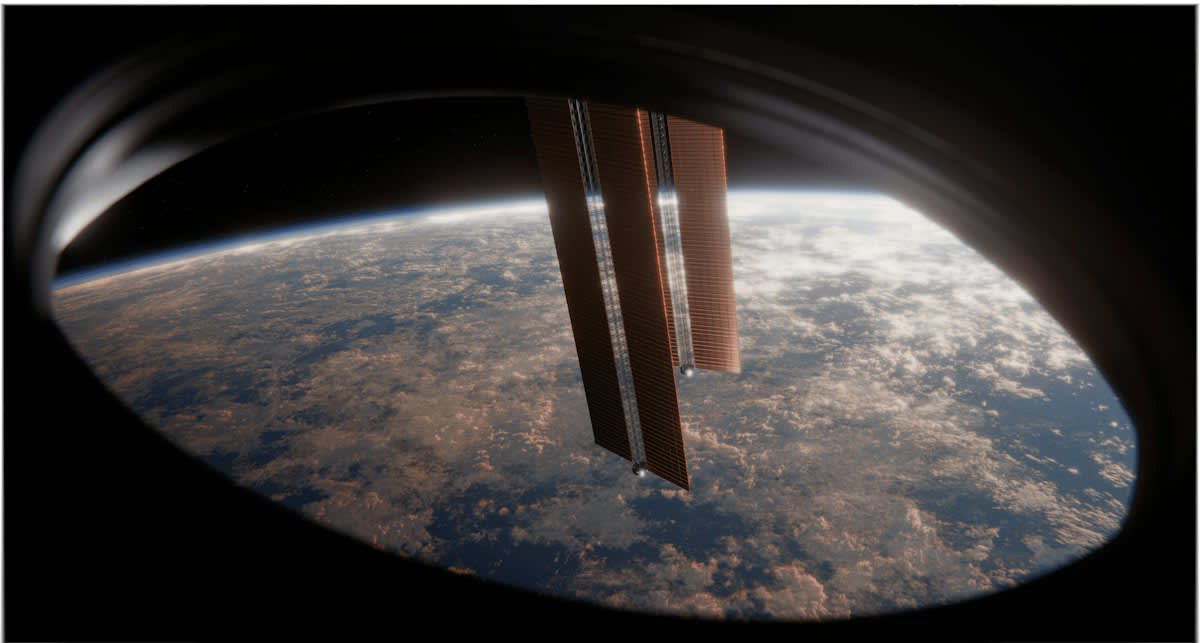
Prerequisites for Orbital Management
Survival requires data. You cannot manage what you cannot track in a terrain where objects move faster than a rifle bullet. Precision is everything. Access to high-fidelity telemetry is a baseline requirement. Without a real-time feed of covariance ellipsoids, any attempt at impact avoidance is mere guesswork. Luck is not a strategy.
- High-resolution radar tracking access (S-band or X-band)
- Real-time Conjunction Data Messages (CDMs)
- Propulsion systems capable of rapid delta-v maneuvers
- Automated impact avoidance software integrated with ground control
- Post-mission disposal (PMD) compliance certification
The Saturation Process
Math dictates doom. The accumulation of debris follows a non-linear growth curve where the birth of new fragments exceeds the rate of atmospheric decay. Numbers don't lie. Satellites fail. Once the density of objects reaches a specific threshold, a single impact triggers a chain reaction that renders entire orbital shells unusable for generations. The fray grows.
| Object Size | Estimated Population | Impact Risk |
|---|---|---|
| 10 cm or larger | ~36,500 | Catastrophic |
| 1 cm to 10 cm | ~1,000,000 | Mission Ending |
| 1 mm to 1 cm | ~130,000,000 | Surface Degradation |
Data proves the weight. NASA estimates that over 36,500 objects larger than 10 centimeters are currently tracked in LEO (Source: NASA Orbital Debris Program Office, 2023). This is only the visible part. The ESA estimates that debris between 1 millimeter and 1 centimeter totals roughly 130 million pieces (Source: ESA Space Debris Office, 2022). These tiny shards act like sandpaper. They erode solar panels and puncture fuel lines.
"The density of objects in low Earth orbit could become high enough that a single impact would set off a cascade of further impacts."— Donald Kessler, NASA Scientist
Operational Steps for Impact Avoidance
- Ingest CDMs from the 18th Space Defense Squadron to identify potential encounters.
- Calculate the Probability of Impact (PoI) using the covariance data of both the asset and the debris.
- Determine the maneuver window based on fuel constraints and mission priority.
- Execute a prograde or retrograde burn to shift the orbital phase and increase the miss distance.
- Verify the new orbital state via ground-based radar to ensure the strike risk is mitigated.
- Update the orbital catalog to inform other operators of the maneuver.
Execution is brutal. A single miscalculation in burn duration can push a satellite into a different debris cloud. Timing is the only currency. If the operator waits too long, the fuel cost for the maneuver spikes. If they move too early, the uncertainty in the debris path grows. Balance is rare.
Operators fight daily. The real clash exists in the disagreement between the US Space Command and private mega-constellation owners over the precision of covariance ellipsoids. Secrecy breeds risk. Data stays hidden. One side demands raw telemetry to avoid a strike, while the other hides that data to protect proprietary orbital maneuvers. Ego costs money.
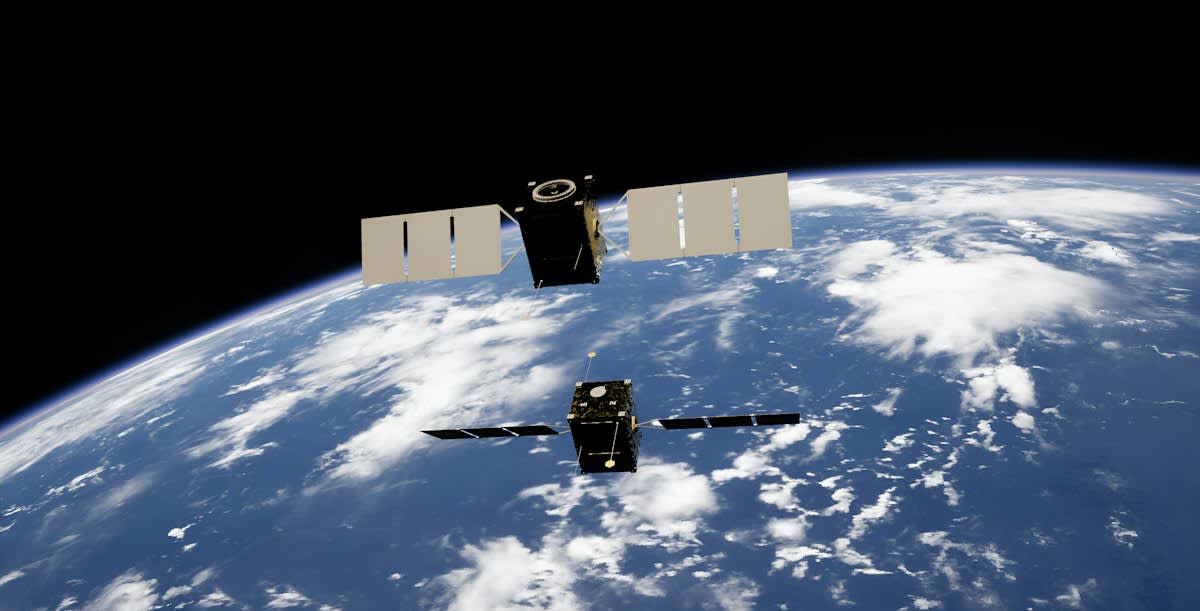
Asia leads now. The Indian Space Research Organisation (ISRO) has developed advanced tracking capabilities to monitor the debris fray across the Southern Hemisphere. Local eyes matter. China acts too. The Chinese National Space Administration (CNSA) implements strict post-mission disposal rules to prevent their spent stages from adding to the weight. Responsibility varies.
This represents a structural break. For decades, the world treated space as a bottomless pit for waste. That era ended. Now, the industry must move toward active debris removal (ADR) to lower the saturation level. The cost of inaction is the loss of the orbital economy. Adapt or vanish.
Common Pitfalls in Debris Mitigation
- Over-reliance on automated avoidance without human oversight for edge-case anomalies.
- Ignoring the 'small debris' problem, which causes cumulative mechanical failure over time.
- Insufficient fuel reserves for end-of-life de-orbiting maneuvers.
- Assuming atmospheric drag will clean the orbit faster than the impact rate creates new debris.
- Failure to share maneuver data with competing operators in the same orbital shell.
Fact-Check & Accuracy Note
The debate over the 'Kessler Syndrome' focuses on the critical density threshold. Some academics argue that atmospheric drag at altitudes below 600km provides a natural cleaning mechanism that prevents a true cascade (Source: Journal of Space Safety Engineering, 2021). However, others point to the rise of mega-constellations as a factor that overrides this natural decay, pushing the saturation point lower and faster.
Opportunity remains. The need to clean the orbital terrain creates a new market for robotic capture and laser ablation technologies. Innovation drives survival. Companies that solve the ADR problem will own the future of space logistics. The void is waiting. Fortune favors the precise.