
The Anatomy of the Cognitive Loop
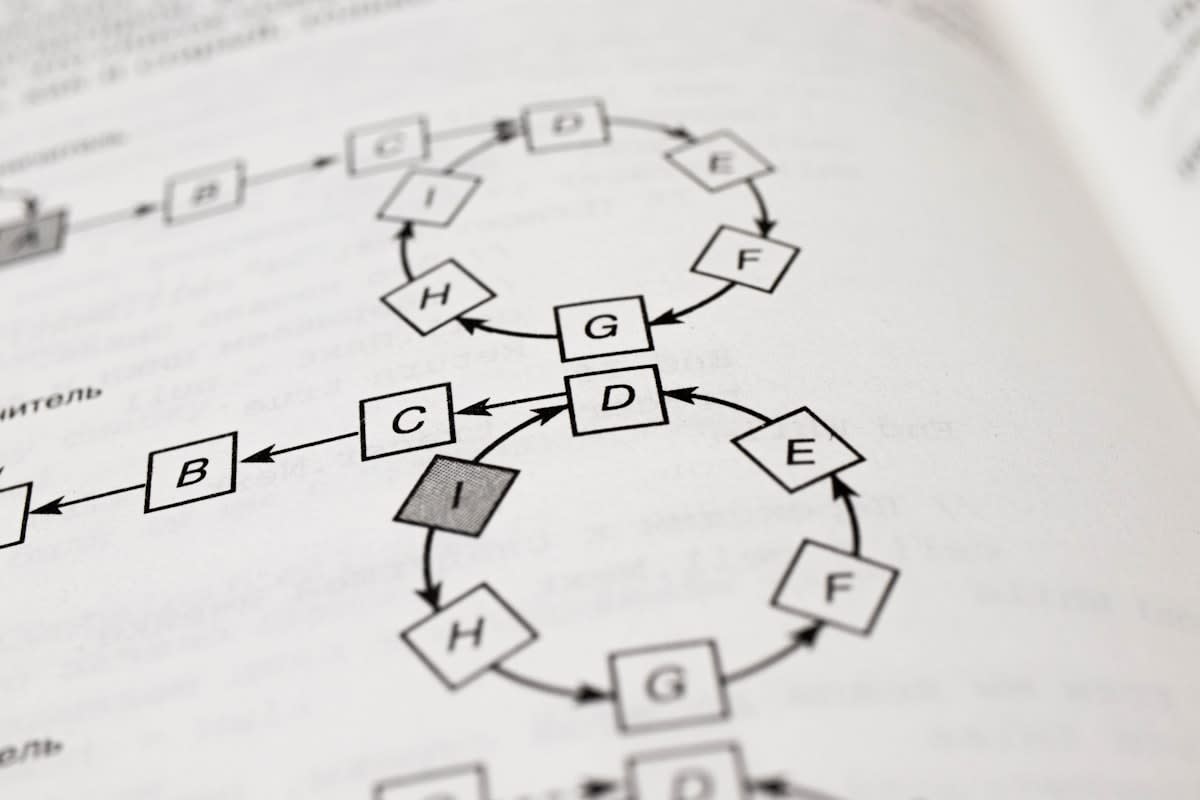
You have been there. The clock is ticking, the stakes are astronomical, and you find yourself obsessing over a single detail while the broader situation collapses around you. This is not a lack of will; it is a biological failure known as cognitive tunneling. When the amygdala hijacks the prefrontal cortex, your brain narrows its focus to a perceived threat or a single potential solution, effectively blinding you to alternative data. You aren't thinking anymore; you are simply orbiting a flawed premise, repeating the same mental loop with increasing intensity.
I have seen this play out across diverse high-pressure environments, from trading floors in Tokyo to emergency response centers in Nairobi. In every instance, the failure isn't a lack of expertise, but an inability to break the loop. The brain convinces itself that more intensity—more effort, more focus, more urgency—will solve the problem. In reality, the intensity is the very thing fueling the tunnel. To escape, you cannot simply 'try harder.' You need a systemic circuit breaker that forces the brain to shift from System 1 intuitive reactions to System 2 analytical processing (Source: Daniel Kahneman, Thinking, Fast and Slow, 2011).
"The ability to rapidly orient oneself to a changing environment is the single most critical factor in high-stakes decision making. If your orientation is flawed, every subsequent action, no matter how precise, is a waste of energy."— John Boyd, Colonel and Military Strategist (Developer of the OODA Loop)
In the field, the debate among practitioners often centers on whether a 'reset' should be internal or external. Some argue for mindfulness and breathwork, while others insist on a physical change of environment. From my experience implementing these protocols, the answer is both. An internal shift without a physical trigger often fails because the body remains in a state of high arousal, signaling to the brain that the 'crisis' is still active. To truly reset, you must shock the system out of its current state to create a window of cognitive plasticity.

Prerequisites for the Reset
A decision reset cannot be performed in a vacuum. If you attempt to apply the protocol while still immersed in the same sensory triggers that caused the loop, you will likely slide back into the tunnel. You need a set of predetermined 'circuit breakers'—physical or environmental triggers that signal to your brain that the current mode of operation is being suspended. Without these, the reset is merely a suggestion to a brain that is currently screaming for survival.
- A physical trigger: This could be standing up, splashing cold water on your face, or stepping out of the room for 60 seconds.
- A sensory shift: Changing the lighting, putting on noise-canceling headphones, or shifting your gaze to a distant object.
- A trusted 'Out-Sider': A colleague or partner authorized to tell you, 'You are looping,' without fear of retribution.
- A time-box: A hard limit (e.g., 3 minutes) during which no decisions are allowed to be made.
The most common mistake I see is the 'hero complex'—the belief that the leader must stay in the fray at all costs. This is a fallacy. Stepping away for ninety seconds to break a cognitive loop is not an abandonment of duty; it is a strategic optimization of the only tool that matters: your judgment.
The Decision Reset Protocol
Once you have triggered your circuit breaker, you must follow a rigid sequence. The goal is to move from the visceral, emotional reaction back to a state of strategic orientation. Do not skip steps. The sequence is designed to dismantle the loop layer by layer, starting with the body and ending with the logic.
- Physiological Interruption: Force a sudden change in your physical state to break the amygdala's grip.
- The Cognitive Audit: Identify the specific premise you are obsessing over and label it as a 'hypothesis' rather than a 'fact'.
- Perspective Zoom-Out: Shift your temporal or spatial frame of reference to diminish the perceived urgency.
- Constraint Re-Evaluation: Question the 'non-negotiables' that are driving the current loop.
- The Low-Fidelity First Step: Commit to a small, reversible action to regain momentum.
Step one, Physiological Interruption, is about biochemistry. When you are looping, your cortisol levels are spiked and your heart rate is elevated. By forcing a physical change—such as the 'physiological sigh' (two quick inhales followed by a long exhale)—you signal to the autonomic nervous system that the immediate threat has passed. This lowers the noise floor of your anxiety, allowing the prefrontal cortex to come back online.
Step two, the Cognitive Audit, requires you to externalize the loop. I recommend writing down the single thought that is repeating in your head. Once it is on paper, it stops being an absolute truth and becomes a data point. Ask yourself: 'What evidence am I ignoring to keep this thought alive?' This creates a wedge between your identity and the decision, reducing the emotional stakes.
Step three is the Perspective Zoom-Out. Cognitive loops thrive on an artificial sense of immediacy. To break this, shift your timeline. Ask: 'Will this specific decision matter in six months? In two years?' By expanding the temporal horizon, you strip the loop of its urgency. Alternatively, imagine you are a consultant hired to solve this problem from the outside. What is the first thing that outside observer would notice that you are currently ignoring?
Step four involves Constraint Re-Evaluation. Most loops are caused by a perceived constraint—'I must finish this by 5 PM' or 'I cannot lose a single dollar on this trade.' Often, these constraints are self-imposed or outdated. By questioning the rigidity of your boundaries, you open up new paths. If the deadline shifted by two hours, would the 'correct' answer change? If the answer is yes, your loop is driven by the clock, not the logic.
Finally, the Low-Fidelity First Step prevents analysis paralysis. The biggest danger after a reset is the fear of making another mistake, which can lead to a new kind of loop. Instead of trying to solve the entire problem, identify the smallest possible action that provides more information. This is the 'probe' phase of the OODA loop. Execute it, gather the data, and let that data drive the next decision.
Common Pitfalls and How to Avoid Them
The most dangerous pitfall is the Sunk Cost Fallacy. You have already spent four hours looping on a specific strategy, and you feel that abandoning it now would be a waste of that effort. This is a cognitive trap. The time is already gone; the only question is whether the next hour will be spent on a failing path or a new one. I have seen executives in Seoul and New York bleed millions of dollars because they refused to 'waste' the initial bad decision by making a second, better one.
Another frequent error is the 'Reset-to-Loop' pipeline. This happens when a practitioner performs the physiological reset but returns immediately to the same environment and the same data set without changing their frame of reference. If you go back to the same screen and the same spreadsheet, your brain will likely snap back into the tunnel within seconds. You must change at least one variable—the room, the person you are talking to, or the medium you are using—to sustain the reset.
Fact-Check & Accuracy Note
The claims regarding System 1 and System 2 thinking are sourced from Daniel Kahneman's 'Thinking, Fast and Slow' (2011). The OODA loop framework is attributed to Colonel John Boyd's strategic theories. The physiological sigh technique is based on current neurobiological research regarding the vagus nerve and heart rate variability. There is ongoing debate in the field of behavioral economics regarding the speed at which a 'reset' can truly override deep-seated cognitive biases in extreme crisis scenarios.
Editorial Note
Editorial Note: This guide is written from the perspective of a Master Practitioner. While the steps are structured, the application should be fluid. The goal is not perfection, but the interruption of a failure state.