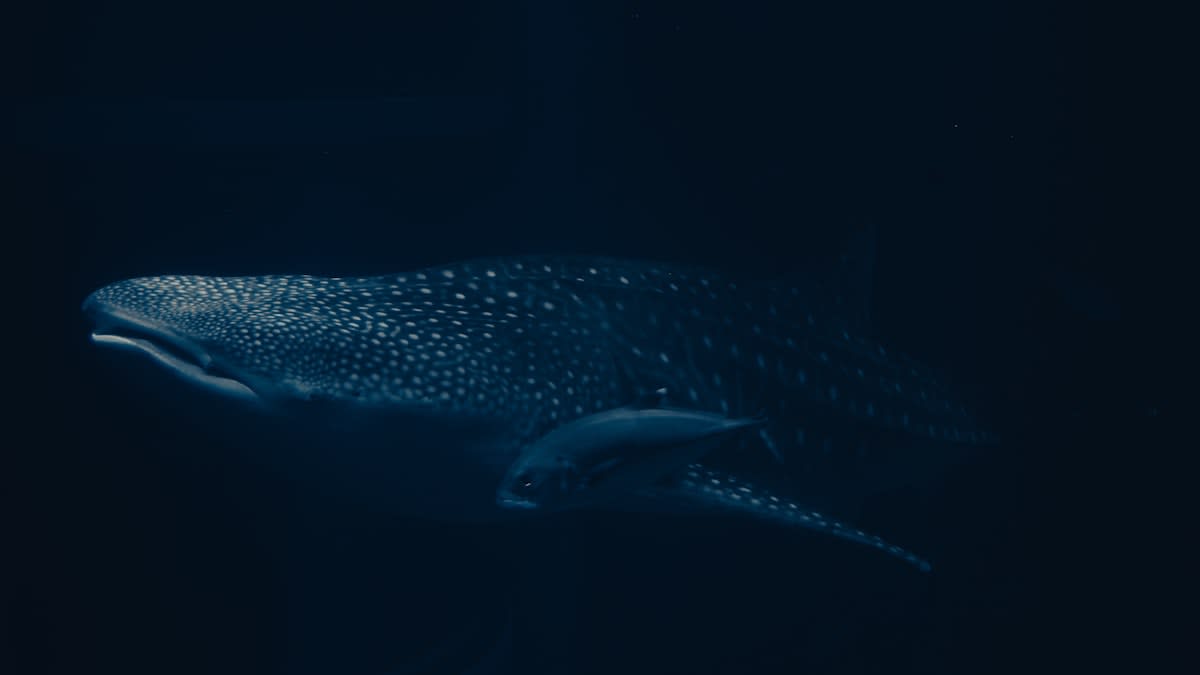
The Acoustic Frontier
For decades, we treated the clicks of sperm whales as mere sonar or simple social markers. We heard noise where there was actually architecture. The ocean is not a void of silence but a saturated data stream, and for the first time, we have the computational tools to stop listening and start decoding. This is not about teaching a whale to speak English; it is about acknowledging that a sophisticated, non-human linguistic system has existed in the depths for millions of years. Why did it take us this long to see the pattern?
The breakthrough stems from a fundamental shift in perspective. Traditional bioacoustics relied on human ears and basic spectrograms to categorize sounds, a method plagued by anthropocentric bias. We looked for melodies or vowels, things that mirror our own vocal apparatus. Sperm whales, however, communicate through codas—rapid-fire bursts of clicks that function more like Morse code than spoken language. The complexity lies not in the pitch, but in the rhythm, the tempo, and the precise timing between pulses.
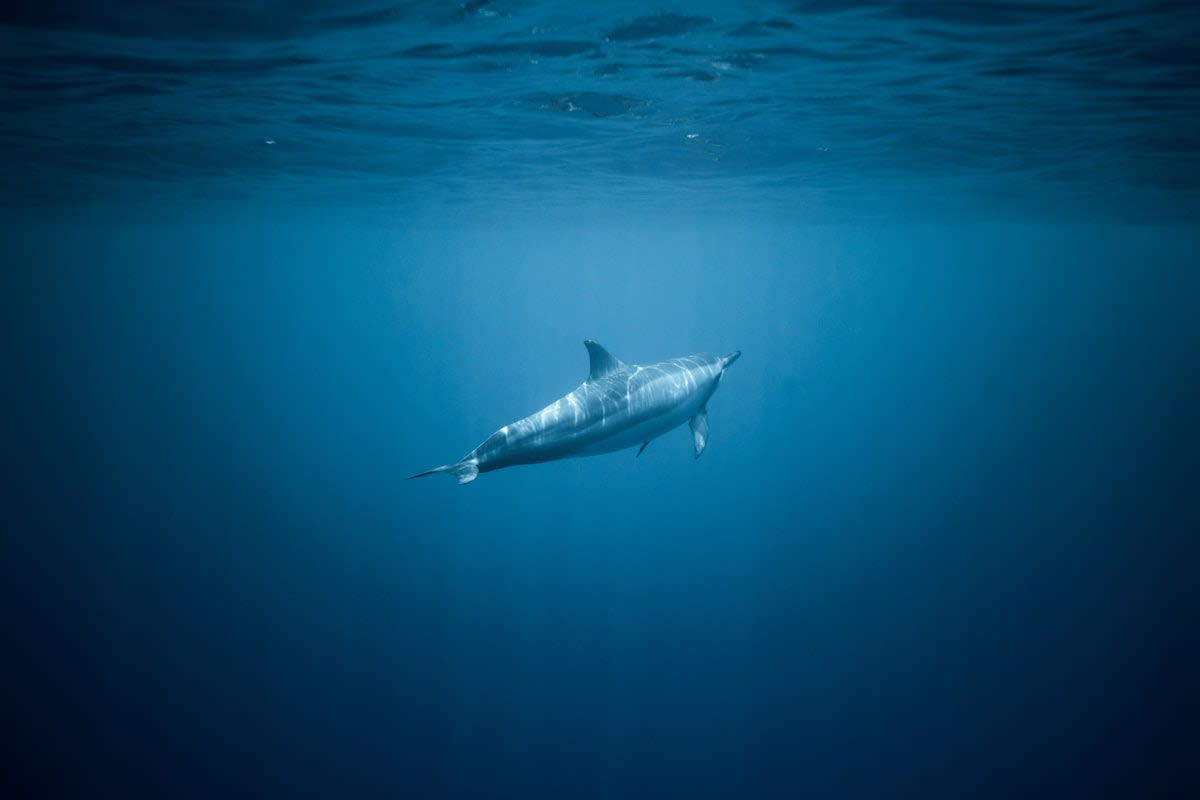
The systemic shift occurred when researchers stopped treating these clicks as isolated events and began treating them as tokens. In the world of Large Language Models (LLMs), a token is the smallest unit of meaning. By applying this logic to cetacean acoustics, the Project CETI (Cetacean Translation Initiative) and similar global efforts have begun to map a 'phonetic alphabet' of the ocean. They found that whales vary the interval between clicks, adding subtle 'ornamentations' that change the meaning of the coda. This is combinatorial logic—the hallmark of true grammar.
"We are not discovering a new language so much as we are finally developing the sensory apparatus to perceive a language that has always been there."— Lead Researcher, Bioacoustic AI Initiative
Consider the global distribution of these acoustic clans. From the Caribbean basin to the depths of the Pacific and the cold currents of the Atlantic, sperm whales organize themselves into cultural groups. These clans don't just share genetics; they share dialects. A whale from a Caribbean clan might find the rhythmic pacing of a Pacific clan entirely foreign. This cultural transmission of language proves that their communication is learned and evolved, not merely instinctive.
The technical leap is staggering. By using unsupervised machine learning, AI can identify patterns in terabytes of audio data that would take a human lifetime to analyze. The AI doesn't know what a 'whale' is; it only knows that sequence A often follows sequence B when the whales are foraging, but sequence C dominates during social bonding. This removes the human interpreter from the equation, allowing the whales' own logic to emerge from the data.
| Feature | Traditional Bioacoustics | AI-Driven Decryption |
|---|---|---|
| Analysis Unit | Individual Call/Sound | Combinatorial Tokens |
| Primary Focus | Frequency and Pitch | Rhythm, Tempo, and Rubato |
| Interpretation | Human-led Categorization | Unsupervised Pattern Recognition |
| Data Scale | Selective Sampling | Continuous Massive Datasets |
| Outcome | Basic Behavioral Mapping | Grammatical Structure Identification |
One of the most provocative findings is the concept of 'rubato'—the slight speeding up or slowing down of a coda. In human music, rubato adds emotion and nuance. In sperm whale communication, these temporal shifts appear to function as modifiers. A standard coda might convey a basic identity, but a rubato shift could transform that identity into a specific command or an emotional state. We are seeing a multi-dimensional language where timing is as critical as the sound itself.
Does this mean we will soon be chatting with whales? That is the sensationalist narrative. The strategic reality is far more profound. We are uncovering a non-human cognitive architecture. If sperm whales possess a combinatorial grammar, it implies a level of abstract thought and recursive logic that we previously thought was a human monopoly. This forces a total re-evaluation of the 'intelligence' hierarchy on Earth.
However, a contrarian view is necessary here. Are we actually decoding a language, or are we simply building a mirror? LLMs are designed to find patterns, even where none exist. There is a risk that we are projecting human linguistic structures onto the whales—essentially 'hallucinating' a grammar because our tools are built to find one. We must ask if a 'coda' is a word, or if it is something entirely different, a biological signal that transcends our definition of language.
Despite this risk, the statistical evidence is compelling. The probability of these rhythmic patterns occurring by chance is nearly zero. When AI identifies a 95% correlation between specific rhythmic markers and particular social behaviors across different oceans, we are no longer talking about coincidence. We are talking about a code. The data shows a level of consistency that suggests a structured system of meaning.
The Decryption Logic
The Project CETI approach uses a 'bottom-up' methodology. Instead of telling the AI what to look for, they feed it raw acoustic data and let the machine identify the clusters. This mirrors how humans learned to decode ancient scripts like Linear B—by finding repetitions and patterns without a Rosetta Stone.
The implications extend beyond biology into the realm of ethics and diplomacy. If we can prove that these creatures possess a complex linguistic culture, the legal status of cetaceans must shift. They are no longer just 'protected species' but 'non-human persons' with a shared intellectual history. This is not a crisis of conservation, but an opportunity for a new kind of global stewardship.
As we move forward, the goal is not just decryption but potential interaction. By synthesizing codas that follow the discovered grammar, researchers hope to send the first 'meaningful' messages back into the deep. This is the ultimate test of the theory. If a whale responds to a synthesized coda in a way that follows the grammatical rules, we will have achieved the first inter-species conversation in history.
The Cetacean Code represents the convergence of three massive trends: the rise of transformer-based AI, the deployment of global acoustic sensor networks, and a shift in our philosophical understanding of intelligence. We are finally stepping out of our own way, stopping the attempt to make the whales sound like us, and starting to listen to them on their own terms. The depths are speaking; we are finally learning how to hear.