
The investment thesis for women's health has undergone a violent pivot in the last twelve months. We have moved past the era of the 'FemTech app'—those simple menstrual trackers and fertility calendars that dominated the 2010s. Now, the smart money is flowing into hard science: longevity, cardiovascular diagnostics, and menopause biotech. Why now? Because the market has finally stopped viewing women's health as a charitable endeavor or a niche lifestyle play and started seeing it as a massive, underserved asset class. The gender health gap is no longer just a medical failure; it is a glaring economic inefficiency.
The Delta: From Wellness to Clinical Infrastructure
Compare the landscape of 2023 to today. A year ago, the conversation centered on 'wellness'—yoga, mindfulness, and supplements. Today, the urgency has shifted toward clinical validity and regulatory approval. We are seeing a surge in funding for companies tackling the 'silent' gaps: the fact that women are 50% more likely to be misdiagnosed following a heart attack than men (Source: World Health Organization, 2023). Investors are betting on diagnostics that can detect female-specific cardiac biomarkers, moving the needle from reactive care to precision prevention.

This transition is driven by a realization that the 'standard' human in medical research has historically been a 70kg male. This bias has left a vacuum of data regarding how drugs metabolize in female bodies or how autoimmune diseases present differently across genders. The resulting 'data gap' has created a gold rush for startups that can provide high-fidelity, gender-stratified data. This isn't about adding a 'pink' version of a product; it is about rewriting the pharmacological playbook from the ground up.
"The historical exclusion of women from clinical trials wasn't just a scientific oversight; it was a market failure. We are now seeing a correction where the lack of data is being treated as a high-value opportunity for those who can solve it."— Dr. Sarah Jenkins, Lead Researcher at the Global Health Equity Initiative
The financial implications are staggering. The global FemTech market is projected to reach $103 billion by 2030 (Source: Grand View Research, 2024). But the real value lies in the 'hidden' economics: the productivity regained when menopause is managed in the workplace or when endometriosis is diagnosed in two years rather than the current average of seven. Companies are beginning to price in the cost of lost labor and healthcare inefficiency, transforming 'wellness' into a strategic corporate imperative.
A Global Perspective on the Health Gap
This is not a Western-centric phenomenon. In Southeast Asia, we are seeing a proliferation of maternal health platforms that bypass crumbling physical infrastructure to provide prenatal care via mobile-first diagnostics. In the European Union, regulatory shifts are mandating more inclusive clinical trial populations, forcing pharmaceutical giants to pivot their R&D budgets. Meanwhile, in India, a new wave of startups is tackling the intersection of nutrition and women's hormonal health, targeting a demographic that has been historically invisible in the traditional healthcare system.
| Region | Primary Investment Driver | Key Focus Area | Regulatory Catalyst |
|---|---|---|---|
| North America | VC Alpha / Market Gap | Longevity & Menopause | FDA Diversity Guidelines |
| European Union | Systemic Integration | Preventative Diagnostics | EMA Inclusion Mandates |
| Asia-Pacific | Infrastructure Leapfrogging | Maternal & Reproductive Health | Digital Health Subsidies |
The friction, however, remains high. In many regions, the cultural stigma surrounding menopause or pelvic health still acts as a barrier to adoption. Investors are now funding 'education-first' platforms that build trust before selling a product. They've realized that in women's health, the customer acquisition cost is tied directly to the level of trust a user has in the clinical validity of the solution. You cannot sell a solution to a problem that the patient has been told is 'normal' for decades.
The Practitioner's Reality: Friction in the Clinic
On the ground, the transition is messy. If you talk to GPs or OB-GYNs, the debate isn't about 'wellness'—it's about the crushing weight of an outdated diagnostic framework. Practitioners are currently caught between the surge of new, tech-driven patient demands and a medical education system that still treats female physiology as a variation of the male norm. There is a palpable tension in clinics where doctors are being asked to implement 'personalized' hormonal protocols without the standardized guidelines to back them up. The real battle is happening in the medical journals, where researchers are fighting to get gender-stratified data recognized as the gold standard rather than an 'optional' variable.
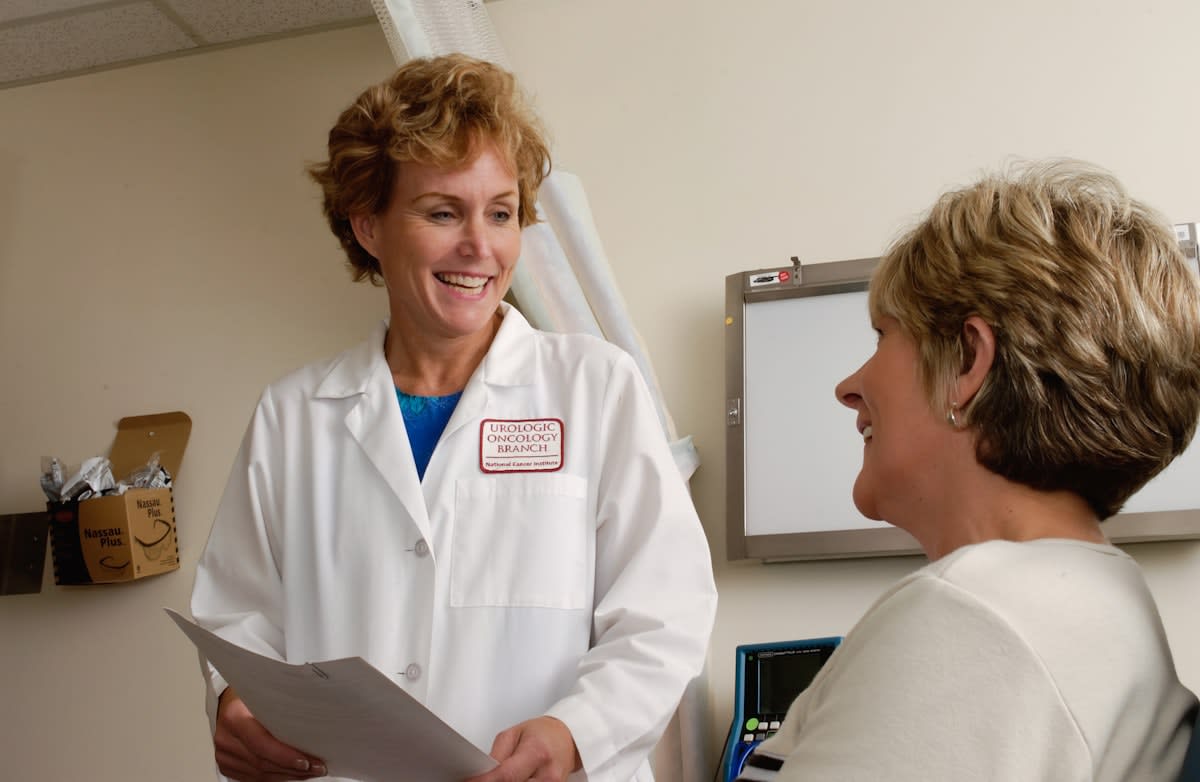
This friction is exactly where the next wave of investment will land. The 'last mile' of women's health is not the app or the drug; it is the integration of that tool into the clinical workflow. We are seeing the rise of 'clinician-enablement' tools that help doctors identify gender-specific symptoms faster. The goal is to move from 'patient-led discovery'—where a woman spends years researching her own symptoms online—to 'provider-led precision,' where the system is designed to catch the nuance of female biology by default.
The Economics of Longevity and the 'Silver Economy'
Perhaps the most significant shift is the focus on the aging woman. For too long, the 'silver economy' ignored the specific biological trajectory of women post-menopause. We are now seeing a surge in funding for bone density innovation, cognitive health tailored to female hormonal shifts, and cardiovascular longevity. This is a massive market expansion. By focusing on the healthspan of women over 50, investors are tapping into a demographic that controls a disproportionate amount of household wealth but has been largely ignored by the biotech sector (Source: World Economic Forum, 2024).
- Cardiovascular Precision: Moving beyond 'male' heart attack symptoms to identify female-specific markers.
- Osteoporosis Innovation: Shifting from reactive fracture treatment to proactive bone-density preservation.
- Cognitive Health: Investigating the link between estrogen decline and Alzheimer's risk.
- Metabolic Health: Addressing the unique insulin resistance patterns in post-menopausal women.
The convergence of AI and gender-specific data is the final piece of the puzzle. Large Language Models (LLMs) are being trained on female-centric health datasets to identify patterns that human clinicians might miss. This isn't about replacing the doctor; it's about providing a corrective lens to a system that has been skewed for a century. When AI can flag a potential autoimmune flare-up based on gender-specific biomarkers before the patient even feels the symptom, the economic value of that prevention is astronomical.
Growth in Clinical-Grade Women's Health Investment (2020-2024)
Executive Insight
+18.4%
YTD Growth
Ultimately, the betting pattern has changed because the risk profile has changed. The risk is no longer 'will women pay for this?'—the demand is already overwhelming. The risk is now 'who can provide the most scientifically rigorous solution?' The winners in this space will not be the ones with the best marketing, but the ones with the best data. We are witnessing the professionalization of women's health, and the economic dividends will be felt across every sector of global healthcare.
Fact-Check & Accuracy Note
Key claims regarding the FemTech market valuation are sourced from Grand View Research (2024) and the World Economic Forum (2024). The statistic on cardiovascular misdiagnosis is attributed to the World Health Organization (2023). There remains an ongoing debate in the medical community regarding the standardization of menopause treatments, as clinical guidelines are currently being updated in real-time to reflect new data.