The Infrastructure of Living Systems
Urban greenery is often treated as a cosmetic addition rather than a functional utility. To build a sanctuary that actually works, we must stop viewing plants as decor and start treating them as land-based removals infrastructure. The shift in the industry is evident in the GHG Protocol’s Land Sector and Removals Guidance released in June 2026, which moves the needle from vague ambition to implementation. This guidance, building on the January 2026 Land Sector and Removals Standard (LSRS), demands that organizations move toward credible, evidence-based action. If your urban sanctuary does not have a measurable impact on carbon removals or biodiversity, it is merely a garden, not a sanctuary.
Strategic Shift
The objective is not just 'greenery' but the creation of a system that accounts for land-based emissions and removals with clinical precision, as outlined in the 2026 GHG Protocol updates.
Prerequisites for Implementation
Before a single seed is planted, the practitioner must establish a framework of accountability and environmental data. You cannot manage what you do not measure. This requires a deep dive into the specific land-sector emissions of the site and an understanding of the local thermal stressors. In regions like Illinois, where heat domes create prolonged periods of extreme humidity and temperature, the sanctuary must be designed to alleviate the strain on the local electric grid. The goal is to create a biological buffer that reduces the reliance on mechanical cooling.
- Compliance with the GHG Protocol Land Sector and Removals Guidance (June 2026).
- Baseline thermal mapping to identify heat-dome vulnerability.
- Ecological audit of local foundation species to avoid inappropriate restoration paradigms.
- Alignment with regional energy guidelines, such as the 78-degree Fahrenheit indoor temperature standard.
The Execution Framework
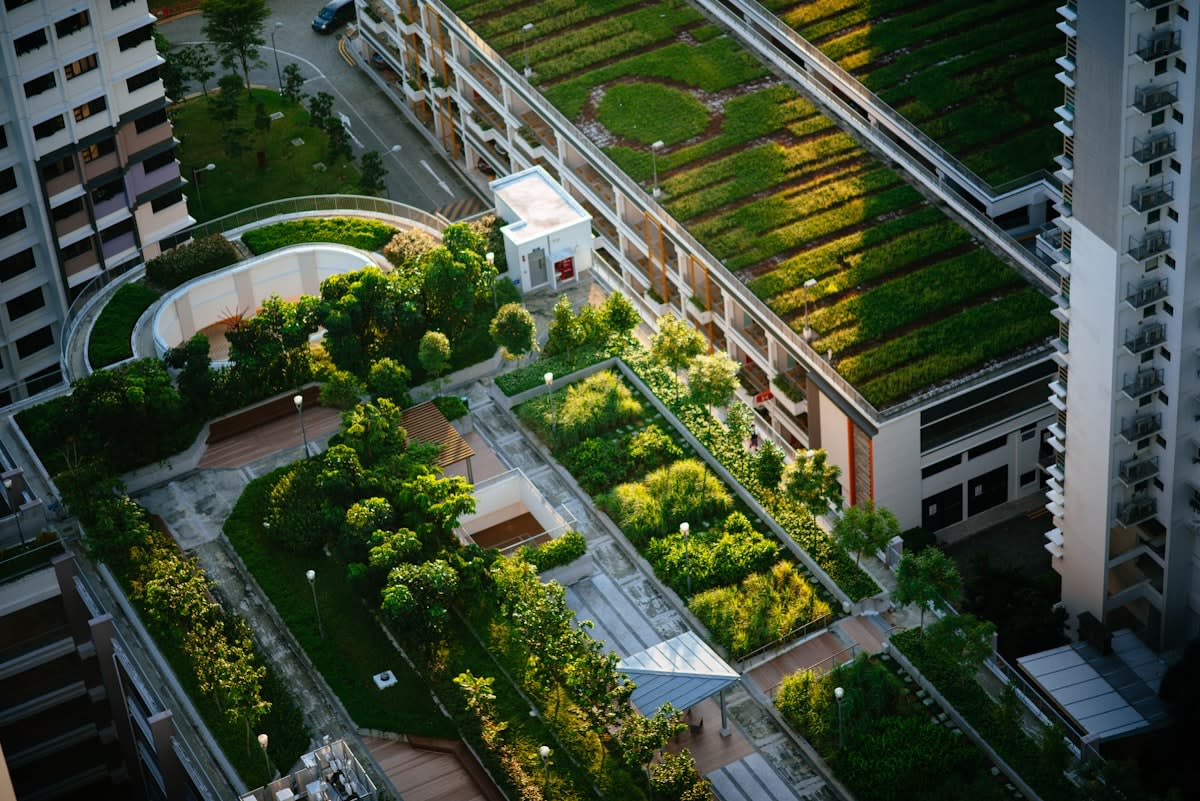
The following steps move the project from a conceptual drawing to a functioning ecological asset. We avoid the typical AI-driven 'planting list' and instead focus on systemic integration. Each phase is designed to maximize the synergy between carbon sequestration, thermal regulation, and biodiversity.
- Establish a Carbon Removal Baseline: Utilize the January 2026 Land Sector and Removals Standard (LSRS) to quantify the current emissions of the urban plot. This ensures that the sanctuary is not just offsetting but actively removing carbon through evidence-based land use.
- Deploy Thermal Mitigation Zones: Design the sanctuary to lower the ambient temperature of surrounding buildings. Following the Department of Energy and Energy Star recommendations, aim for a biological cooling effect that allows indoor thermostats to remain at or above 78 degrees Fahrenheit without sacrificing comfort. This reduces peak electricity demand, a critical issue highlighted by the Illinois Commerce Commission during extreme heat waves.
- Select Foundation Species via Temperate Paradigms: Avoid the trap of importing 'tropical' biodiversity solutions. As seen in the failure of applying tropical coral paradigms to the Mediterranean Sea, where slow-growing species like Corallium rubrum were ignored in favor of fast-growing acroporids, urban sanctuaries must prioritize local, temperate foundation species. Use the EU's 2024 Nature Restoration Law framework to guide habitat recovery.
- Integrate Sustainable Food Systems: Transform the sanctuary into a tool for education and community impact. Mirror the Slow Food Negroni Week Fund model by linking biodiversity to local food systems. This involves creating edible landscapes that support local pollinators and provide a platform for cultural storytelling and sustainable change.
When selecting species, the practitioner must resist the urge to prioritize rapid growth over ecological stability. The Nature Restoration Law (EU, 2024) has committed approximately 100 billion euros to habitat recovery through 2050. This massive investment underscores the shift toward policy-driven practice. However, the danger lies in the 'perverse incentive' to deploy existing tropical solutions to temperate systems. In an urban sanctuary, this manifests as planting exotic, fast-growing ornamentals that provide no real support for local fauna and require excessive water, thereby undermining the sanctuary's purpose.
Systemic Metrics for Success
A sanctuary's success is measured by its ability to function as a biological utility. We look at the delta between the sanctuary's presence and the surrounding urban heat island. For instance, if the surrounding area is experiencing a heat dome, the sanctuary should actively lower the ambient temperature, reducing the need for residents to fight the 78-degree rule. This is not a vague 'feeling' of coolness but a measurable reduction in kilowatt-hours used for air conditioning.
| Metric | Traditional Green Space | Bio-Diverse Urban Sanctuary |
|---|---|---|
| Carbon Accounting | Estimated/Vague | GHG Protocol LSRS (Jan 2026) Compliant |
| Species Selection | Aesthetic/Ornamental | Temperate Foundation Species (EU 2024 Law) |
| Thermal Goal | Passive Shade | Grid-Strain Reduction (DOE 78-degree rule) |
| Community Role | Passive Recreation | Sustainable Food System Integration |
The integration of community-led biodiversity is the final layer of the sanctuary. The Slow Food approach demonstrates that biodiversity is not just a biological metric but a cultural one. With 352 applications for educational scholarships and 92 for innovation awards in their 2026 fund, there is a clear global demand for beverage and food professionals to lead biodiversity transitions. An urban sanctuary should provide the raw materials—herbs, fruits, and pollinators—that fuel this transition, turning a plot of land into a hub for sustainable hospitality and community-based food systems.
Common Pitfalls
The most frequent failure in urban sanctuary design is the application of 'tropical paradigms' to temperate zones. This occurs when designers prioritize the appearance of lush, fast-growing greenery over the slow, steady growth of native foundation species. As noted in the research regarding Mediterranean coral restoration, scaling up restoration faster than the ecological understanding required to guide it leads to failure. In an urban context, this means planting species that cannot survive a local heat dome or those that do not support the local insect population.
Another critical error is the neglect of the energy-water nexus. A sanctuary that requires massive irrigation during a heat wave to maintain its 'look' actually increases the strain on urban infrastructure. The goal is to align with the Illinois Commerce Commission's objective: keeping the public safe and cool without putting them at financial risk. A sanctuary that increases water costs or requires high-energy maintenance is a liability, not an asset.
"The focus is shifting from ambition to implementation, and from broad commitments to credible, evidence-based action."— GHG Protocol Guidance (June 2026)