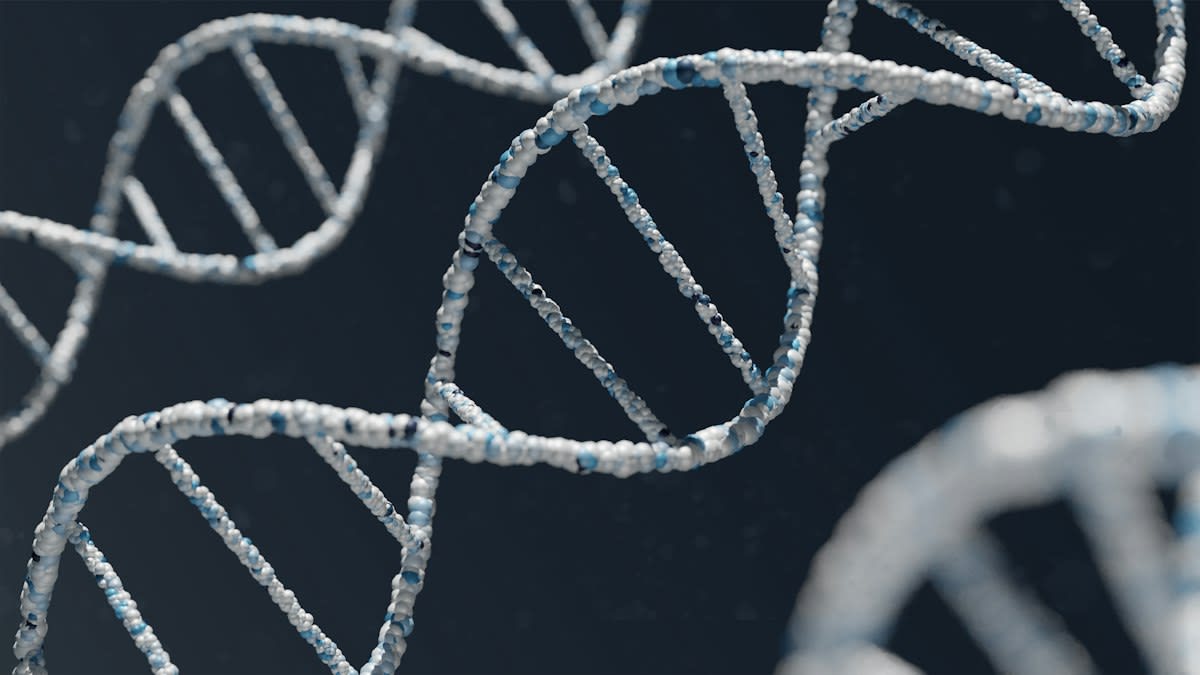
Why do we still trust the calendar? We treat the date of our birth as an absolute truth, a rigid anchor for health expectations. It is a fiction. The molecular weight of our environment and our choices carves a different, more honest timeline into our cells, often leaving the chronological date in the dust. This is the reality of epigenetic drift. It is the fraying of the genetic script, where the gap between how old you are and how old you feel is actually a measurable, chemical distance.
The Lifestyle Delta: Lessons from Seoul
The drift is not a slow, inevitable slide. It is a collision of habit and biology. A prospective Korean cohort study provides the proof. Researchers tracked biological aging over an eight-year window and found that poor or worsening lifestyle patterns directly linked to higher epigenetic age acceleration (Source: Bioengineer, 2026). The data suggests that we are not just aging; we are accelerating. When the default habits of a population shift toward the negative, the biological clock doesn't just tick—it sprints.
This shift happened with startling precision over the last few months of research. While we previously viewed aging as a generalized decay, the latest data isolates the triggers. In these Korean cohorts, the acceleration was not random. It was a direct response to the environment. Does this mean we can reverse the grip of time? The evidence suggests that while the drift is aggressive, it is also reactive.
Viral Scarring and the Three-Year Spike
Viruses do more than make us sick. They leave a molecular footprint. Recent analysis into the SARS-CoV-2 spike protein reveals a mechanism of aging acceleration through the activation of NF-κB (Source: Preprints.org, 2026). This isn't a temporary inflammation. It is a fundamental shift in the epigenetic state. Data shows that the three-year period following a COVID-19 infection significantly increased the progress of aging, specifically affecting markers like DNAmGrimAge (Source: Preprints.org, 2026).
"The set of DNAmGrimAge showed that the 3-year period after contracting COVID-19 significantly increased the progress of aging."— MK Gupta and R Vadde, Researchers cited in Preprints.org
The drift here is nuanced. Not every clock agrees. While Horvath's clock identified a slight acceleration, the GrimAge and PhenoAge clocks showed a much more aggressive surge (Source: Preprints.org, 2026). This discrepancy highlights a critical tension in the field: which clock actually tells the truth? The reality is that different clocks measure different types of decay—some track the cellular engine, others track the wear and tear on the chassis.
This is where the invisible frictions of the industry emerge. In the labs, there is a quiet, bitter war over clock validation. Practitioners argue over whether a clock that predicts mortality (like GrimAge) is more valuable than one that predicts biological age (like Horvath). This isn't just academic. It determines how we treat patients. If a doctor sees a 'GrimAge' spike post-COVID, they aren't looking at a number; they are looking at a heightened risk of death, regardless of whether the patient is 30 or 60.
The Weight of the Air: Particulate Matter
Breath is the primary interface between the body and the world. In cities where the air is a thick soup of particulates, the biological clock is forced to accelerate. Research focusing on myocardial infarction survivors shows that chronic exposure to PM 2.5 and PM 10 promotes the acceleration of blood-based epigenetic aging markers, specifically DNAmAge (Source: NHSJS, 2026). The air we breathe is essentially a catalyst for epigenetic drift.
| Trigger | Primary Marker Affected | Observed Effect | Source |
|---|---|---|---|
| PM 2.5/10 Exposure | DNAmAge | Acceleration of blood-based aging | NHSJS, 2026 |
| SARS-CoV-2 Spike | DNAmGrimAge | Significant aging progress (3-year window) | Preprints.org, 2026 |
| Poor Lifestyle | Epigenetic Age | Acceleration over 8-year cohort | Bioengineer, 2026 |
This is a mechanical failure of the body's defense. Particulate matter doesn't just clog lungs; it enters the molecular trajectory of aging. For those with pre-existing cardiovascular vulnerabilities, the effect is compounded. The drift becomes a downward spiral where the environment hollows out the biological reserve, making the person functionally older than their peer in a cleaner city.
Precision Drift: Organ-Specific Clocks
We are finally moving past the 'whole-body' average. The new trend is proteomic clocks that reveal organ-specific signatures. The brain, for instance, does not age as a single unit. Research now identifies specific markers for oligodendrocytes (Plp1, Mbp), neurons (Snap25, Syt1), and astrocytes (Aqp4, Slc1a2) to pinpoint exactly where the drift is happening (Source: bioRxiv, 2026). This means your brain could be 70 while your heart is 50.

This granular view changes everything. It allows us to see the suture points where specific environmental insults hit specific tissues. By regressing out niche identity and library size, researchers can now identify 'hotspots' of aging within a single organ section (Source: bioRxiv, 2026). We are no longer guessing based on a birth date; we are mapping the actual terrain of decay.
Fact-Check & Accuracy Note
The current academic debate centers on the 'universality' of these clocks. While GrimAge and PhenoAge show strong correlations with mortality, critics argue that 'epigenetic drift' is too variable across different ethnicities and environments to serve as a diagnostic gold standard. The Korean cohort study is a critical piece of evidence in arguing that lifestyle-driven drift is a global, rather than localized, phenomenon.
Is the birth date irrelevant? Almost. In a world where a virus can add years to your biological age in a three-year window, or where PM 2.5 can accelerate your DNAmAge, the calendar is a blunt instrument. We are entering an era of biological auditing. The goal is no longer to stop the clock—that is a fantasy—but to manage the drift. The opportunity lies in identifying the acceleration early and applying the right biological brakes before the fraying becomes permanent.