The Biological Tax of Hyper-Stimulation
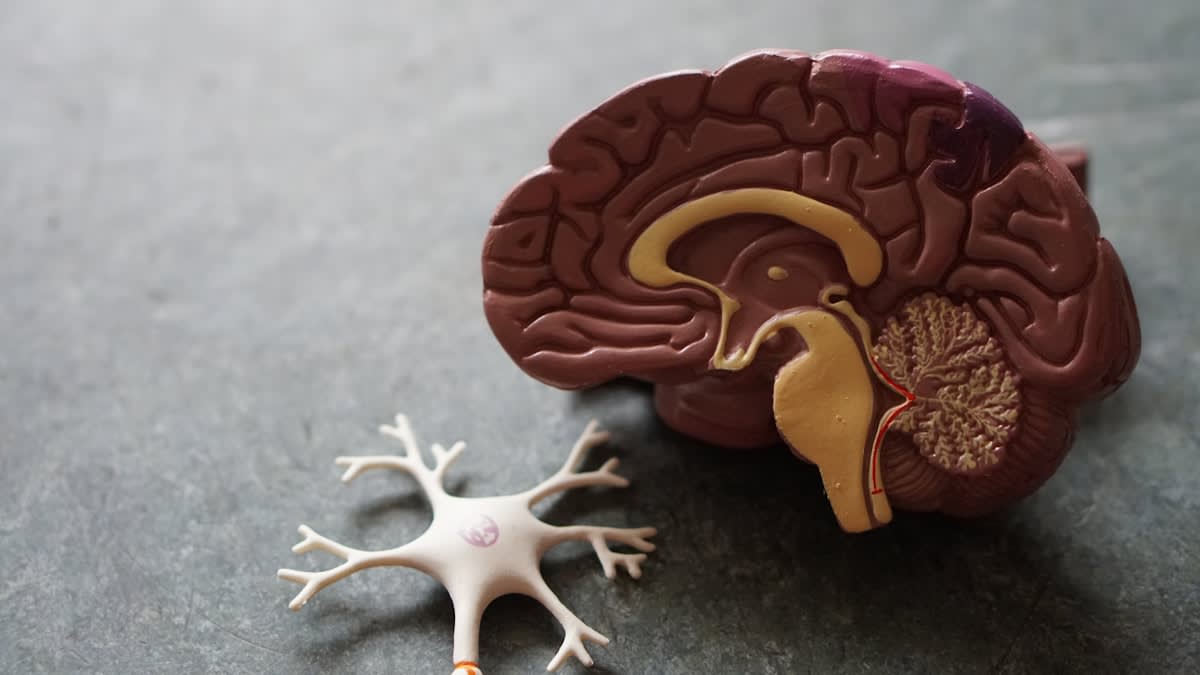
Most high-performers believe their inability to focus is a failure of willpower. It is not. It is a biological adaptation. When we saturate our environment with high-frequency dopamine triggers—infinite scrolls, instant notifications, and the constant novelty of the digital stream—we shift our neural baseline. The brain seeks homeostasis, and in response to an overabundance of dopamine, it downregulates its receptors to protect itself. This leaves you in a state of chronic under-stimulation where the high-effort, high-reward nature of deep work feels physically painful or impossibly boring. You aren't lazy; you are chemically imbalanced by design (Source: Stanford University, 2021).
Consider the pleasure-pain balance. Every spike of dopamine is inevitably followed by a dip below the baseline, a phenomenon known as the opponent-process theory. In a world of constant stimulation, we spend more time in the 'dip' than in the 'peak,' leading to a persistent sense of restlessness and cognitive fragmentation. Whether you are a quantitative analyst in London or a software architect in Bangalore, the mechanism is identical: the more you chase the quick hit, the more you erode your capacity for the slow burn of complex problem solving.
"The problem is that we have access to dopamine-triggering stimuli that are far more potent than anything our ancestors encountered. We are essentially living in a dopamine pharmacy, and our brains are struggling to keep up."— Dr. Anna Lembke, Psychiatrist and Chief of the Stanford Addiction Medicine Dual Fellowship
To fix this, we don't need a new productivity app or a more rigid calendar. We need a Focus Architecture. This is a systemic re-engineering of your relationship with reward. By intentionally inducing a period of low-stimulation, we allow the brain to upregulate its dopamine receptors, effectively lowering the threshold for what feels rewarding. Suddenly, the act of writing a complex technical specification or analyzing a market trend becomes satisfying again because the brain is no longer competing with the artificial intensity of a social media feed.
Prerequisites: The Setup for Success
You cannot engineer a reset while remaining immersed in the triggers that caused the dysfunction. Before initiating the protocol, you must establish a baseline of control. This is not about total asceticism, but about creating a controlled environment where the biological reset can actually take hold. If you attempt a reset while keeping your phone on your desk, you are fighting a losing battle against an industry designed to capture your attention.
- A dedicated analog workspace: A physical area devoid of screens, used exclusively for thinking and planning.
- Digital boundaries: Installation of site-blockers (e.g., Cold Turkey or Freedom) to eliminate 'reflexive' browsing.
- A Boredom Window: A scheduled 30-minute block daily where no input is allowed—no music, no podcasts, no reading.
- The Baseline Log: A simple notebook to track when the urge to switch tasks occurs during deep work sessions.
From a practitioner's perspective, this is where most people fail. They treat the reset as a software update—something that happens in the background while they continue their normal routine. In reality, it's more like a physical rehabilitation. I have seen executives in Tokyo and creative directors in New York attempt this, only to relapse within 48 hours because they underestimated the visceral discomfort of boredom. The debate among performance coaches often centers on 'micro-habits' versus 'hard resets,' but for those with severe cognitive fragmentation, the hard reset is the only way to break the loop.
The 5-Step Engineering Protocol
- The Stimulus Audit: Spend three days tracking every 'micro-hit' of dopamine. Note every time you check your phone, open a new tab, or switch tasks. The goal is to identify your primary triggers. Are they emotional (stress-induced) or habitual (boredom-induced)?
- The Fasting Phase (Days 1-7): Eliminate all non-essential high-dopamine activities. This includes social media, short-form video, gaming, and excessive sugar. The focus is on 'low-arousal' activities: walking, reading physical books, and deep conversation. You will feel a period of intense restlessness; this is the biological signal that your receptors are beginning to reset.
- The Reintroduction Layering (Days 8-21): Slowly reintroduce tools based on utility, not pleasure. If you need LinkedIn for business, allocate a strict 30-minute window. If you use music for focus, switch from high-tempo playlists to lo-fi or brown noise. The key is to decouple the tool from the compulsive urge.
- Environment Hardening: Implement a 'Physical Firewall.' Your phone lives in another room during work hours. Your computer has only the tabs necessary for the current task. Use a physical timer to create a 'sprint' mentality, training the brain to sustain effort for a fixed duration without seeking a reward.
- The Maintenance Cycle: Establish a weekly 'Digital Sabbath.' For 24 hours every week, disconnect entirely from all digital interfaces. This prevents the gradual creep of stimulation and ensures your baseline remains low enough to make deep work feel rewarding.

The transition from Phase 2 to Phase 3 is the most critical juncture. This is where the Rebound Effect typically occurs. After a week of low stimulation, the brain is hungry for a hit. If you jump straight back into your old habits, the surge of dopamine will be even more intense, potentially leading to a more severe crash. The reintroduction must be surgical. You are not returning to your old life; you are designing a new one where you control the tools, rather than the tools controlling you.
Common Pitfalls and How to Avoid Them
The most frequent error is the All-or-Nothing Fallacy. Practitioners often believe that a single 'slip'—checking Instagram for five minutes—voids the entire reset. This mindset triggers a shame response, which ironically creates stress that the brain tries to soothe with more dopamine. Instead, treat a slip as data. Why did it happen? Was it a specific trigger? Acknowledge it and immediately return to the protocol.
Another significant trap is 'Productivity Porn.' This is the act of spending hours researching the perfect reset protocol or downloading a dozen new focus apps instead of actually doing the boring work of the reset. If your 'reset' involves spending four hours on YouTube watching videos about dopamine, you are not resetting; you are just changing the flavor of your stimulation.
| Stimulus Type | Effect on Focus | Reset Strategy |
|---|---|---|
| Short-form Video | Fragments attention span | Complete elimination for 30 days |
| Professional Email | Creates 'Attention Residue' | Batching (e.g., 10am and 4pm) |
| Ambient Music | Can support flow state | Switch to non-lyrical/low-tempo |
| Constant Notifications | Triggers reflexive switching | Strict 'Do Not Disturb' mode |
Ultimately, the goal of the Focus Architecture is not to live in a void of stimulation, but to regain the ability to choose your focus. When you can sit with a complex problem for four hours without the itch to check your phone, you have a competitive advantage that is becoming increasingly rare in the global economy. Resilience is not the ability to resist temptation through sheer force; it is the ability to build a system where temptation no longer holds power over your biology.
Fact-Check & Accuracy Note
This guide is based on the principles of dopamine homeostasis and the opponent-process theory as detailed in the work of Dr. Anna Lembke (Stanford University) and the neurobiological frameworks provided by Dr. Andrew Huberman. While the 30-day window is a standard recommendation for receptor upregulation, individual results may vary based on the severity of the initial stimulation levels.
Editorial Governance
Editorial Note: This guide avoids the common 'digital detox' narrative which suggests that technology is inherently evil. Instead, it treats technology as a high-potency tool that requires a specific biological infrastructure to use effectively without compromising cognitive function.