
The Paradox of the Blueprint
We are living through a profound scientific irony. For the first time in human history, the bottleneck for curing a rare genetic disease is no longer the 'what' or the 'where.' Next-Generation Sequencing (NGS) has turned the act of identifying a pathogenic mutation into a routine clinical exercise. In a matter of days, a clinician in Seoul or Sao Paulo can pinpoint the exact misspelling in a patient's DNA that causes a devastating neurodegenerative condition. The blueprint is clear. The target is locked. Yet, for the vast majority of the 7,000 known rare diseases, the journey from a digital sequence to a physical injection remains a chasm that few can cross.
Why does this gap exist? Because we have mistaken the ability to design a cure for the ability to manufacture one. Genomic discovery operates in the realm of information—bits, sequences, and digital models. Manufacturing operates in the realm of biology—volatile proteins, temperamental viral vectors, and stringent purity standards. While the software of medicine has evolved at an exponential rate, the hardware remains stubbornly linear. We are trying to run 21st-century genetic code on 20th-century industrial infrastructure.
"The tragedy of modern genomics is that we can now tell a parent exactly why their child is sick, but we cannot provide the physical vehicle to fix it because the factory is full."— Industry Analyst, Bio-Manufacturing Systems
This isn't just a technical glitch; it is a systemic failure of priority. For decades, the pharmaceutical industry optimized for the 'blockbuster' model—one pill, millions of patients. Rare disease cures require the opposite: one cure, one patient. This 'N-of-1' reality shatters the traditional economics of scale. When the manufacturing process for a single dose of a gene therapy costs hundreds of thousands of dollars in raw materials and labor, the traditional factory model collapses.
As we move further into the era of precision medicine, the tension between discovery and delivery will only intensify. We are essentially winning the race to find the cure while losing the race to build the pharmacy.
The CMC Wall: Where Science Hits the Floor
In the industry, this struggle is encapsulated in three letters: CMC (Chemistry, Manufacturing, and Controls). CMC is the graveyard of promising genomic breakthroughs. A scientist can prove a concept in a petri dish using a handful of cells, but translating that to a 2,000-liter bioreactor is a different beast entirely. Viral vectors, such as Adeno-Associated Virus (AAV), are the primary vehicles used to deliver genetic payloads. Producing these vectors is an art form masquerading as a science; slight shifts in temperature or pH can render an entire batch useless.
Consider the sheer inefficiency of current vector production. To treat a single patient with a systemic genetic disorder, billions of viral particles are required. Yet, a significant percentage of these particles are 'empty'—meaning they are shells without the therapeutic gene. The industry is currently grappling with a purity crisis where the cost of filtering out these empty capsids often exceeds the cost of producing the vector itself. This inefficiency drives the astronomical price tags we see on therapies like Zolgensma, which can cost upwards of $2 million per dose.
| Metric | Genomic Discovery Phase | Manufacturing (CMC) Phase |
|---|---|---|
| Timeline to Result | Days to Weeks | Months to Years |
| Primary Constraint | Computational Power | Biological Stability |
| Scalability | Near-Infinite (Digital) | Highly Limited (Physical) |
| Failure Rate | Low (Iterative) | High (Binary/Batch Loss) |
| Cost Driver | Sequencing Reagents | Clean-room Infrastructure |
The table above highlights the fundamental disconnect. We have optimized the left column—the discovery phase—to a point of near-perfection. We can sequence a genome for under $600. But the right column—the manufacturing phase—remains a manual, high-risk endeavor. When a batch fails in a GMP (Good Manufacturing Practice) facility, it isn't just a loss of money; it is a loss of time for patients who may only have a window of a few years before irreversible organ damage occurs.
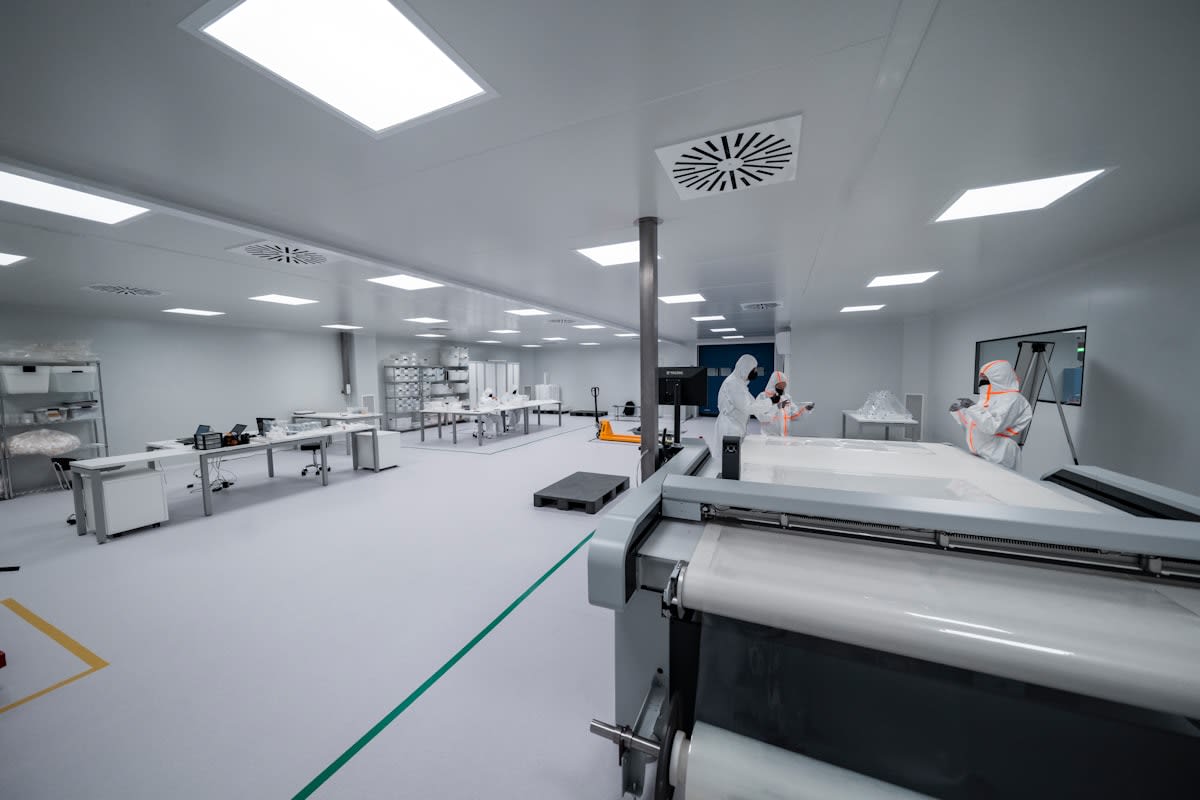
Does this mean the current model is hopeless? No, but it requires a shift in perspective. We must stop treating manufacturing as a downstream consequence of discovery and start treating it as the primary driver of therapeutic design. If a cure cannot be manufactured reliably and affordably, does it actually exist in any meaningful clinical sense?
The Geography of Access: A Global Lottery
The manufacturing gap creates a secondary, more insidious problem: geographic exclusion. Current genomic cures are heavily centralized in a few hubs—primarily in the US, the EU, and increasingly, China. These therapies often require a 'cold chain'—a seamless, ultra-low temperature transport system—to move the product from the factory to the patient. For a patient in rural India or sub-Saharan Africa, the existence of a genomic cure is a theoretical victory but a practical irrelevance.
The logistical fragility is staggering. Some CAR-T cell therapies require the patient's own cells to be flown to a central facility in another country, engineered, and then flown back. This creates a 'biological transit' risk. If a flight is delayed or a freezer fails, the patient's only chance at survival is literally evaporated in the air. This centralization is not a choice; it is a symptom of our inability to decentralize the manufacturing process.
- Cold-Chain Dependence: Dependence on -80C storage makes global distribution nearly impossible in low-infrastructure regions.
- Centralized Hubs: Most gene therapy production is concentrated in 3-4 global regions, creating immense geopolitical and logistical bottlenecks.
- Regulatory Fragmentation: Different nations have wildly varying standards for CMC, making the approval of a single global manufacturing process a nightmare.
- Biopsy Barriers: The need for specialized surgical centers to collect the genetic material required for personalized cures.
Is it fair that a child's survival depends on their proximity to a specialized logistics hub? Of course not. But the industry's obsession with the 'discovery' side of the equation has blinded it to the 'delivery' side. We are building Ferraris in a world where there are no roads.
The Economic Wall
The 'N-of-1' challenge is the ultimate test of the bio-economy. When the patient is the only person in the world with a specific mutation, the traditional ROI (Return on Investment) models of Big Pharma fail completely. We need a new economic architecture for medicine.
This economic wall is where the most interesting innovations are now happening. We are seeing the rise of 'platform technologies'—modular systems where the delivery vehicle remains the same, and only the genetic 'payload' changes. If we can standardize the vehicle, we can standardize the factory, turning a bespoke craft into an assembly line.

The Shift Toward Decentralized Bio-Economies
The solution to the rare disease lottery isn't more sequencing; it is the 'democratization of the bioreactor.' We are seeing a pivot toward point-of-care manufacturing—small, automated 'factories-in-a-box' that can be placed directly inside hospitals. Instead of shipping cells across oceans, the engineering happens in the room next to the patient. This removes the cold-chain risk and collapses the delivery timeline from months to days.
This shift represents a fundamental transition in the nature of medicine. We are moving from a 'Product' model (where you buy a drug) to a 'Process' model (where you buy a capability). In this new paradigm, the value lies not in the patent for a specific molecule, but in the efficiency of the manufacturing platform. The companies that win the next decade will not be those who find the most mutations, but those who build the most resilient and portable delivery systems.
Ultimately, the rare disease lottery is a solvable problem. The science has already done the hard work of identifying the targets. The remaining challenge is an engineering one. By shifting our focus from the digital blueprint to the physical factory, we can ensure that the genomic revolution doesn't just benefit a few thousand wealthy patients in a few dozen cities, but becomes a global reality for everyone.