
The Diagnostic Breakthrough in Boston
For years, thousands of families have lived in a diagnostic limbo, possessing the full sequence of their children's genomes but no answers as to why they were sick. This week, the silence broke. Researchers at Boston Children's Hospital, collaborating with OpenAI, demonstrated that the o3 Deep Research model could identify errors in patient genomes that had previously eluded the world's top geneticists. By processing the genomes of 376 patients who lacked a diagnosis, the AI successfully identified the cause of rare diseases in 18 children. This represents a 5% diagnosis rate from a pool of cases that were previously considered undiagnosable, turning cold cases into actionable medical insights.
The mechanism of this success was not simply more computing power, but a shift in how data is synthesized. The o3 system did not look at the DNA in a vacuum; it integrated genomic sequences with clinician notes, detailed descriptions of patient symptoms, and filtered lists of candidate genes. This multimodal approach mimics the cognitive process of a multidisciplinary medical board but operates at a scale and speed impossible for humans. The result is a drastic reduction in the time frame required to find answers for children with rare illnesses, transforming a process that once took years of iterative testing into a high-efficiency computational search.
"Total game changer"— Research findings from Boston Children's Hospital regarding AI-driven diagnosis
The Shift in Logic
The Delta: Twelve months ago, genomic analysis relied heavily on known variant databases and manual curation. Today, the shift is toward predictive, multimodal AI that can hypothesize the effect of a variant based on the patient's specific phenotype and deep-learning biological models.
AlphaGenome and the Prediction of Function
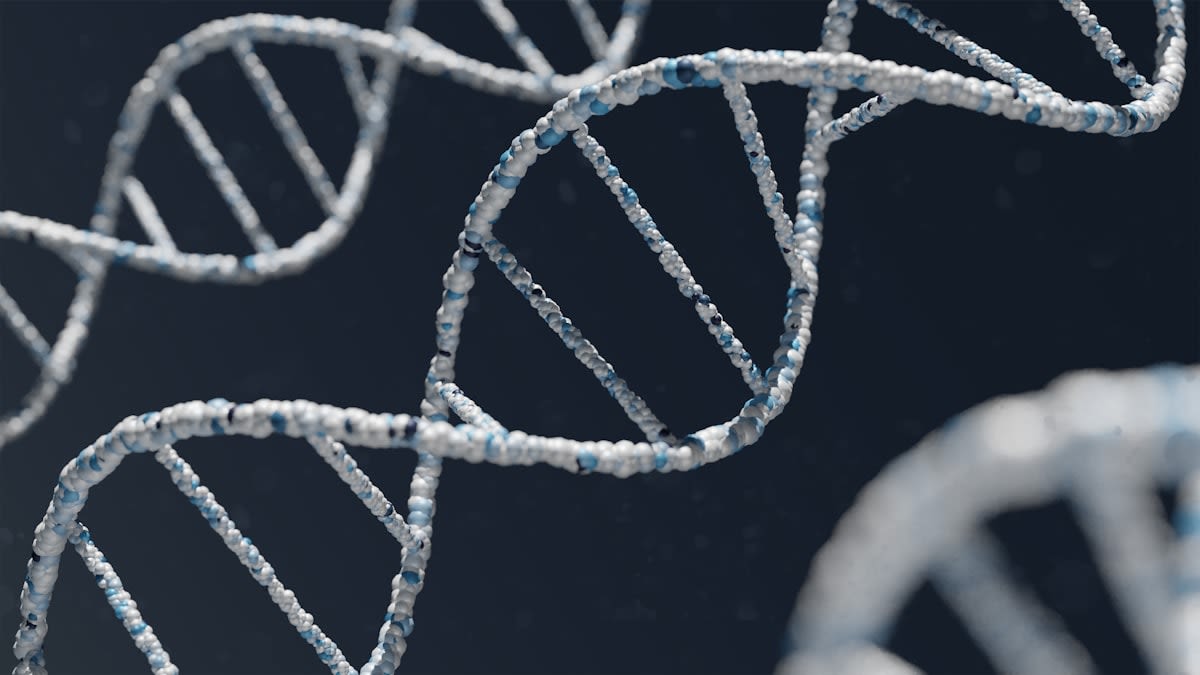
While the Boston study highlights the power of LLMs to synthesize data, a separate breakthrough published in Nature reveals the arrival of AlphaGenome. This unified, multimodal framework is capable of predicting thousands of functional genomic tracks and variant effects with single-base-pair resolution. Unlike traditional tools that require extensive experimental validation for every single mutation, AlphaGenome can analyze 1Mb of DNA sequence to predict how non-coding variants shape receptor expression and transcription factor activation. This allows scientists to see not just that a mutation exists, but exactly how it disrupts the cellular machinery.
The implications for immunology are particularly profound. AlphaGenome is the first model capable of predicting immune regulation and splicing outcomes from DNA sequences alone. It dissects the complex communication between enhancers and promoters and the splicing of immune regulators like MyD88-L, MyD88-S, and CD45 isoforms. By understanding how stimulus-responsive pathways—such as those triggered by LPS or cytokines—are rewritten by genetic variants, clinicians can finally explain why some patients exhibit sustained inflammatory profiles while others do not.
The Multi-Omics Integration Challenge
The industry is now moving beyond the genome to the 'multi-omic' layer, integrating DNA with RNA, proteins, and metabolites. A recent Nature perspective argues that the central challenge has shifted from data generation to interpretation. We can generate the data, but our health systems are still built for discrete tests. The goal is now to implement integrative analyses that outperform single modalities, providing a holistic view of disease. However, this transition introduces significant risks regarding reproducibility and clinical validity due to the high dimensionality and probabilistic nature of the interpretations.
| Approach | Focus | Primary Limitation | Current AI Solution |
|---|---|---|---|
| Single-Omics | DNA Sequence | Misses functional expression | AlphaGenome Predictive Tracks |
| Multi-Omics | DNA, RNA, Proteins | Complexity and Standardization | Explainable AI for Auditability |
| Clinical Reanalysis | Old Genomic Data | Human interpretation bottleneck | OpenAI o3 Deep Research |
To bridge the gap between research and routine care, the focus has turned to explainable AI. For a physician to change a treatment plan based on a multi-omic prediction, the AI cannot be a black box; it must provide an auditable trail for regulatory trust. The integration of genomics, imaging, and Electronic Health Record (EHR) data is the next frontier, allowing AI to cross-reference a genetic variant with a specific pixel in an MRI scan and a symptom noted in a nurse's chart from five years ago.
Scaling High-Resolution Mapping
Hardware and strategic leadership are now catching up to the software. Nabsys recently appointed genome mapping pioneer Dr. Alka Chaubey as Chief Medical and Genomics Officer to accelerate the adoption of its OhmX electronic genome mapping platform. The objective is to expand global access to high-resolution structural variant analysis. While standard sequencing is excellent for small mutations, structural variants—large-scale rearrangements of the genome—often require the kind of high-resolution mapping that Nabsys is commercializing for cancer and cell and gene therapy applications.
The appointment of Dr. Chaubey signals a pivotal moment in the transition from academic curiosity to commercial utility. By making structural variant analysis accessible to researchers worldwide, the industry is ensuring that the 're-analysis surge' isn't limited to elite institutions like Boston Children's Hospital. The ability to detect large-scale genomic shifts is critical for understanding constitutional diseases that are often missed by traditional short-read sequencing, further expanding the pool of solvable rare diseases.
Ultimately, the surge in genomic reanalysis is a victory of synthesis over raw data. We have spent a decade collecting the library of human variation; we are only now developing the intelligence to read it. The convergence of AlphaGenome's functional predictions, OpenAI's deep research capabilities, and Nabsys's structural mapping creates a pincer movement against the undiagnosable. The question is no longer whether the answer exists in the DNA, but how quickly the AI can find it.