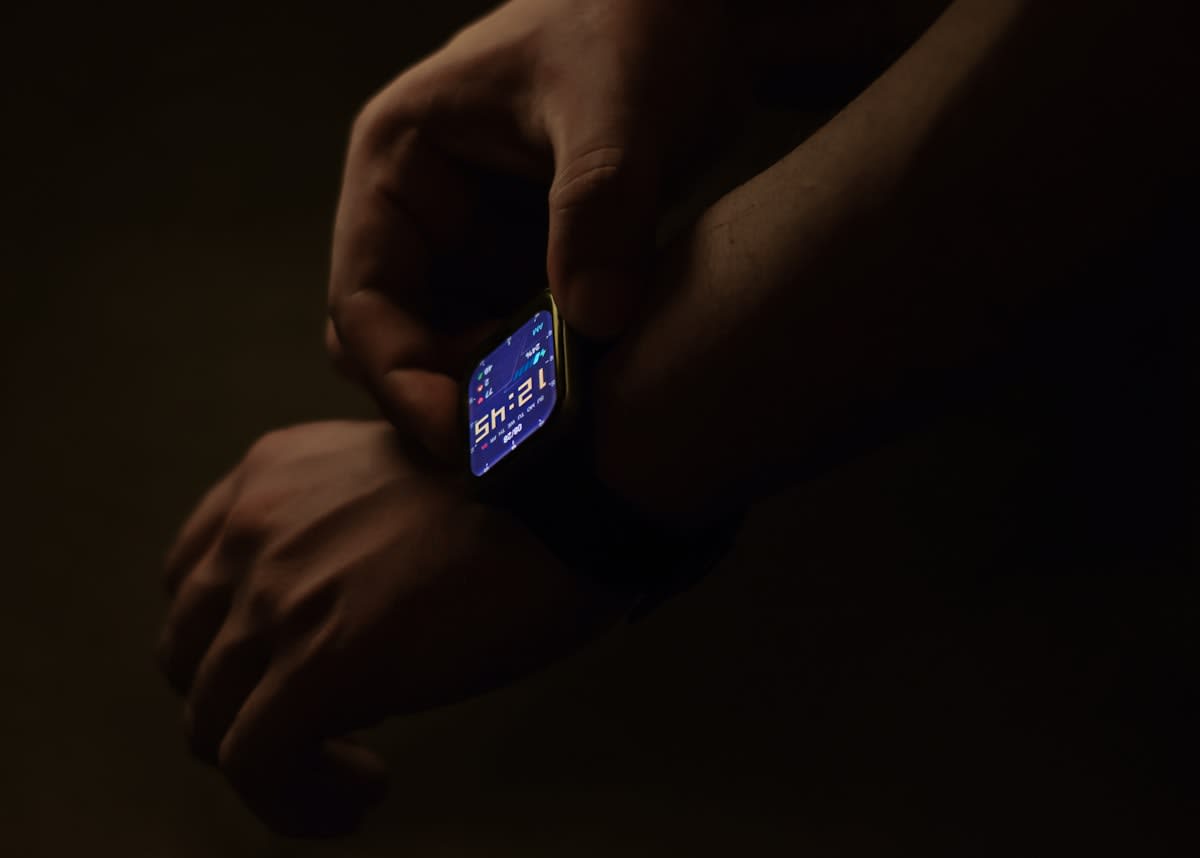
The autonomic nervous system does not operate in a binary state of stress or relaxation. Instead, it exists in a fluid oscillation between the sympathetic fight or flight response and the parasympathetic rest and digest system. Heart Rate Variability (HRV) measures the variation in time between consecutive heartbeats, serving as a proxy for the Vagus nerve's influence over the heart. When HRV is high, the body is resilient and the prefrontal cortex retains executive control. When it drops, the amygdala takes precedence, slashing cognitive flexibility and increasing the likelihood of errors in complex reasoning.
Prerequisites for Implementation
- A wearable device capable of tracking RMSSD (Root Mean Square of Successive Differences) during sleep or upon waking (e.g., Oura, Whoop, Garmin, or Polar).
- A 14-day baseline period to establish your personal normal range, as HRV is highly individual.
- A task-tracking system (digital or analog) that categorizes work by cognitive complexity (Low, Medium, High).
- A dedicated 10-minute window each morning for biometric synchronization.
Establishing a baseline is not optional; it is the foundation of the entire system. Because HRV varies wildly between individuals—where one person's high of 80ms is another person's low—comparing your data to population averages is a clinical error. You must track your RMSSD for two weeks to identify your standard deviation. This allows you to recognize a 15% drop not as a random number, but as a signal of systemic fatigue. Only then can you accurately map your biological state to your cognitive capacity.

1. Dynamic Task Scheduling based on RMSSD
- Check your morning HRV score immediately upon waking.
- Compare the current RMSSD value against your 14-day rolling average.
- If HRV is within +/- 5% of baseline, schedule High-Complexity tasks (e.g., strategic planning, deep coding) for the first 4 hours of the day.
- If HRV is 10-20% below baseline, shift High-Complexity tasks to the following day and prioritize Medium-Complexity administrative work.
- If HRV is >20% below baseline, restrict activities to Low-Complexity tasks (e.g., email triage, basic reporting) to avoid burnout.
In the software hubs of Bengaluru, where engineers manage sprawling distributed systems across multiple time zones, the cognitive load is rarely linear. A sudden drop in RMSSD often precedes a decline in code quality, even if the engineer feels subjectively fine. By tracking these shifts, professionals can identify the exact moment their brain transitions from deep work capability to mere maintenance mode. Forcing a complex architectural review during a low HRV state typically results in a 20% increase in logic errors and extended recovery time.
Metric Precision
RMSSD is the gold standard for short-term HRV because it specifically reflects parasympathetic activity. Ignore the general HRV score provided by some apps; look for the raw millisecond (ms) value to ensure precision.
This approach transforms the workday from a rigid calendar into a responsive system. Instead of fighting a mental fog that is biologically mandated, you align your output with your nervous system's actual capacity. This prevents the accumulation of 'cognitive debt,' where the effort to focus during a low-resilience state drains resources that would have otherwise fueled the next three days of productivity.
2. Strategic Recovery Windows
Recovery is not the absence of work, but the active restoration of vagal tone. When your mid-day HRV begins to trend downward—observable through real-time wearables—you must intervene before the prefrontal cortex offlines. This is a biological requirement, not a luxury. The goal is to trigger a rapid shift from sympathetic dominance back to parasympathetic stability using targeted physiological interventions.
| HRV State | Cognitive Capacity | Recommended Intervention |
|---|---|---|
| High (>Baseline) | Peak Executive Function | Deep Work / High-Stakes Decisions |
| Stable (+/- 10%) | Standard Operational Capacity | Collaborative Tasks / Iterative Work |
| Low (<15% Drop) | Impaired Cognitive Flexibility | NSDR (Non-Sleep Deep Rest) / Box Breathing |
| Critical (<25% Drop) | High Error Propensity | Complete Cognitive Disengagement |
Implementing Non-Sleep Deep Rest (NSDR) or a 10-minute box-breathing protocol can artificially elevate HRV in the short term. By slowing the exhalation phase, you stimulate the Vagus nerve, which sends a signal to the brain that the immediate environment is safe. This lowers the heart rate and restores the ability to process complex information. In high-pressure environments like the National Stock Exchange in Mumbai, these micro-recoveries prevent the erratic decision-making associated with sympathetic overdrive.
"The ability to consciously modulate the autonomic nervous system is the ultimate competitive advantage in knowledge work."— Dr. Andrew Huberman
3. Cognitive Load Capping
Most professionals treat their cognitive energy as an infinite resource, leading to a gradual slide into chronic burnout. Cognitive load capping uses HRV as a hard ceiling. When your baseline drops for three consecutive days, you are in a state of systemic under-recovery. At this point, you must implement a 20% reduction in total cognitive load across all domains. This means cancelling non-essential meetings and delegating complex analysis.
The danger of ignoring a three-day HRV decline is the 'crash' phenomenon. When the body remains in sympathetic dominance for too long, the cortisol response becomes blunted, leading to brain fog and severe executive dysfunction. By capping the load early, you prevent the total collapse of the system. This is a proactive defensive strategy that ensures long-term sustainability over short-term intensity.

4. Environmental Calibration
External variables directly influence HRV, which in turn dictates cognitive load capacity. Temperature, lighting, and noise levels are not just comfort issues; they are biological inputs. A room that is too warm increases the heart rate and lowers HRV, effectively stealing cognitive bandwidth from your tasks. To optimize for deep work, you must calibrate your environment to support parasympathetic stability.
Lowering the ambient temperature to approximately 18-20 degrees Celsius has been shown to support higher HRV during focused work. Additionally, utilizing blue-light blocking filters after 8 PM ensures that the nocturnal HRV recovery phase is not interrupted by melatonin suppression. If your morning HRV is low, it is often a lagging indicator of poor environmental control the previous evening. Correcting the environment is the fastest way to stabilize the biometric trend.
5. Biometric-Driven Decision Gating
- Identify 'High-Stakes' decisions (e.g., signing contracts, firing employees, pivoting product strategy).
- Check RMSSD before the decision meeting.
- If HRV is >15% below baseline, postpone the decision by 24 hours if possible.
- If postponement is impossible, utilize a 5-minute coherence breathing exercise to stabilize the nervous system.
- Document the decision and review it 48 hours later to check for biases introduced by stress.
Decision gating removes the ego from the equation. We often believe we are thinking rationally when we are actually operating under the influence of a stressed nervous system. A low HRV state shifts the brain toward heuristic-based thinking, which is prone to confirmation bias and risk aversion. By using a biometric gate, you ensure that high-stakes choices are made when the prefrontal cortex is fully online and capable of nuanced analysis.
This protocol is particularly vital for executives in volatile markets. When the biological cost of a decision is high, the risk of a catastrophic error increases exponentially. Decision gating transforms the process from a gamble on 'feeling' focused to a data-driven execution of cognitive capacity.
Common Pitfalls
- Over-reliance on a single morning reading: HRV is a trend, not a snapshot. Look at the 7-day average for systemic health.
- Ignoring subjective data: If your HRV is high but you feel exhausted, trust the feeling. Biometrics are a tool, not a replacement for consciousness.
- Confusing HRV with Heart Rate: A low heart rate does not mean high HRV. HRV is about the variability between beats, not the speed of the beats.
- Attempting to 'force' a high HRV: Using stimulants like excessive caffeine can artificially mask fatigue while actually lowering long-term HRV.