
Why does the feeling of isolation intensify as our social networks expand? We have transitioned from a world of local proximity to a global catalog of human beings, where the next best option is always a flick of the thumb away. This is not a failure of individual will or a quirk of modern dating; it is a systemic shift in how we perceive value in other people. When every human interaction is framed as a choice among infinite variables, the act of choosing becomes a burden rather than a liberation. We are no longer looking for a partner to build a life with, but are instead optimizing for a set of preferences in a marketplace that never closes.
The Evolutionary Mismatch: Tribes vs. Terminals
The human brain did not evolve for the digital sprawl. Research from the Singapore University of Technology and Design (SUTD) and James Cook University suggests a profound evolutionary mismatch between our ancestral instincts and our modern environment. For millennia, human survival depended on small, close-knit groups where faces were familiar and social roles were stable. Today, those same instincts are forced to navigate dense urban centers and digital platforms that demand constant social comparison. The result is an internal confusion; the biological responses that ensured survival in a tribe now manifest as chronic stress and loneliness in a city of millions.
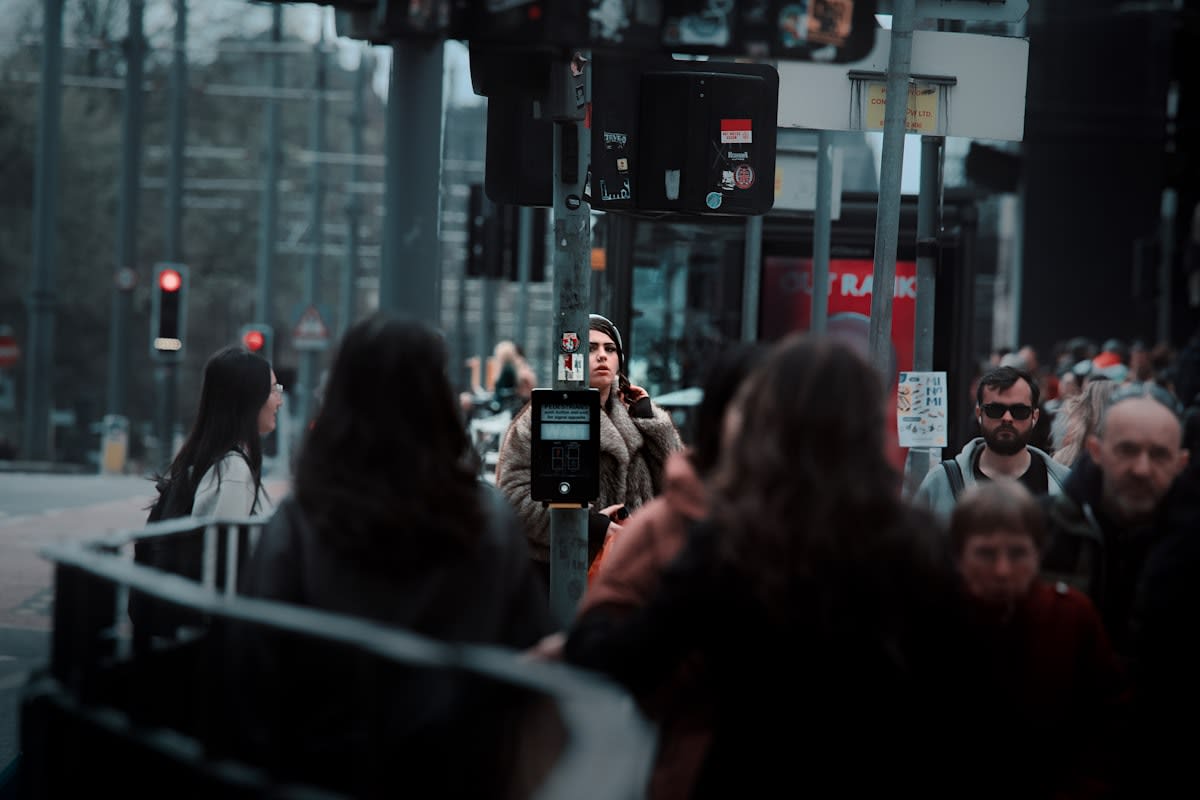
This mismatch transforms our social interactions into a series of high-stakes competitions. In a small group, your value was inherent to your role in the community. In the infinite scroll, your value is relative to the thousand other profiles currently visible. When we are constantly exposed to a curated stream of the world's most successful, attractive, or adventurous individuals, our internal baseline for satisfaction shifts. We stop asking if a person is a good fit for us and start asking if they are the absolute best possible option available globally. This shift from sufficiency to optimization is the engine of modern loneliness.
The Optimization Trap
The stress of modern loneliness isn't caused by a lack of people, but by the cognitive load of managing too many potential connections without the biological infrastructure to support them.
Does this mean we are doomed to a life of digital isolation? Not necessarily. The realization that our brains are operating on outdated software allows us to consciously architect our social lives. The challenge lies in resisting the urge to optimize. Resilience in the modern age requires a deliberate return to the 'small group' mentality—prioritizing depth over breadth and stability over the hypothetical 'better' option. We must move from a mindset of consumption to one of cultivation.
The Architecture of Decision: When Logic Shifts
Our decision-making process is not static; it adapts to the shape of the problem we are solving. Recent findings in neuroscience, leveraging Large Language Models to decode human thought justifications, reveal that human decision-making strategies shift dynamically based on problem architecture. When we enter a high-stakes environment—like a competitive job market or a dating app—the core logic we rely on changes. We simplify complex human beings into a set of data points to make the decision-making process manageable. We aren't choosing a person; we are solving a puzzle.
| Environmental Context | Decision Logic | Psychological Outcome |
|---|---|---|
| Ancestral (Small Group) | Interdependence & Stability | Belonging & Security |
| Modern (Digital Platform) | Comparison & Optimization | Anxiety & Disposable Connection |
| AI-Mediated (Curated) | Efficiency & Algorithmic Fit | Emotional Detachment |
This shift in logic has a corrosive effect on intimacy. When the architecture of the problem is a 'swipe,' the logic becomes one of elimination. We look for reasons to say no rather than reasons to say yes. This algorithmic approach to human connection treats people as commodities. If the problem architecture is designed for efficiency, we will naturally use efficiency-based logic, which is the antithesis of the slow, messy, and unpredictable process of actually getting to know another human being.
"Human self-insights are a highly reliable and mathematically valid source of data, showing that the core logic people rely on shifts systematically depending on the immediate shape of the problem."— Kamil Fuławka, via Neuroscience News
If we want to change the outcome of our relationships, we must change the architecture of the search. As long as the interface encourages a catalog-style mentality, the human brain will continue to apply a consumerist logic to love. The loneliness we feel is the friction between our need for authentic bond and the mathematical efficiency of the platforms we use to find them.
The Automation of Intimacy and the AI Proxy
We are now entering an era where the search for connection is being outsourced to AI. From apps like Known, which uses AI voice chats to vet personality and upbringing, to the use of AI agents like OpenClaw and Claude to automate social media attention, the human element is being filtered through a proxy. In one instance, a content creator utilized an automated system to target specific demographics with AI-generated videos, gaining millions of views and hundreds of messages by automating emotional support. This is the ultimate expression of the infinite scroll: the automation of the initial spark.
While these tools promise to find 'better matches more quickly,' they risk removing the very friction that creates genuine intimacy. Intimacy is often forged in the gaps—the awkward silences, the shared misunderstandings, and the effort of discovery. By removing the 'work' of dating through AI vetting and automated outreach, we are optimizing for the destination while destroying the journey. We are creating a world where we can find a mathematically perfect match, but lack the social muscles to actually maintain a relationship with them.
The danger here is not the technology itself, but the belief that connection can be solved. Love is not a problem to be optimized; it is an experience to be inhabited. When we use AI to 'improve our chances of landing a date,' we are essentially presenting a curated, optimized version of ourselves. This leads to a secondary layer of loneliness: the feeling that the person being loved is not you, but the AI-optimized avatar you've deployed into the digital marketplace.
The Socio-Economic Erosion of the Dream
This psychological shift is mirrored in the broader societal trends of the next generation. Data suggests a significant pivot in how Gen Z views traditional institutions. According to a CNBC and SurveyMonkey American Dream Pulse Survey, 51% of U.S. adults believe the American Dream is currently out of reach. This economic precariousness, combined with the digital abundance of options, has led many in Gen Z to forgo marriage entirely. The institution is no longer seen as a necessary foundation for stability, but as a risk in an unstable economy.
The irony is that the data still shows a strong correlation between marriage and wellbeing. A 2023 Gallup Poll indicated that 61% of married Americans say they are thriving in life, compared to only 45% of those who have never married. There is a clear gap in life satisfaction, yet the systemic pressures—economic instability and the 'infinite scroll' of potential partners—push people away from the very institution that historically provided the social stability and depth they crave.
- 61% of married Americans report 'thriving' in life.
- 45% of those who have never married report 'thriving'.
- 51% of U.S. adults view the American Dream as currently unattainable.
- Gen Z is increasingly skipping marriage due to a combination of economic fear and digital social shifts.
This creates a vicious cycle. The economic inability to achieve the 'Dream' makes people more reliant on digital escapism and short-term connections. These short-term connections, fueled by an infinite supply of options, prevent the development of the deep, stable bonds that lead to the 'thriving' state seen in married populations. We are trading long-term structural support for short-term algorithmic novelty.
Adaptation: Moving Beyond the Scroll
The solution is not to delete every app or retreat into a pre-digital fantasy. That is an impractical response to a systemic shift. Instead, the path forward is strategic adaptation. We must recognize that the 'infinite scroll' is a psychological trap and consciously limit our options. By artificially constraining our choices—focusing on a few deep connections rather than a hundred superficial ones—we can simulate the small-group environment our brains are evolved for.
We must also challenge the logic of optimization. The goal of a relationship should not be to find the 'best' person in the world, but to build the 'best' relationship with a specific person. This requires a shift in value from the traits of the individual to the quality of the connection. It means embracing the friction, the boredom, and the effort that AI and dating apps seek to eliminate.
Ultimately, the loneliness of the modern era is a signal. It is our biology telling us that we are starving for depth in a world of surface. By understanding the evolutionary mismatch and the traps of decision architecture, we can stop blaming ourselves for our isolation and start redesigning our lives to prioritize the small, the local, and the deep. The infinite scroll offers everything and gives nothing; the only way to find something real is to stop scrolling.