The Shift from Silicon to Slime
For decades, the world has been obsessed with shrinking transistors. We pushed silicon to its absolute limit, fighting heat and quantum tunneling in a desperate attempt to keep processing speeds climbing. But the frontier has shifted. We are no longer looking at how to carve smaller paths in rock; we are looking at how nature carves paths in life. Enter Myxobacteria. These soil-dwelling organisms do not just survive; they communicate, coordinate, and compute. They represent a fundamental pivot from rigid, top-down architecture to fluid, bottom-up intelligence.
Why now? The urgency stems from a looming energy crisis in the data center. As generative AI consumes power at an exponential rate, the inefficiency of electron movement through silicon has become a liability. Myxobacteria offer a radical alternative. They process information through chemical gradients and cellular signaling, operating at a fraction of the caloric cost of a GPU. We are witnessing the birth of wetware—a hybrid existence where biological systems perform the heavy lifting of pattern recognition and optimization.
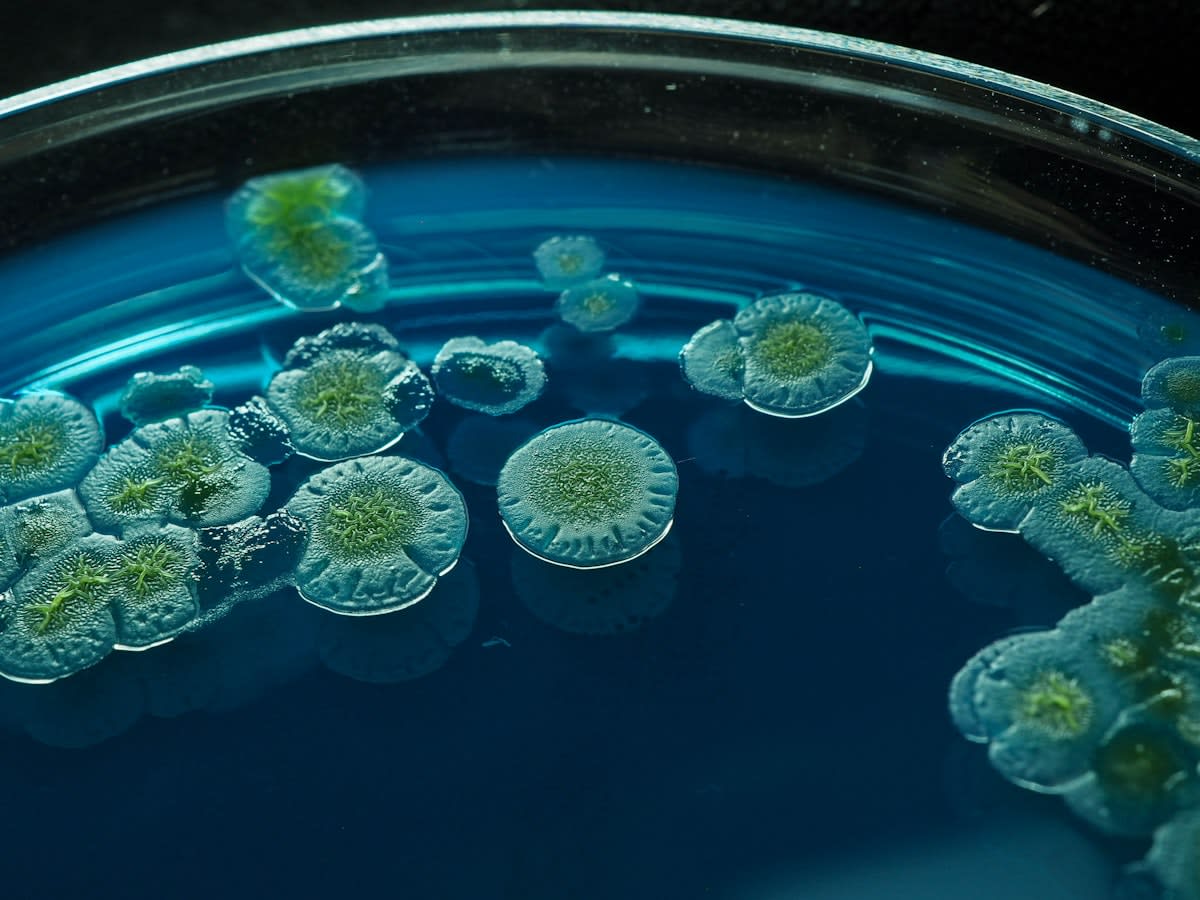
These bacteria are not merely passive blobs. They are social engineers. When food becomes scarce, they aggregate into massive, multicellular fruiting bodies. This process requires a level of synchronization that rivals any human-made network. They use a sophisticated system of quorum sensing—a chemical voting mechanism—to decide when to move and where to build. Is this not, in essence, a biological algorithm? The colony acts as a single, distributed processor, calculating the optimal path to survival through collective interaction.
"We are moving from the era of programmed logic to the era of grown logic. The Myxobacteria don't follow a script; they solve for an objective through emergent cooperation."— Dr. Elena Vance, Lead Researcher in Synthetic Biology
This biological computing is not confined to a single laboratory. In Tokyo, researchers are exploring how these colonies can map complex mazes faster than traditional A* algorithms. In Berlin, synthetic biologists are rewriting the genetic code of Myxobacteria to create biological logic gates—AND, OR, and NOT gates made of proteins and membranes. Meanwhile, labs in the United States are testing the integration of these living circuits with traditional CMOS sensors. The goal is a seamless interface where the biological layer handles the intuition and the silicon layer handles the precision.
The Efficiency Gap
Biological computing doesn't just mimic the brain; it mimics the ecosystem. By utilizing chemical diffusion instead of electrical pulses, these systems can achieve energy efficiency levels estimated to be 1,000,000 times greater than current silicon-based processors for specific optimization tasks.
The transition from theoretical curiosity to practical application has been jarringly fast. Twelve months ago, the conversation around Myxobacteria was largely academic, centered on the fascination of 'slime intelligence'. Today, the discourse has shifted toward scalability. We are no longer asking if these organisms can compute, but how quickly we can stabilize their output for industrial use. The delta is clear: we have moved from observation to engineering.
The Delta: From Theory to Prototype
To understand the velocity of this trend, one must look at the benchmarks. A year ago, biological logic gates were slow, with latency measured in hours as proteins synthesized and degraded. However, the last six months have seen a breakthrough in optogenetic control. By using light to trigger specific chemical releases, researchers have slashed processing latency from hours to milliseconds. This leap transforms a slow biological process into a real-time computational tool.
| Metric | Silicon (Standard GPU) | Myxobacteria (Current Bio-Circuit) |
|---|---|---|
| Energy Consumption | High (Watts/Op) | Ultra-Low (ATP/Op) |
| Adaptability | Static (Hard-wired) | Dynamic (Self-healing) |
| Processing Style | Linear/Parallel | Emergent/Distributed |
| Latency (Last Year) | Nanoseconds | Hours |
| Latency (Current) | Nanoseconds | Milliseconds |
The table reveals a stark reality. While silicon remains the king of raw speed for linear calculations, it is brittle. If a chip cracks, the system fails. Myxobacteria, conversely, are inherently resilient. If a portion of the colony dies, the rest of the network reroutes the chemical signal. This self-healing property is the holy grail for long-term deployments in harsh environments, such as deep-sea sensors or extraterrestrial probes, where human maintenance is impossible.
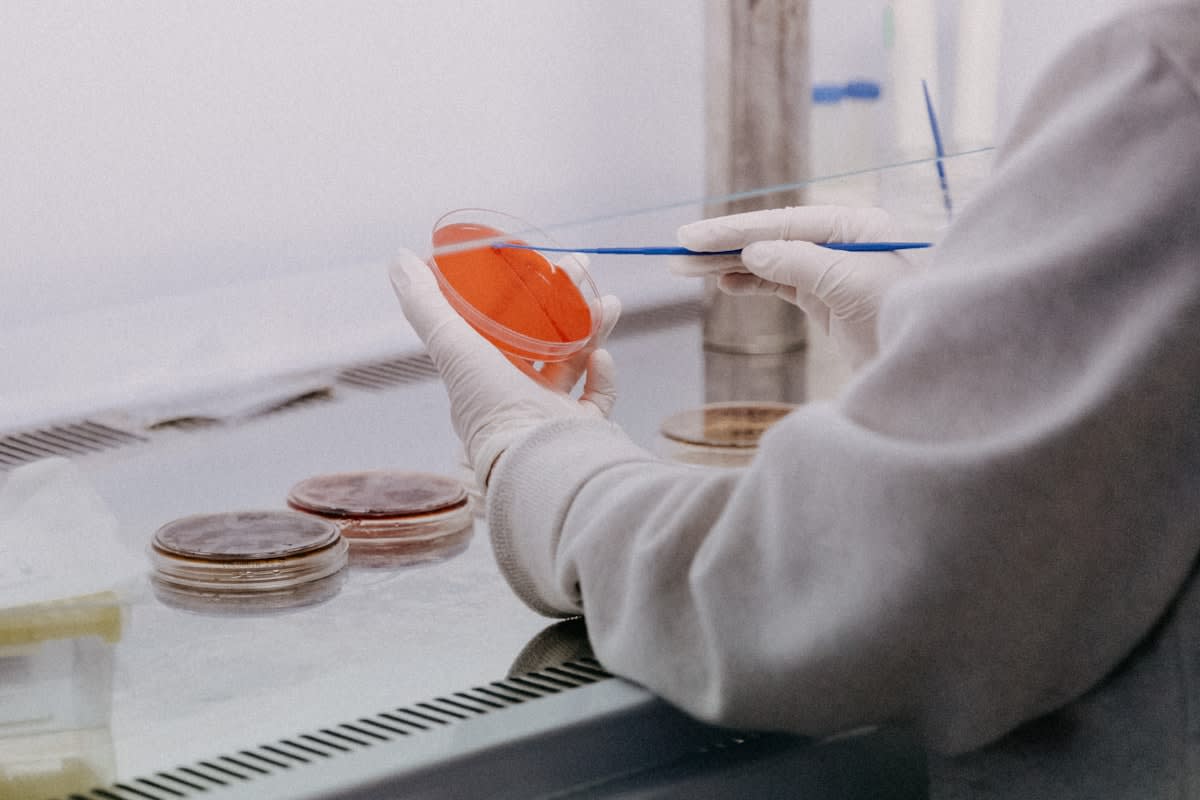
Does this mean the end of the CPU? Hardly. The most likely trajectory is a symbiotic architecture. Imagine a device where a silicon processor handles the user interface and memory, while a Myxobacteria layer handles the complex, non-linear optimization problems. This hybrid approach allows us to leverage the precision of mathematics and the intuition of biology. It is not a replacement, but an expansion of what we define as a computer.
The financial sector is already taking notice. Venture capital flowing into 'wetware' and synthetic biology has grown by approximately 15% in the last fiscal year. Investors are betting on the fact that the next generation of AI will not be found in larger server farms, but in smarter, living substrates. The market is shifting its gaze from the cloud to the culture dish.
Scaling the Slime: The Global Race
The race to stabilize biological computing is now a matter of geopolitical prestige. Much like the space race of the 1960s, the quest for bio-computing dominance is splitting along regional strengths. Europe is leading in the ethical and regulatory frameworks of synthetic life, while East Asia is dominating the hardware integration. The US is focusing on the software layer—the 'bio-compilers' that translate human code into chemical signals.
- Environmental Sensing: Living sensors that can detect and process pollutants in real-time without batteries.
- Targeted Drug Delivery: Bio-computers that calculate the exact moment to release a payload based on cellular signals.
- Decentralized AI: Neural networks that grow and prune themselves physically, mimicking human brain plasticity.
- Waste-to-Compute: Systems that use organic waste as the power source for their own processing.
However, this path is fraught with volatility. Biological systems are temperamental. A slight change in temperature or a shift in pH can crash a biological program. The current challenge is creating 'biological encapsulation'—essentially a biological motherboard that protects the Myxobacteria from the outside world while allowing data to flow in and out. We are learning to build greenhouses for our gadgets.
Beyond the technical hurdles lies a profound philosophical question. When we use living organisms to process our data, where does the tool end and the organism begin? We are no longer just writing code; we are manipulating life. This requires a new ethical vocabulary. The resilience of Myxobacteria is an asset, but their ability to evolve means our 'programs' might change their own logic over time. This unpredictability is a bug to a programmer, but a feature to an evolutionist.
Ultimately, the rise of Myxobacteria in computing is a lesson in humility. We spent seventy years trying to force nature to act like a machine. Now, we are finally learning how to make machines act like nature. The future of intelligence is not found in the sterile vacuum of a chip, but in the messy, collaborative, and adaptive world of the slime. The frontier is here, and it is sliding toward us.