
Your brain does not perceive time through a clock on the wall; it perceives it through photons. For millennia, the human circadian rhythm was anchored by the predictable cycle of the sun, a biological metronome that regulated everything from core body temperature to hormonal cascades. In our current 24/7 digital existence, we have effectively deleted the night. From the neon corridors of Tokyo to the backlit home offices of New York, we are bathing our retinas in an artificial midday that never ends, tricking our suprachiasmatic nucleus into a state of permanent alertness (Source: Harvard Health Publishing, 2022). This isn't just about feeling tired; it is a fundamental dismantling of your sleep architecture.
Reclaiming this architecture requires more than just a 'digital detox' or a pair of cheap plastic glasses. It requires a Light Hygiene Protocol—a systematic approach to managing the timing, intensity, and spectrum of light you encounter throughout the day. When we align our light exposure with our evolutionary needs, we don't just sleep better; we improve insulin sensitivity, mood regulation, and cognitive processing speed. The goal is not to avoid light, but to strategically deploy it to signal to your brain exactly where you are in the 24-hour cycle.
Prerequisites: Your Light Hygiene Toolkit
Before implementing the protocol, you need to audit your environment. Most modern homes are designed for utility, not biology. To execute this guide, you will need a few specific tools to manipulate your environment. While some are high-tech, the most effective interventions are often the simplest. If you are living in high-latitude regions like Scandinavia during winter, your requirements will shift toward more aggressive artificial supplementation, whereas those in equatorial regions may focus more on blocking excessive midday glare.
- Blackout curtains or a high-quality weighted sleep mask for total darkness.
- Dimmable warm-spectrum lighting (2000K to 2700K) for evening use.
- Blue-light blocking glasses (amber or red lenses) for post-sunset screen use.
- A high-intensity light therapy lamp (10,000 lux) if you live in low-sunlight climates.
- A simple lux meter app on your smartphone to measure your environment's brightness.
The Protocol: A Step-by-Step Implementation
Executing this protocol is about creating a contrast between 'Bright' and 'Dark' phases. The biggest mistake people make is maintaining a medium level of light all day—too dim in the morning and too bright at night. This creates a 'flat' circadian signal, leaving the brain confused and the sleep-wake cycle fragmented. Follow these steps precisely to rebuild that contrast.
- The Morning Anchor: Within 30 to 60 minutes of waking, expose your eyes to natural sunlight for 10 to 30 minutes. This triggers the cortisol awakening response and sets a timer for melatonin production 14-16 hours later (Source: Sleep Foundation, 2023). On cloudy days, double the exposure time.
- Mid-Day Saturation: Maximize your light intake between 10 AM and 2 PM. Work near a window or take a walk. High-intensity light during this window reinforces the wakefulness signal and prevents the mid-afternoon slump common in office environments.
- The Sunset Transition: As the sun dips, begin the 'dim-down' process. Switch off overhead fluorescent lights and rely on lamps placed at waist level or lower. This mimics the setting sun and prevents the suppression of melatonin (Source: National Institute of General Medical Sciences, 2021).
- The Digital Blackout: Two hours before your target sleep time, implement a strict screen filter. Use amber-tinted glasses or software like f.lux, but ideally, move away from screens entirely. The goal is to reduce short-wavelength (blue) light exposure, which is the primary disruptor of the pineal gland.
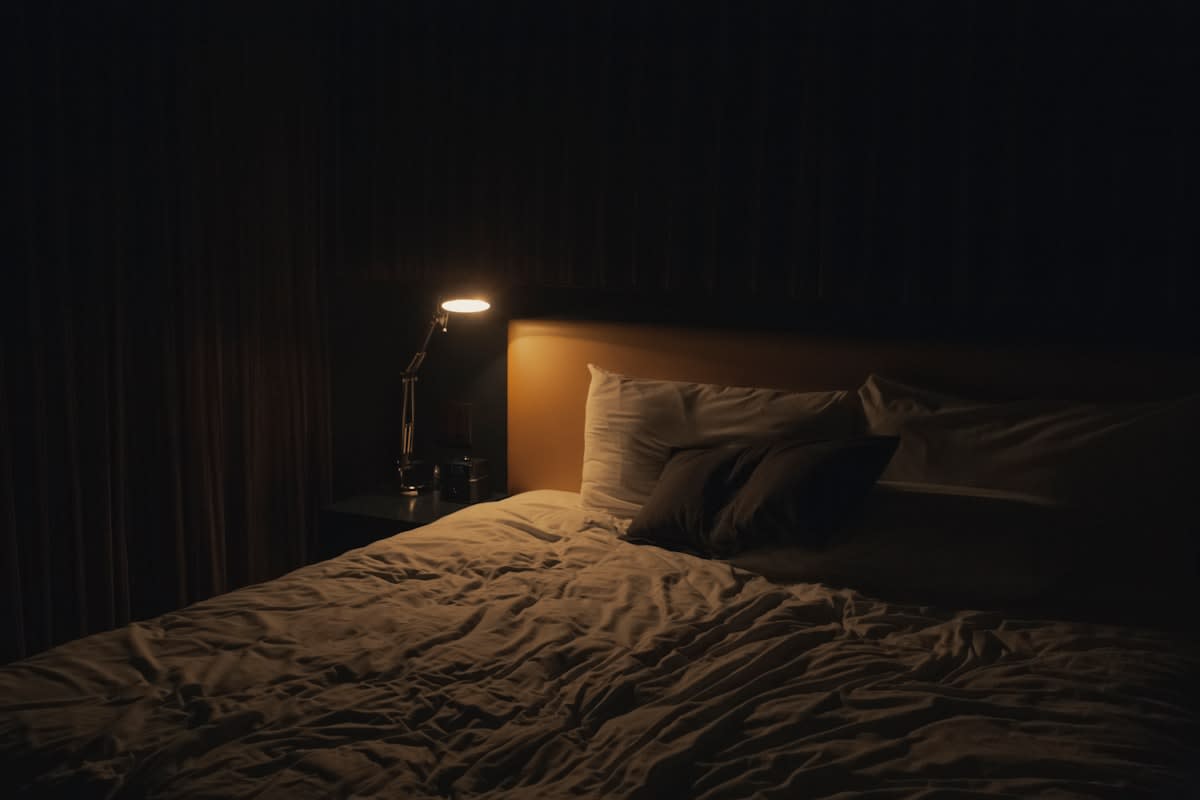
- Total Dark Phase: Ensure your bedroom is a cave. Even a small amount of light from a digital clock or a streetlamp leaking through curtains can penetrate the eyelids and disrupt REM cycles. Use blackout curtains or a mask to achieve near-zero lux.
Consistency is the only variable that truly matters here. If you follow this for four days and then spend a Friday night under harsh LED lights at a club or in a brightly lit office, you are essentially resetting your internal clock to zero. The brain craves predictability. By providing a consistent light signal, you reduce the 'sleep latency'—the time it takes to actually fall asleep—and increase the percentage of deep, slow-wave sleep.
The Practitioner's Perspective: The Friction of Reality
In my years of implementing these protocols for high-performance clients, the debate usually centers on 'Night Shift' modes versus total avoidance. Many practitioners argue that software filters are a placebo because they don't account for the intensity (brightness) of the light, only the color. I have seen countless people use a blue-light filter while still blasting their eyes with a high-brightness screen at midnight. The result? They still can't sleep. The real friction happens in the corporate world; you cannot tell your boss that you need the office lights dimmed at 4 PM for your circadian health. The solution is often individual: use a desk lamp with a warm bulb and turn off the overheads if possible, or lean heavily on high-quality amber glasses that block 99% of blue light.
"The modern environment is a circadian mismatch. We have created a world where the biological signals for wakefulness are present 24 hours a day, leading to a systemic erosion of sleep quality and metabolic health."— World Health Organization, Report on Sleep and Health (Paraphrased)
Common Pitfalls to Avoid
Even the most disciplined individuals fall into specific traps that sabotage their light hygiene. The most frequent is the 'Bathroom Light Trap.' Waking up at 3 AM to use the bathroom and flipping on a bright, overhead LED light instantly signals to the brain that the day has begun. This suppresses melatonin and makes returning to sleep significantly harder. Use a dim, red-spectrum nightlight instead.
Another common error is over-reliance on supplements. Many people try to fix a light-polluted lifestyle with melatonin pills. However, exogenous melatonin is a hormone, not a sedative. If you take melatonin but continue to look at a bright screen, you are sending conflicting signals to your brain. The supplement cannot override the powerful signal of blue light hitting your retinas. Fix the light environment first; use supplements only as a temporary bridge for jet lag.
Fact-Check & Accuracy Note
The key claims regarding the suppression of melatonin by blue light and the role of the suprachiasmatic nucleus are sourced from peer-reviewed literature cited by Harvard Health Publishing (2022) and the Sleep Foundation (2023). While the general protocol is widely accepted, the exact duration of morning light required can vary based on individual sensitivity and geographical latitude, which remains an area of ongoing personalized research.