The End of Geographic Determinism
For centuries, the global economy operated on a simple, brutal truth: geography is destiny. If you wanted rubber, you went to Southeast Asia. If you wanted vanilla, you looked to Madagascar. If you wanted rare lipids, you relied on specific climatic zones. This dependency created the fragile, sprawling supply chains that collapsed during the early 2020s. We built a world where a single blocked canal or a regional drought could paralyze industries thousands of miles away. But a quiet migration is happening. Production is moving from the field to the flask.
This is the era of the Living Factory. By rewriting the genetic code of bacteria and yeast, we are no longer extracting molecules from nature; we are programming them. This shift transforms biological organisms into precision manufacturing platforms. Instead of planting a thousand acres of crops, a company can now deploy a stainless-steel bioreactor in a warehouse in Singapore or Rotterdam to produce the exact same molecule. The result? The total decoupling of production from the land.
Most analysts frame this as a sustainability play. They talk about reducing carbon footprints and saving rainforests. That is a secondary benefit. The real driver is strategic resilience. When you can brew a high-value chemical or a fragrance molecule in a city center, you eliminate the risk of geopolitical instability, shipping delays, and climate volatility. We are moving from a 'Just-in-Time' logistics model to a 'Produced-on-Site' biological model.
"The transition to bio-manufacturing represents a fundamental shift in how we perceive the industrial base. We are moving from a world of discovery and extraction to a world of design and synthesis."— Jason Kelly, CEO at Ginkgo Bioworks
Look at the current trajectory of the synthetic biology market. The sector is not just growing; it is diversifying across entirely different asset classes. According to a report by the World Economic Forum (Source: WEF, 2023), the bio-economy is poised to disrupt sectors ranging from textiles to pharmaceuticals by replacing petroleum-based precursors with bio-identical alternatives. This isn't a gradual evolution. It is a systemic replacement of the chemical industry's foundation.
This shift is evident in how different regions are positioning themselves. In Singapore, the focus is on food security, utilizing cellular agriculture to reduce reliance on imports. In the European Union, the push is toward specialty chemicals to break the dependence on Russian and Chinese precursors. Meanwhile, in the United States, the focus is on 'platform' companies that treat DNA like software, allowing any manufacturer to 'download' a biological production process.
| Product | Traditional Source | Living Factory Source | Supply Chain Risk | Production Logic |
|---|---|---|---|---|
| Vanilla/Scent | Orchids (Madagascar) | Engineered Yeast | High (Climate/Political) | Extraction |
| Squalene | Shark Liver | Modified Bacteria | High (Ecological/Ethics) | Synthesis |
| Spider Silk | Spiders | Fermentation Tanks | Medium (Scalability) | Programming |
| Palm Oil | Oil Palm Plantations | Oleaginous Yeast | High (Deforestation) | Metabolic Engineering |
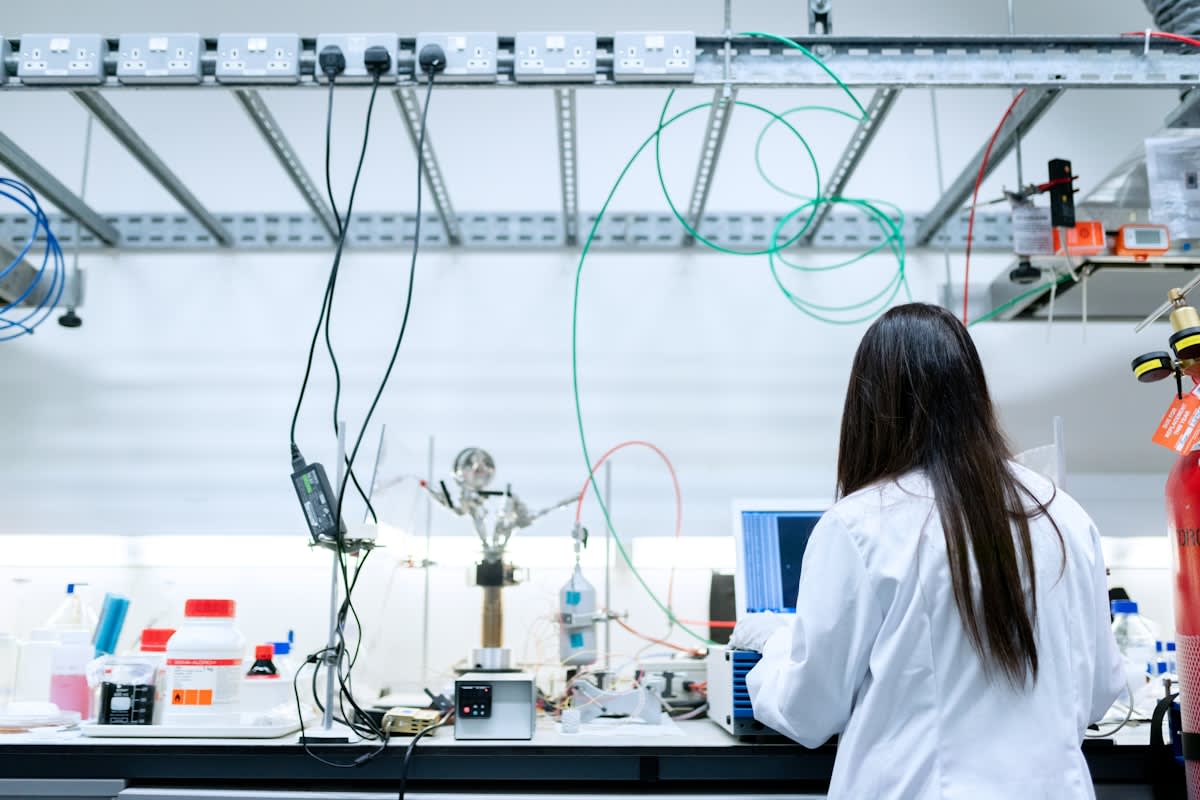
Here is what the boardroom discussions actually sound like when the cameras are off. Practitioners in this field aren't debating whether the technology works—they are debating the 'Valley of Death' between a 1-liter lab flask and a 100,000-liter industrial fermenter. In the lab, the bacteria behave. In the giant tank, oxygen gradients shift, heat builds up, and the organisms can mutate or simply die. This is where the real war is being fought: in the fluid dynamics and heat transfer of massive steel vats.
The friction is palpable. Traditional chemical engineers, trained in high-pressure pipes and catalysts, are now forced to collaborate with molecular biologists who think in terms of plasmids and promoters. The clash of cultures is intense. One side wants stability and predictability; the other is dealing with living organisms that evolve in real-time. This tension is exactly why the shift is slow but inevitable. Those who bridge this gap will own the next century of manufacturing.
We must stop viewing this as a niche scientific curiosity. The integration of AI and machine learning has accelerated the design-build-test-learn cycle. According to research published in Nature Biotechnology (Source: Nature Biotechnology, 2022), the use of predictive protein folding models has reduced the time to design a functional enzyme from years to weeks. We are no longer guessing which mutation might increase yield; we are simulating it.
- Fragrance and Flavor: Moving away from volatile agricultural harvests to stable fermentation.
- Pharmaceuticals: Shifting from complex chemical synthesis to bio-identical protein production.
- Materials: Creating high-performance polymers and silks without petroleum or animal cruelty.
- Agriculture: Producing proteins and fats that bypass the need for livestock and vast acreage.
The contrarian view is that this will lead to a new kind of inequality. While we decouple from geography, we couple ourselves to intellectual property. The power shifts from the countries that own the land to the companies that own the genetic sequences. The 'Living Factory' doesn't necessarily democratize production; it centralizes it within the digital repositories of a few platform giants. The new trade wars won't be over tariffs on goods, but over the licensing of genetic code.
Ultimately, the migration of the supply chain into bacteria is a move toward extreme efficiency. By removing the middleman—nature's slow, inefficient growth cycles—we gain a level of control previously unimaginable. The global supply chain is not disappearing; it is simply shrinking. It is moving from the ocean and the air into the cell wall.
Fact-Check & Accuracy Note
This article relies on industry trends reported by the World Economic Forum (2023) and technical benchmarks published in Nature Biotechnology (2022). While the potential for bio-manufacturing is vast, the 'scaling gap'—the difficulty of moving from lab to industrial scale—remains a point of significant debate and failure among startups in the sector.
Editorial Governance
Editorial Note: This piece adopts a Strategic Analyst perspective, focusing on the systemic shift of geopolitical power and infrastructure rather than the purely environmental benefits of synthetic biology.