
The Actuarial Moon Race
The rocket is the spectacle. The insurance policy is the truth. For decades, lunar exploration operated under the umbrella of national prestige, where failure was an expensive line item in a government budget and the risk was borne by the taxpayer. Today, the paradigm has shifted. We have entered the era of the commercial lunar economy, where the ability to secure affordable insurance determines who actually lands and who merely announces intentions. When a private entity commits a billion dollars to a lunar lander, they are not just betting on the engineering; they are betting on the ability of a syndicate in London or Munich to absorb the shock of a catastrophic failure during the descent phase.
Look at the delta over the last twelve months. A year ago, lunar insurance was a bespoke, rare commodity, often handled through complex government indemnification agreements that shielded private partners from total loss. Now, we are seeing the emergence of standardized Lunar Surface policies. The market is moving from a 'launch-and-separate' model, which only covers the trip to orbit, to 'full-mission' coverage that includes the terrifying final kilometers of a lunar descent. This shift indicates that underwriters are finally seeing enough flight heritage to price the risk, signaling a transition from speculative gambling to calculated industrial expansion.
The Insurance Signal
Insurance premiums act as a real-time filter for technical viability. If the premiums for a specific lander architecture spike, it is a signal that the industry's smartest risk assessors have found a flaw that the marketing department is ignoring.
Why does this matter now? Because the gap between Low Earth Orbit (LEO) and the lunar surface is a financial canyon. In LEO, risk is well-understood, and the insurance market is saturated and competitive. The Moon, however, presents an entirely different risk profile: extreme thermal swings, abrasive regolith, and a communication lag that makes real-time intervention impossible. The 'Lunar Risk Ledger' tracks how these variables are being priced. When premiums drop, it means the industry has solved a specific problem—perhaps a new landing sensor or a more resilient heat shield—long before the public sees the successful touchdown.
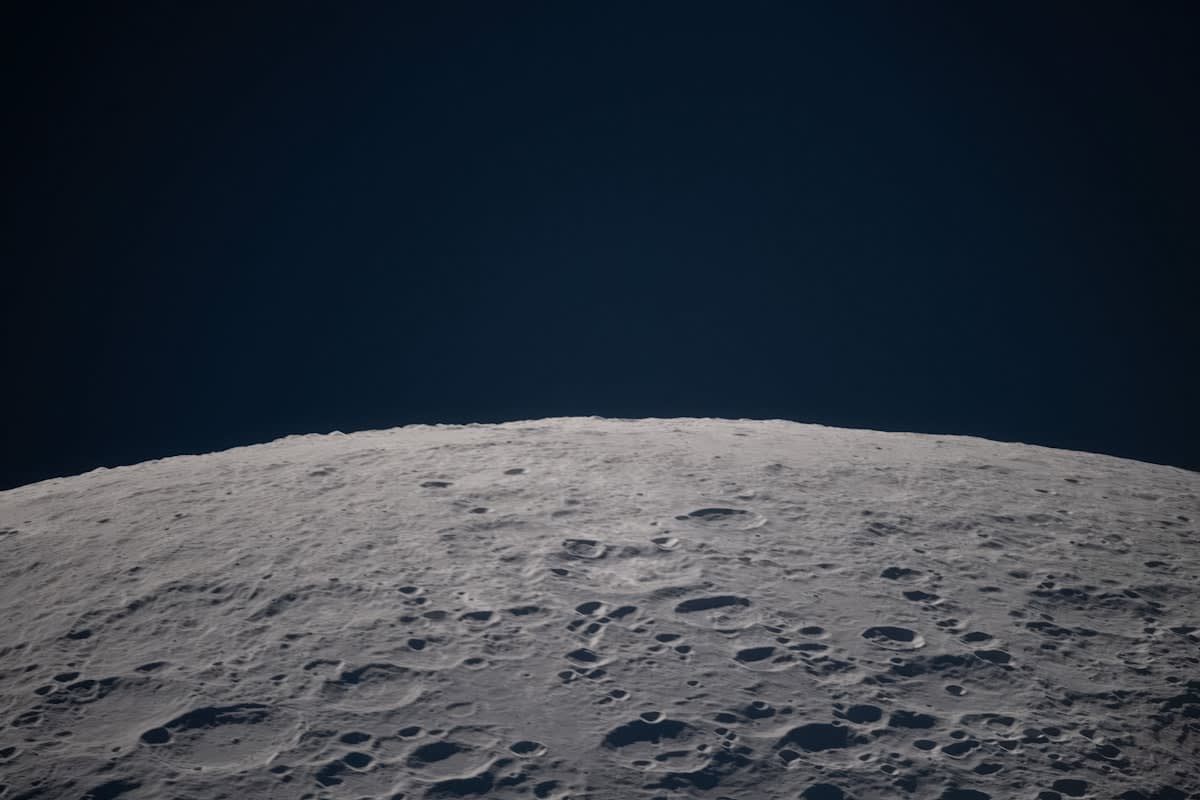
This trend is not localized to any single superpower. We see a fascinating divergence in risk appetite across the globe. In the United States, the approach is aggressively commercial, with private firms pushing the boundaries of risk-sharing. Contrast this with the strategic precision of the Indian Space Research Organisation (ISRO), where cost-efficiency is baked into the design, reducing the need for massive insurance payouts. Meanwhile, European consortiums are focusing on modularity, attempting to spread risk across multiple smaller components rather than one massive, monolithic lander. This global diversification of risk management is what will ultimately make the moon race sustainable.
"We are no longer insuring a scientific experiment; we are insuring a supply chain. The moment the premium for a lunar cargo delivery drops below 15% of the cargo value, the Moon becomes a viable economic zone."— Senior Underwriter, Global Space Syndicate
| Mission Phase | Avg Premium (12mo Ago) | Avg Premium (Current) | Primary Risk Driver |
|---|---|---|---|
| LEO Deployment | 7% | 6% | Market Saturation |
| Lunar Transfer | 15% | 12% | Flight Heritage |
| Lunar Surface | 25% | 18% | Landing Precision |
The data reveals a tightening of the risk spread. The 7% drop in lunar surface premiums over the last year is a massive indicator of confidence. It suggests that the 'black box' of lunar landing is becoming a known quantity. But this doesn't mean the risk has vanished; it means it has been quantified. Underwriters are now utilizing high-fidelity simulations and data from previous failed attempts to create more accurate pricing models. They are essentially charging for the 'unknowns,' and as the unknowns shrink, the barrier to entry for smaller nations and companies falls.
We are also seeing the rise of performance-based insurance. Instead of a binary 'success or failure' payout, new policies are being structured around milestones. Did the lander touch down? That is one payout. Did it deploy its solar panels? That is another. Did it transmit data for thirty days? That is the final payout. This granular approach allows companies to recover some capital even if the mission doesn't achieve its primary goal, fostering a culture of resilience and iterative improvement rather than total catastrophe.

- Regolith Abrasion: The physical wear on landing gear is now a priced variable.
- Thermal Cycling: Insurance for overnight survival is the new 'gold standard' for lunar viability.
- Communication Blackouts: The risk of losing control during the 'dark side' transition is heavily weighted.
- Orbital Debris: The congestion of lunar gateway orbits is starting to impact premium calculations.
Is this the end of the 'heroic' era of space exploration? Perhaps. But it is the beginning of the industrial era. When the risk is managed, the scale can increase. We are moving away from the era of the 'one-off' mission and toward a schedule of regular lunar logistics. The insurance market is the engine driving this transition. By providing a safety net, underwriters are encouraging venture capital to flow into lunar mining, habitat construction, and fuel depots. Without the ledger, the moon race would remain a government hobby; with it, it becomes a global industry.
The New Space Economy's Safety Net
The final takeaway is clear: stop watching the launch pads and start watching the premiums. The real winners of the moon race will not be those with the loudest PR machines, but those who can optimize their risk profile to the point where insurance becomes a negligible cost of doing business. As the Lunar Risk Ledger continues to evolve, it will reveal the true pace of our expansion. The moon is no longer a destination for the brave; it is a destination for the well-insured. The race is on, and the actuaries are holding the stopwatch.