
Have you ever felt a sudden surge of irritation during a board meeting in Singapore or a wave of inexplicable dread while walking through a crowded market in Mexico City, without knowing why? Most of us experience emotions as sudden, overwhelming weather patterns that arrive without warning. We call this feeling anxious or angry, but these are just labels. The actual experience is biological: a tightening of the diaphragm, a spike in heart rate, or a subtle shift in gastric acidity. This is interoception—your body's internal sensing system—and most of us are functionally blind to it.
Interoception is the process by which the nervous system simple scans the physiological condition of the body to maintain homeostasis. When we lack interoceptive accuracy, we misinterpret biological signals as psychological crises. For instance, the physical sensation of excitement and the sensation of anxiety are nearly identical; the only difference is the narrative your brain attaches to the signal. By refining this internal compass, you stop being a victim of your moods and start becoming a translator of your biology.
Prerequisites for Interoceptive Training
Before attempting to rewire your emotional response system, you need more than just a quiet room. You need a baseline of psychological safety. Attempting deep interoceptive work while in a state of active trauma or acute crisis can lead to flooding—a state where the sensory input overwhelms the prefrontal cortex, triggering a fight-or-flight response rather than regulation. You will need a commitment to daily practice, a willingness to sit with discomfort, and a basic understanding of your autonomic nervous system's current state.
- A dedicated 10-minute window of uninterrupted time per day.
- A low-stimulation environment to minimize exteroceptive (external) noise.
- A journaling tool to track the delta between physical sensation and emotional label.
- A 'grounding object' (like a stone or a textured fabric) to use if sensations become too intense.
Once these foundations are set, the transition from external noise to internal signal begins. This is not about relaxation; it is about precision.
The Step-by-Step Protocol for Interoceptive Mastery
- The Baseline Scan: Spend three minutes focusing exclusively on the 'visceral' organs. Instead of thinking about your muscles, feel the expansion of your lungs, the rhythmic beat of your heart, and the tension in your gut. Research indicates that the insular cortex is the primary hub for this integration, and consciously directing attention here strengthens the neural pathways (Source: Nature Reviews Neuroscience, 2019).
- Affect Labeling: When a strong emotion hits, stop the narrative. Instead of saying 'I am stressed,' describe the physical data. Say, 'I feel a constriction in my throat and a warmth in my chest.' This shift from subjective emotion to objective sensation reduces amygdala activation (Source: Psychological Science, 2015).
- Interoceptive Exposure: Intentionally induce a mild physical sensation that mimics an emotional trigger. For example, breathe through a thin straw for one minute to simulate the shortness of breath associated with anxiety. By doing this in a safe environment, you teach your brain that the sensation does not equal a threat.
- The Regulation Loop: Once the sensation is identified, apply a targeted biological counter-measure. If you feel the 'heat' of anger in your neck, utilize a physiological sigh—two quick inhales followed by a long exhale—to rapidly lower your heart rate and signal safety to the brainstem.

Why does this work? It comes down to predictive processing. Your brain is essentially a prediction machine that uses interoceptive data to guess what is happening in the world. If your heart rate spikes, your brain looks for a reason. If you are in a high-pressure meeting in London, it predicts 'stress.' If you are on a first date in Paris, it predicts 'attraction.' When you master interoception, you can correct these predictions in real-time.
"Interoceptive awareness is not merely about feeling the body; it is about the accuracy with which we perceive those signals. High interoceptive accuracy is consistently linked to better emotional regulation and more adaptive social behavior."— Dr. Sarah Garfinkel, Researcher in Interoception and Affective Neuroscience
From a practitioner's perspective, the most significant friction occurs when clients encounter 'the void.' Many people who have spent years suppressing their emotions have developed a form of interoceptive numbness. When they first try to scan their bodies, they feel nothing—or worse, they feel a sudden, overwhelming flood of stored tension that they cannot name. In the field, we debate whether to start with 'bottom-up' somatic experiencing or 'top-down' cognitive labeling. My experience suggests that for those with high levels of dissociation, starting with external sensory anchors is the only way to safely bridge the gap to internal awareness.
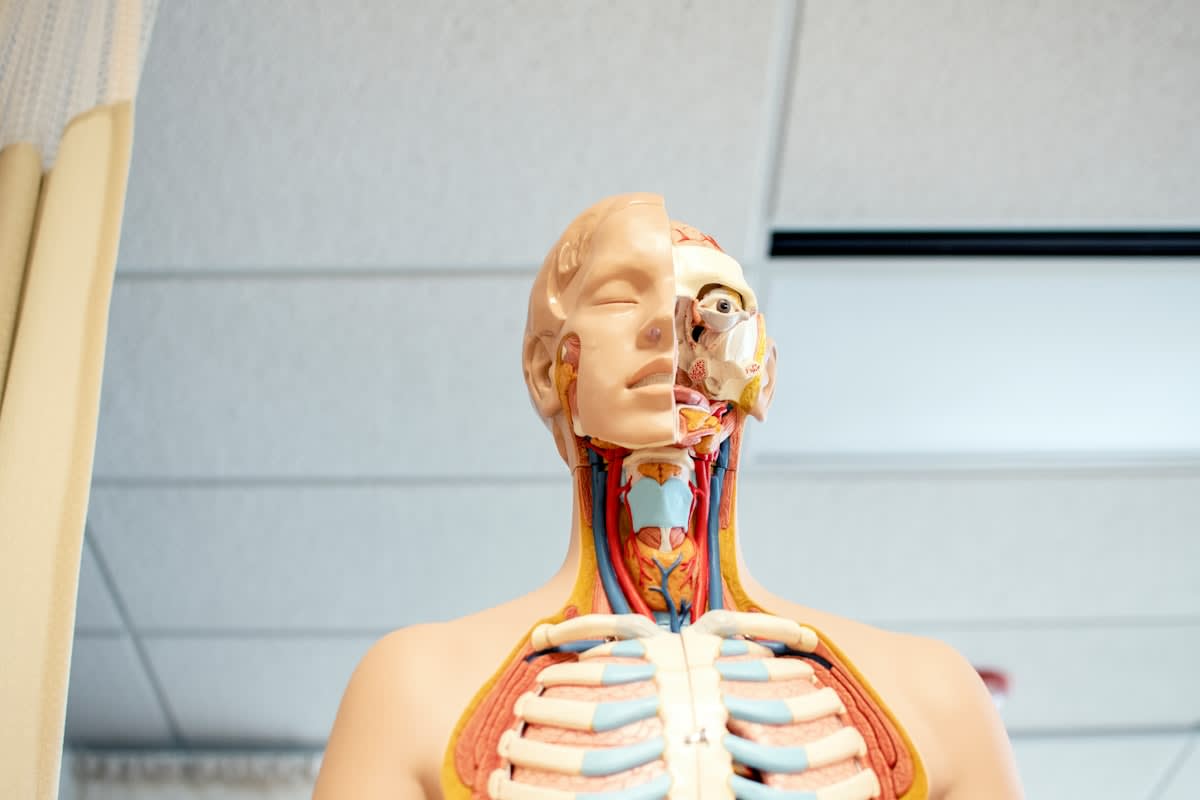
The data supports this approach. Studies on heart-rate variability (HRV) show that individuals with higher interoceptive sensitivity typically exhibit more flexible autonomic responses to stress (Source: Frontiers in Psychology, 2021). This flexibility is the biological bedrock of resilience.
Common Pitfalls and How to Avoid Them
The most dangerous mistake is the 'Anxiety Loop.' This happens when a practitioner becomes so focused on their heartbeat that they begin to panic about the fact that their heart is beating. This is a form of hyper-vigilance, not awareness. To avoid this, always anchor your internal scan with an external sensation. Touch the edge of your desk or feel your feet on the floor. This reminds the brain that while the internal signal is present, the external environment is safe.
Another frequent error is 'spiritual bypassing.' This is the tendency to use breathwork or mindfulness to push the sensation away rather than observing it. If you feel a knot of grief in your stomach and immediately start deep breathing to make it disappear, you aren't regulating; you are suppressing. The goal is to observe the knot, label it, and allow it to exist without letting it drive your behavior.
Fact-Check & Accuracy Note
This guide relies on established principles of affective neuroscience and somatic psychology. Key claims regarding the insular cortex and affect labeling are sourced from peer-reviewed publications in Nature Reviews Neuroscience (2019) and Psychological Science (2015). Note that interoceptive training should not replace medical diagnosis for cardiovascular or gastrointestinal issues, as some physical sensations may be symptomatic of underlying pathology.