
We have been conditioned to view recovery as a vacuum—a period of absolute stillness where the body magically repairs itself. The prevailing wisdom in many high-performance circles suggests that the more you 'recover,' the faster you progress. But here is the cold reality: maximum recovery is often a euphemism for neuromuscular stagnation. When we prioritize total passivity over strategic readiness, we aren't just resting; we are actively allowing our muscle temperature to drop and our neuromuscular firing rates to plummet. If you are treating your off-days or your breaks like a coma, you are likely stunting the very adaptations you are training for.
The goal shouldn't be to feel 'fresh' in a sedative sense, but to maintain a state of high-alert readiness. Whether you are a professional athlete in Europe, a collegiate player in North America, or a strength enthusiast in Asia, the physics of neuromuscular decay remain the same. The moment you move from an active state to a completely passive one, your system begins to wind down. This isn't a slow drift; it is a measurable decline in the ability to execute explosive movements, sprint, and change direction.
Prerequisites for Neuromuscular Optimization
Before you can shift your recovery strategy, you need to stop guessing. Most practitioners track 'volume' (sets and reps), but they ignore the 'realized training dose.' To actually manage neuromuscular progress, you must begin tracking the variables that dictate how your nervous system responds to stress and subsequent rest. Without these markers, you are simply throwing darts in the dark and calling it a program.
- Movement Velocity: The actual speed of the lift or jump, not just the intended speed.
- Velocity Loss: The percentage drop in speed across a set, which indicates the onset of neuromuscular fatigue.
- Ground-Contact Volume: Total time spent in contact with the floor during plyometrics.
- Recovery Intervals: The precise duration between bouts of high-intensity output.
- Internal Load: Subjective or biometric measures of how the body perceived the stress.
Why does this matter? Because adaptation is not a linear result of effort; it is a result of the specific stress applied. According to a 2026 editorial in Frontiers in Sports and Active Living, reporting the realized training dose—including repetition volume and movement velocity—is essential for improving reproducibility and practical translation of performance gains (Source: Frontiers, 2026). If you don't know your velocity loss, you don't know when you've hit the point of diminishing returns or when you've entered a zone of excessive fatigue that requires active, rather than passive, intervention.
The Framework: Implementing Active Readiness
To avoid the stagnation that comes with maximum recovery, you must transition to a model of active readiness. This means strategically manipulating your downtime to keep the nervous system 'primed' without adding systemic fatigue. This is especially critical during intra-session breaks or game-time intervals where the temptation to shut down is highest.
- Audit your passive intervals. Identify every window where you are completely sedentary (e.g., halftime, between heavy sets, post-workout).
- Implement 'Re-warm-up' strategies. Instead of sitting, use low-intensity movement to maintain muscle temperature. This prevents the decline in sprinting and jumping ability often seen during passive periods (Source: Strength & Conditioning Journal, 2026).
- Calibrate your external resistance. Shift your loading based on the desired adaptation. Use weighted vests for maximal-strength adaptation and elastic bands for reactive strength and anaerobic power (Source: Frontiers, 2026).
- Individualize the recovery dose. Move away from generic protocols. For example, female athletes may require different recovery resources to address specific physiological demands and mitigate higher risks of ACL tears (Source: Sports Business Journal, 2026).
- Monitor the 'Neural Edge.' Use the train-of-four stimulus test or similar neuromuscular monitoring to ensure you aren't over-suppressing the system with recovery aids or medications (Source: Anesthesia Key, 2026).
Consider the halftime interval in team sports. It is often treated as a medical and nutritional pit stop. However, when athletes remain passive for the majority of this window, their neuromuscular readiness declines. This leads to a measurable impairment in early second-half performance, specifically in change-of-direction ability and explosive jumping (Source: Strength & Conditioning Journal, 2026). The challenge for the practitioner is to find the line between necessary physiological recovery and the maintenance of the neural 'spark.'
"Women athletes adapted long enough — now they're redesigning recovery... In sports like soccer and basketball, research has shown women to be two to eight times more likely to suffer an ACL tear than men."— Yale Medicine, as cited in Sports Business Journal (2026)
This disparity highlights a critical flaw in the 'maximum recovery' mindset: the assumption that recovery is a universal process. If you are using a recovery protocol designed for a male athlete and applying it to a female athlete, you aren't just being inefficient—you are potentially increasing the risk of injury. Redesigning recovery means moving beyond cosmetic tools and addressing the systemic physiological demands that lead to stress fractures and ligament tears (Source: Sports Business Journal, 2026).
On the ground, this is where the most heated debates happen between strength coaches and medical staff. The medical side often pushes for 'complete rest' to protect the joint, while the performance side argues that total inactivity leads to a loss of stiffness and proprioceptive awareness. In my experience, the winners are those who find a middle path: using low-impact, high-frequency 'priming' movements that keep the nervous system engaged without adding to the total load. It is the difference between letting a car engine cool completely and keeping it idling so it can accelerate the moment the light turns green.
Comparing Loading Modalities for Adaptation
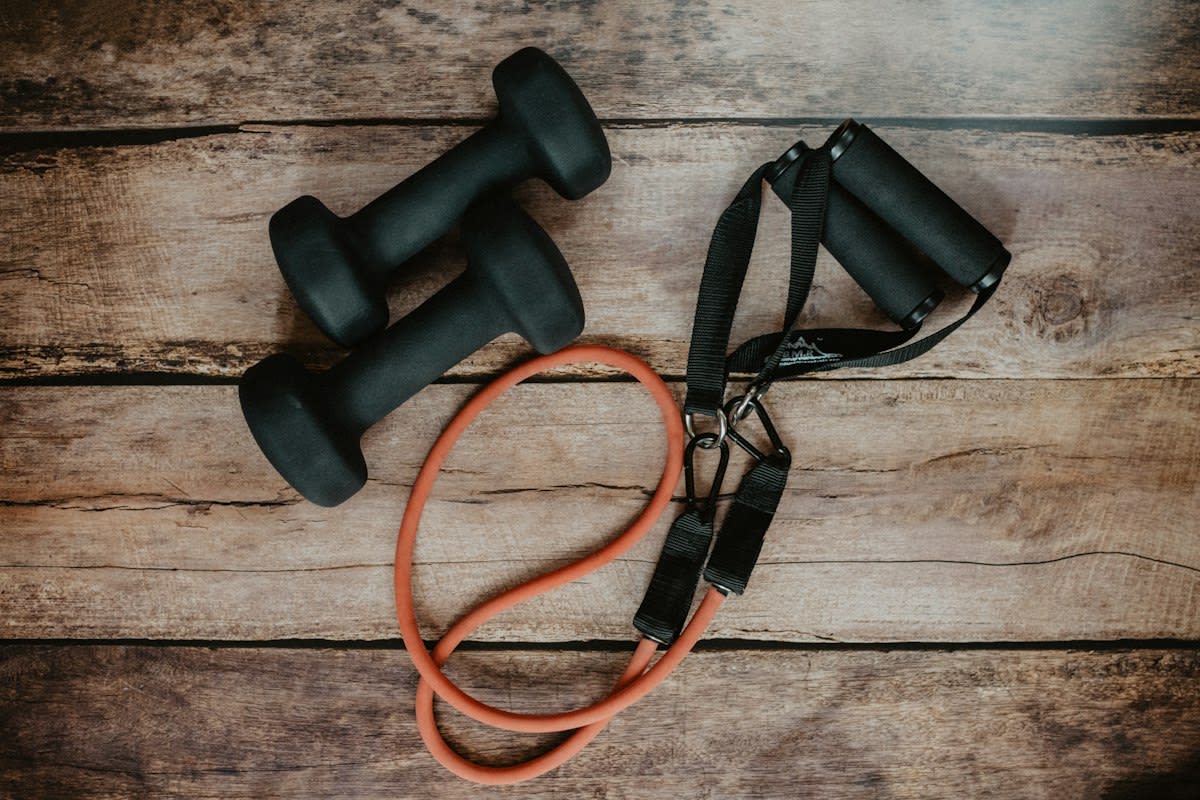
Not all resistance is created equal, and how you apply that resistance during your 'active' phases determines the type of neuromuscular progress you make. The method of applying resistance influences whether you are building raw strength or improving the elasticity of the muscle-tendon unit.
| Resistance Type | Primary Adaptation | Best Use Case |
|---|---|---|
| Weighted Vest | Maximal Strength | Hypertrophy and raw force production |
| Elastic Bands | Reactive Strength / Anaerobic Power | Explosive movement and velocity |
| Unloaded (Bodyweight) | General Physiological Outcomes | Initial conditioning and technique |
Research in young volleyball players confirms that externally loaded conditions—specifically weighted vests—produced greater changes than unloaded training (Source: Frontiers, 2026). If your recovery is too 'maximum' and you avoid these external loads for too long, you effectively erase the stimulus needed for these strength gains. The key is to integrate these modalities in sequences, such as French contrast training, which combines heavy resistance with plyometrics to optimize the neuromuscular response (Source: Frontiers, 2026).
Common Pitfalls in the Recovery Process
Many intelligent athletes fall into the same traps because they confuse 'feeling relaxed' with 'being recovered.' The following pitfalls are common across various sporting cultures, from the professional leagues in Europe to the collegiate systems in the US.
- The Passivity Trap: Sitting for 15+ minutes during halftime or between sets, leading to a drop in core muscle temperature and neural readiness (Source: Strength & Conditioning Journal, 2026).
- The Uniformity Error: Applying the same recovery resources to all athletes regardless of gender or physiological demand, ignoring the 2-8x higher ACL risk in women (Source: Sports Business Journal, 2026).
- Dose Blindness: Failing to track velocity loss and ground-contact volume, leading to either under-training or systemic burnout (Source: Frontiers, 2026).
- Over-Reliance on Passive Tools: Using massage guns or ice baths as a replacement for active mobilization and neural priming.
Fact-Check & Accuracy Note
Key claims regarding the decline of neuromuscular readiness during passive intervals are sourced from the Strength & Conditioning Journal (2026). Data on ACL tear disparities in women athletes is attributed to Yale Medicine via Sports Business Journal (2026). Findings on resistance modalities (weighted vests vs. bands) are derived from Frontiers in Sports and Active Living (2026). The debate over 'total rest' vs. 'active readiness' is an ongoing professional discourse in the strength and conditioning community.