
We have been lied to about what it means to be fed. For nearly a century, the global strategy to combat hunger has relied on a dangerously simplistic metric: the calorie. The assumption was that if you could deliver a specific number of kilocalories to a population, you solved the problem of hunger. But this quantitative obsession ignores a fundamental biological truth: the human body does not experience calories; it experiences nutrients, signals, and metabolic switches. Why are we still measuring success by the volume of energy delivered when the actual crisis is one of metabolic dysfunction and nutrient misalignment?
The shift happening right now in nutritional science is a move away from the macro and toward the molecular. We are seeing a transition from 'filling bellies' to 'optimizing cellular energy utilization.' This isn't just academic hair-splitting. It is the difference between a population that is calorically sufficient but biologically starving—suffering from 'hidden hunger'—and a population that possesses the metabolic resilience to withstand environmental shocks. The delta between our 2015 approach and our 2026 understanding is the realization that the body's ability to burn or store energy is controlled by specific protein switches, not just the amount of food on the plate.
The Mitochondrial Switch: Redefining Energy Expenditure
The most provocative evidence for this shift comes from the discovery of the MTCH2 protein, colloquially known as 'Mitch.' Researchers at the Weizmann Institute of Science have identified this protein as a critical switch that dictates whether human cells burn fat or store it (Source: Science Daily, 2026). By disabling this protein, scientists observed that cells began consuming more fuel, including both fats and carbohydrates, while simultaneously blocking the development of new fat cells. This discovery fundamentally challenges the 'calories in, calories out' dogma that has dominated nutritional policy for decades.
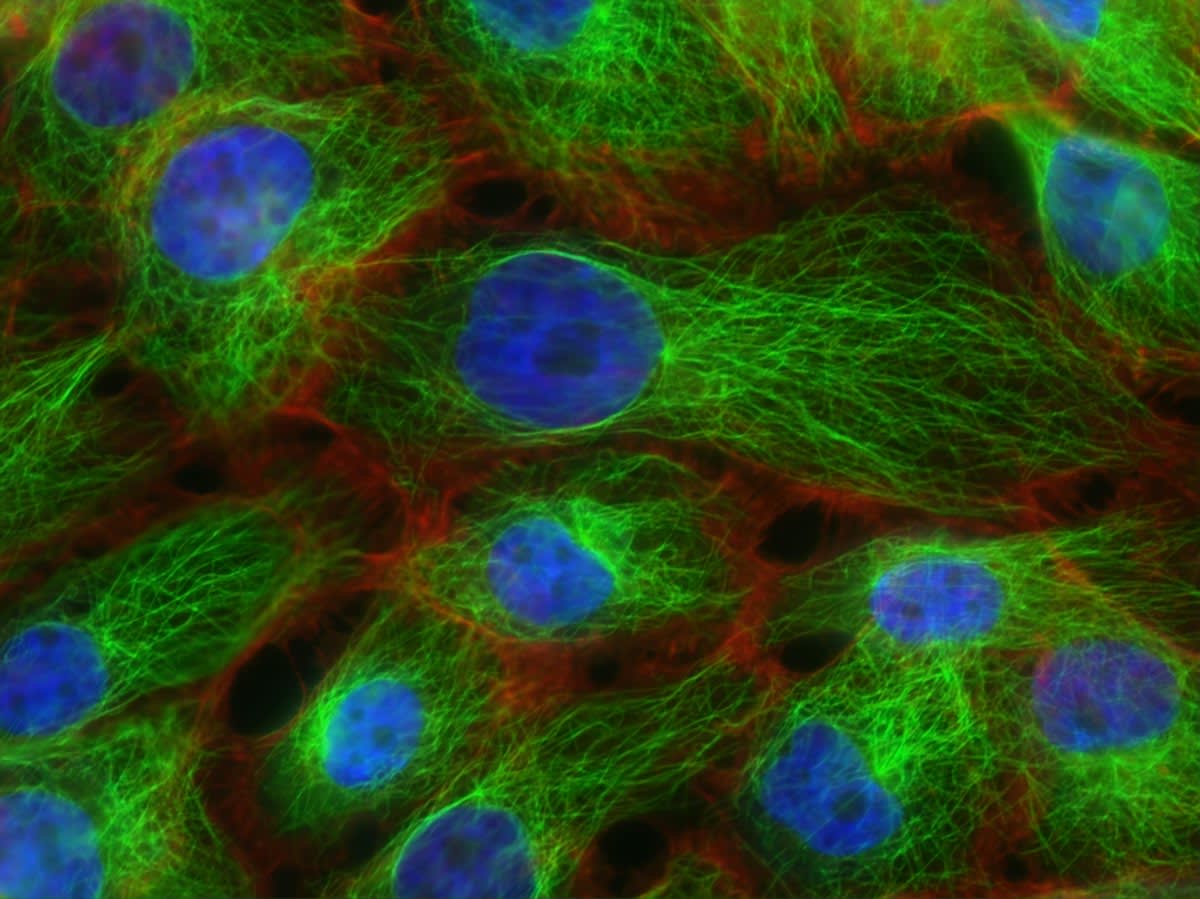
If a single protein switch can override the body's tendency to store fat and instead force the consumption of fuel, then the focus on caloric restriction as the primary tool for metabolic health is obsolete. In the context of global hunger, this suggests that providing high-calorie, low-nutrient fillers—the staple of many international aid programs—may actually be sabotaging the metabolic health of the recipients by reinforcing storage mechanisms rather than promoting efficient energy utilization. We aren't just dealing with a lack of food; we are dealing with a failure of cellular signaling.
"Treatment of metabolic acidosis with fruits and vegetables was associated with more favorable long-term clinical outcomes and health care utilization than standard treatment with sodium bicarbonate or usual care, without increasing overall health-system or societal costs."— Nimrit Goraya, MD, Baylor Scott and White Health
Nutrient Quality as a Clinical Intervention
The failure of the calorie metric is most evident when we compare the outcomes of nutrient-dense diets against standard chemical or caloric interventions. A decade-long clinical trial focusing on kidney disease patients provides a stark example. Patients suffering from acid buildup who were given fruits and vegetables to neutralize excess acid saw a dramatic reduction in hospitalizations compared to those receiving usual care (Source: SciTechDaily, 2026). This wasn't about the calories in the produce; it was about the specific biochemical properties of the plants that the body could use to maintain homeostasis.
| Metric | Dietary Group (Fruits/Veg) | Usual Care Group |
|---|---|---|
| Patient Count | 36 | 36 |
| Hospitalizations | 14 | 64 |
| Emergency Visits | 20 | 88 |
| Study Duration | 10 Years | 10 Years |
The data is undeniable: 14 hospitalizations versus 64. The dietary group didn't just fare slightly better; they experienced a collapse in the need for emergency intervention (Source: SciTechDaily, 2026). This proves that the biological value of food is not found in its energy density, but in its ability to function as a pharmaceutical-grade intervention. When we apply this to global hunger, the conclusion is clear: shipping tons of refined grains to malnourished regions is a quantitative solution to a qualitative problem.
This is where the friction between policy and science becomes palpable. I have spent years in the field, and the internal debates among practitioners are often brutal. On one side, you have the logistics experts who argue that calories are the only scalable metric—you can count a bag of rice, but you can't easily count the micronutrient bioavailability of a diverse crop system. On the other side, the clinicians are screaming that we are creating a generation of 'obese-malnourished' individuals. This invisible friction—the trade-off between logistical ease and biological efficacy—is why the calorie metric persists despite being scientifically bankrupt.
The Genetic Noise: Why One Size Fits None
Adding to the complexity is the realization that our genetic response to nutrition is far more erratic than we previously believed. Recent analysis of transcriptome-wide association studies (TWAS) has revealed high false sign rates in how we identify genes involved in complex traits (Source: Nature Genetics, 2026). Essentially, the scientific community has struggled to accurately recover the true direction of a gene's effect on a trait, such as how a specific nutrient affects plasma proteins. This means that a 'universal' caloric or nutritional standard is not just suboptimal—it is biologically impossible.

When we discover that the relationship between gene expression and protein expression is fraught with 'false signs,' it underscores the danger of top-down nutritional mandates (Source: Nature Genetics, 2026). If we cannot even precisely map how genes influence plasma proteins across a population, how can we justify a global food system based on the crude instrument of the calorie? The future of solving hunger lies in precision nutrition—matching the metabolic switch of the individual to the nutrient profile of the food.
We are moving toward a world where we don't ask 'How many calories did they eat?' but 'Which metabolic pathways were activated?' The discovery of the MTCH2 switch is the first domino to fall in a series of realizations that will eventually dismantle the caloric model entirely. The opportunity here is to rebuild our food systems around resilience and cellular efficiency rather than mere survival.
Fact-Check & Accuracy Note
The claims regarding the MTCH2 protein's role in fat burning are based on lab-grown human cells and mouse models (Source: Science Daily, 2026). While promising, these have not yet been validated in large-scale human clinical trials for obesity. Similarly, the TWAS findings highlight ongoing debates in genetics regarding the accuracy of predicting gene effects on complex traits (Source: Nature Genetics, 2026).
Editorial Note
This article argues for a paradigm shift. The 'Global Hunger' discussed here refers to nutritional insecurity—the lack of access to the specific nutrients required for metabolic health—rather than just the absence of food. The author posits that caloric counting is a legacy metric that obscures the true drivers of health.