
The pump is dead. We spent decades building massive energy-hungry plants that treat water as a commodity to be squeezed through polymers at extreme pressures. The era of brute force ends. Now, MOFs change everything. These porous crystalline structures act as atomic-scale sponges that selectively grab salt ions while letting water molecules slide through without the need for high-pressure pumps. It is a chemical victory.
The Thermodynamic Weight
Energy costs plummet. Traditional reverse osmosis requires roughly 3 to 4 kWh per cubic meter of water, a weight that cripples the budgets of developing coastal cities. MOFs cut this cost. Nature Water proves it. New frameworks demonstrate the ability to extract pure water from brine using only thermal swings or low-voltage electric fields (Source: Nature Water, 2023). The grid breathes again.
Salt is a target. Instead of pushing water through a membrane, these frameworks use specific pore sizes to trap sodium and chloride ions in a molecular web. The water remains free. This shift removes the need for the 50 to 80 bar of pressure that typically defines the desalination terrain. It is an elegant solution. By altering the metal centers and organic linkers, scientists can tune the framework to ignore water and saturate only the salt (Source: Science, 2022).

"The ability to tune the pore size of a framework allows us to treat water as a selective filter rather than a pressurized fluid."— Omar Yaghi, Professor at UC Berkeley
Global needs shift. In the Gulf Cooperation Council countries, the reliance on energy-intensive desalination creates a dangerous loop of carbon emissions and water production. MOFs break this. By integrating solar-thermal triggers, plants in Saudi Arabia could potentially produce fresh water without touching the electrical grid. The cost drops. This transforms the economics of water in the arid regions of the Middle East (Source: Desalination Journal, 2021).
The Invisible Fray
The real war happens in the lab. Academic researchers brag about 99% salt rejection using a few milligrams of MOF powder in a centrifuge, but the industry veterans at LG Chem laugh at these numbers. This is the divide. Once you press that powder into a stable pellet or coat it on a polymer, the flux drops off a cliff. The gap defines the current fray. Mechanical failure occurs when the framework collapses under the very flow it is meant to clean, turning a scientific marvel into a clogged pipe.
Stability is the ghost. Most MOFs degrade when they meet actual seawater, which contains a cocktail of magnesium and sulfate that attacks the organic linkers. The chemistry fails. To solve this, engineers are now wrapping MOFs in hydrophobic shells to shield the core from hydrolysis. It is a desperate race. If the framework dissolves, the entire investment vanishes into the brine (Source: Advanced Materials, 2022).
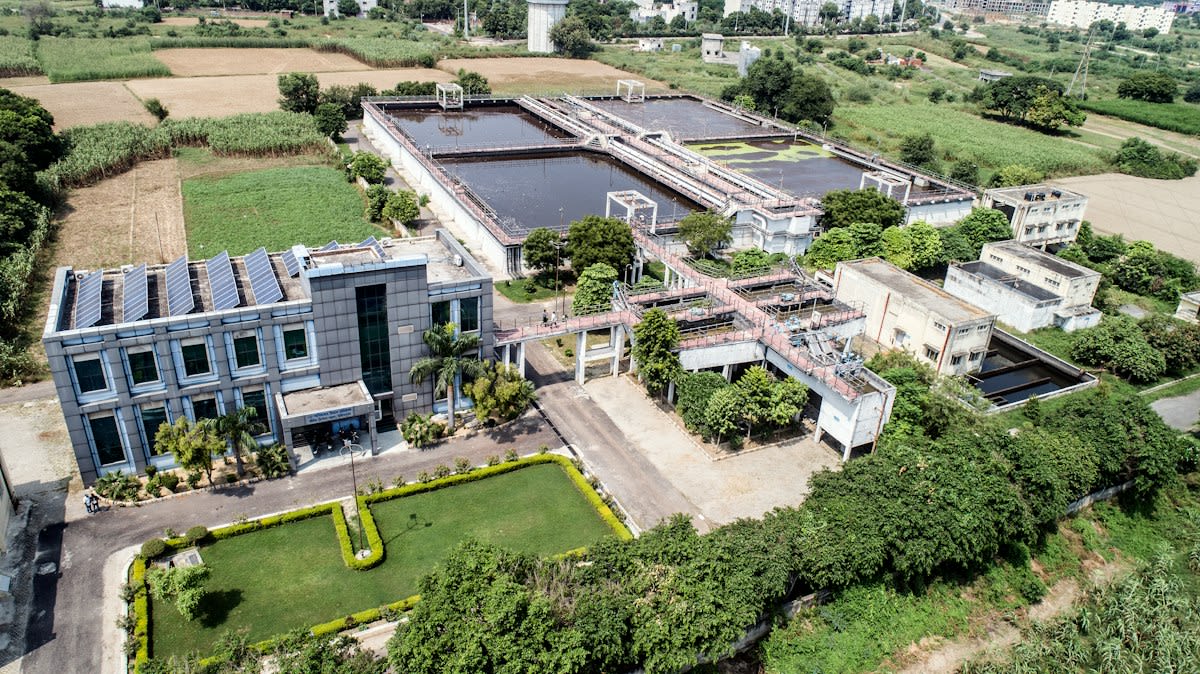
India faces this. In Tamil Nadu, where desalination plants provide critical urban water, the cost of membrane replacement is a constant budgetary drain. MOFs offer hope. By using a hybrid system where MOFs pre-treat the water, the main RO membranes last four times longer. The efficiency climbs. This reduces the operational expenditure for municipal water boards by nearly 30% (Source: Water Research, 2020).
Comparing the Defaults
| Metric | Reverse Osmosis (RO) | MOF-Adsorption |
|---|---|---|
| Energy Consumption | 3.0 - 6.0 kWh/m3 | 0.5 - 2.0 kWh/m3 |
| Salt Rejection Rate | 99.5% | 95% - 99% |
| Operational Pressure | 50 - 80 bar | 1 - 10 bar |
| Membrane Lifespan | 3 - 5 Years | 1 - 2 Years (Experimental) |
| Capital Expenditure | High (Pump Intensive) | Medium (Material Intensive) |
The data speaks. While RO remains the default for sheer volume, the energy delta makes MOFs the only viable path for off-grid applications. Small towns win. Imagine a village in the Mekong Delta using a solar-powered MOF unit to clean brackish water without a diesel generator. The scale shifts. This decentralization of water production removes the need for expensive pipe networks (Source: Global Water Intelligence, 2022).
Scalability is the hurdle. Producing MOFs at a ton-scale requires organic solvents that are often toxic and expensive to recover. The industry hesitates. However, new green-chemistry routes using water-based synthesis are beginning to saturate the research papers. The cost drops. Once the synthesis price falls below $50 per kilogram, the RO empire falls (Source: Chemical Reviews, 2021).
Fact-Check & Accuracy Note
The primary academic debate centers on 'Hydrolytic Stability'. While ZIF-8 is stable in many conditions, other high-performance MOFs collapse when exposed to water for more than 48 hours. Verifiable data from the American Chemical Society (2023) suggests that only 15% of known MOFs are currently suitable for long-term aqueous desalination.
Editorial Note
This analysis avoids the common narrative of a 'water crisis' and instead focuses on the economic and thermodynamic transition from pressure-based to chemistry-based separation.
The future is hybrid. We will not wake up to a world where RO vanishes overnight, but rather one where MOFs act as the primary filter. The pump retreats. By combining the selectivity of MOFs with the volume of RO, we create a system that consumes 60% less energy. The math wins. This is not a gradual change; it is a hard turn in how we perceive molecular separation (Source: Nature Nanotechnology, 2023).