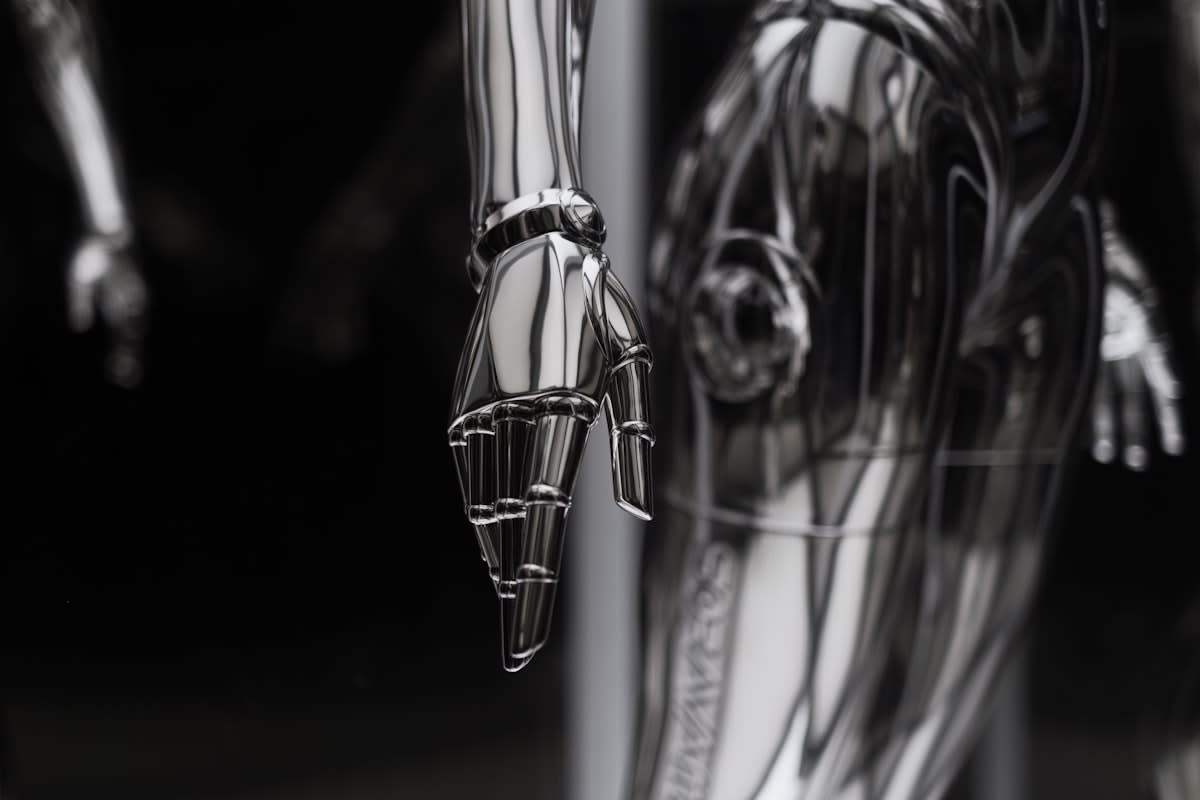
The Great Decoupling: Moving Beyond the Cloud
For a decade, we operated under a convenient delusion: that intelligence was a software problem. We built massive, cloud-centric models, fed them the internet, and assumed that if the 'brain' was large enough, the 'body' would simply follow. But the paradigm is shifting. As of July 2026, the industry is witnessing a fundamental transition from centralized computing to what researchers now call ubiquitous and embodied intelligence. The realization is simple yet jarring: a robot that relies on a distant data center to decide how to balance its weight is not intelligent; it is merely a remote-controlled puppet with a long leash.
This shift is most evident in the emergence of the Mobile AI Stack. Unlike traditional software that exists in a digital vacuum, embodied AI integrates directly with the physical world via autonomous vehicles, drones, and smart infrastructure. These systems face a brutal reality that a LLM in a server farm never encounters: the requirement for real-time execution. When a drone navigates a dense urban forest or a robotic arm handles a fragile biological sample, the luxury of high-latency cloud communication vanishes. The intelligence must reside not just in the processor, but in the very architecture of the machine.
Defining the Shift
Embodied AI represents a total departure from digital-only intelligence. It requires a coordinated operation across the entire stack—low-latency computation, energy efficiency, and robust sensing—to allow a machine to perceive, reason, and act in the physical world simultaneously.
Why does this matter now? Because we have hit the ceiling of cloud-centric efficiency. The demand for reliable connectivity and low-energy usage in industrial robotics and intelligent logistics platforms has made the old model obsolete. We are no longer asking how to make the AI smarter; we are asking how to make the hardware an active participant in the computation. This is the essence of morphological intelligence: the idea that the physical shape of an entity can perform calculations that would otherwise require millions of lines of code.
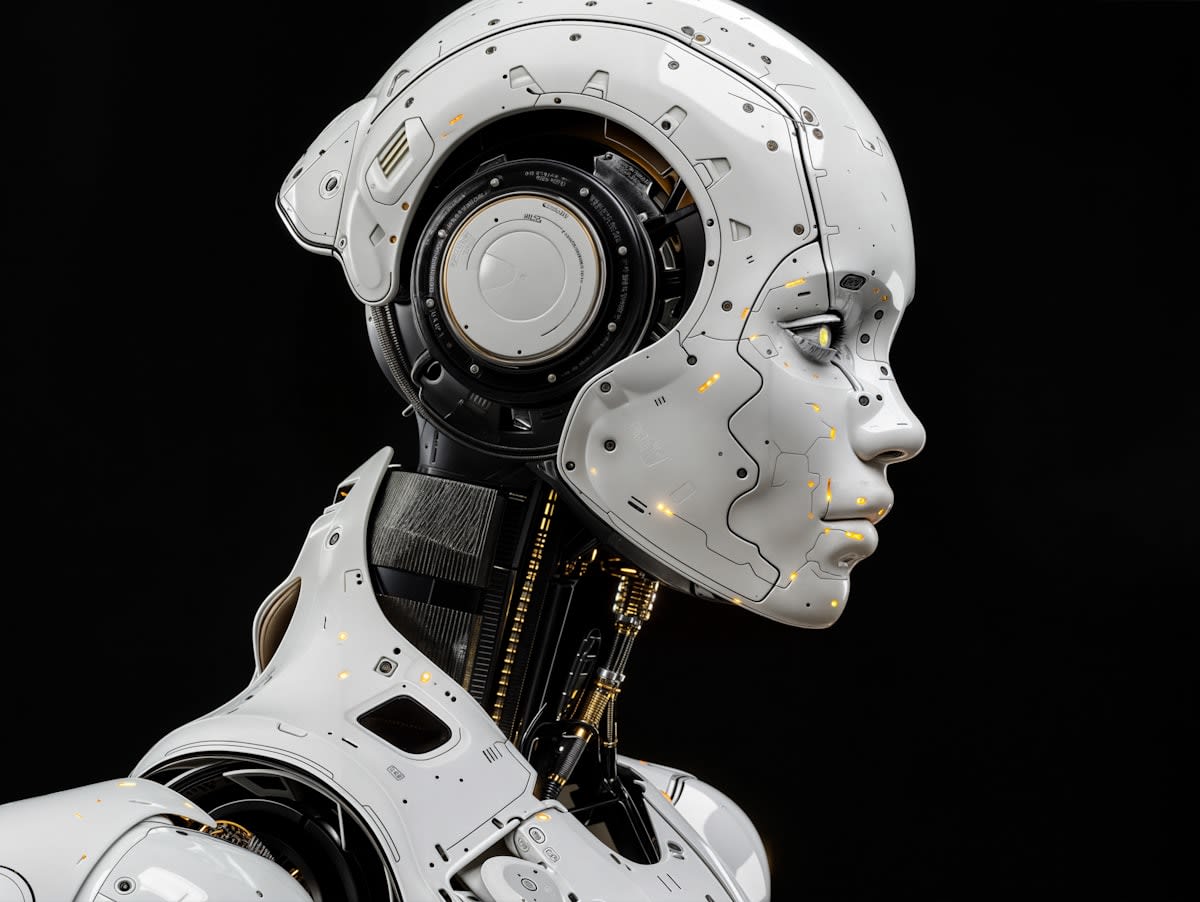
The RIKEN Revelation: Shape as Computation
The most provocative evidence for this shift arrived on August 4, 2026, from a research group at RIKEN. By utilizing simple artificial cells, these researchers uncovered the fundamental physical principles that allow living cells to change their shape. The discovery is a bombshell for robotics: the cell's actin cytoskeleton—the network of protein fibers providing its structure—can generate cell-scale shape changes and front-rear polarity without any reliance on complex biochemical signaling. In short, the cell doesn't need a 'brain' to tell it how to move; the physics of its body do the work.
Think about the implications. If a biological cell can achieve polarity and directional movement through purely physical mechanisms, why are we still trying to program every single joint movement of a robot using complex algorithms? The RIKEN study suggests that we have been over-engineering the software while under-engineering the material. By mimicking the actin cytoskeleton's ability to generate shape-based intelligence, we can create robots that react to their environment instinctively, reducing the computational load on the central processor.
"The discovery that shape changes and polarity can emerge without complex biochemical signaling proves that the physical structure itself is a form of information processing."— Research Analysis, Science Advances (August 2026)
This isn't just a biological curiosity; it is a blueprint for the next generation of actuators. Imagine a robotic limb that doesn't require a sensor to tell it it has hit a wall, but instead possesses a material structure that naturally deflects and adapts based on physical laws. This is the 'delta' between the robotics of 2025 and 2026. We are moving from 'Sense-Think-Act' to 'Shape-React-Refine'.
The Biological Gap: Why ANNs Aren't Enough
We must confront a hard truth: our current artificial neural networks (ANNs) are nothing like biological brains. While ANNs are exceptional at pattern recognition and data synthesis, they lack the intrinsic connection to physical existence that defines biological intelligence. A biological nervous system doesn't just process data; it is embedded in a body that filters and shapes that data before it even reaches the neurons. The body is not a peripheral; it is a pre-processor.
When we ignore morphological intelligence, we create a 'bottleneck of abstraction.' The AI spends too much energy trying to simulate the physics of the world because the body it inhabits is passive. By contrast, a body designed with morphological intelligence simplifies the problem. If the hand is shaped to naturally grip a cylinder, the AI doesn't need to calculate the exact pressure for a thousand different points of contact. The physics of the grip solve the math.
| Feature | Cloud-Centric AI (Old Paradigm) | Embodied/Morphological AI (New Paradigm) |
|---|---|---|
| Intelligence Location | Centralized Data Centers | Distributed/Physical Structure |
| Response Time | High Latency (Network Dependent) | Real-time (Physics-based) |
| Energy Profile | High (Constant Data Transmission) | Low (Passive Mechanical Intelligence) |
| Control Logic | Explicit Algorithmic Instructions | Emergent Physical Properties |
This transition is not happening in a vacuum. It is being fueled by a simultaneous revolution in how we observe the microscopic world. As of July 31, 2026, AI has been fully integrated into the imaging workflow of modern microscopy, from experimental design to data dissemination. We can now see these morphological shifts in real-time with a precision that was impossible a year ago. We are no longer guessing how the actin cytoskeleton works; we are watching it compute.

From the Lab to the Logistics Hub
The path from artificial cells to industrial robots is shorter than it seems. In the realm of intelligent logistics, the current struggle is not the 'brain' of the sorting robot, but its ability to handle diverse, unpredictable objects. By applying the principles of front-rear polarity and shape-based adaptation discovered by RIKEN, engineers can develop grippers that 'know' how to orient themselves based on the physical resistance of the object, rather than relying on a camera and a cloud-based vision model.
Can we imagine a world where the hardware is the algorithm? This is the ultimate goal of the Mobile AI Stack. By distributing intelligence across the sensing, reasoning, and execution layers, we eliminate the fragility of the system. A robot with morphological intelligence doesn't crash when the Wi-Fi drops; it continues to function because its basic survival and operational logic are baked into its physical form.
The Shift in AI Architectural Focus (2025-2026)
Executive Insight
+18.4%
YTD Growth
As we look toward the remainder of 2026, the competition between global robotics hubs will not be won by whoever has the most GPUs, but by whoever masters the materials. The frontier is no longer the digital void of the cloud; it is the tangible, messy, and brilliant world of physical morphology. The body is not just a vessel for the brain—it is the brain.