The Canopy Delusion
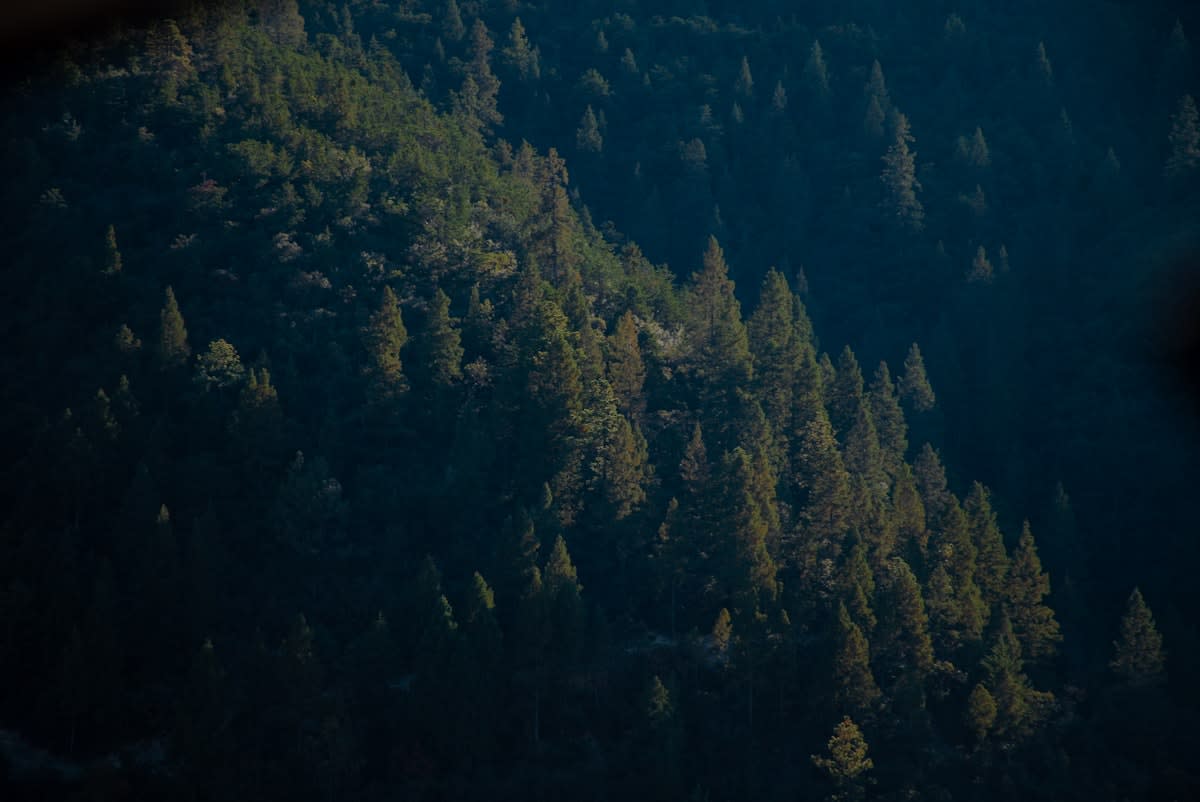
For decades, our approach to planetary monitoring has been obsessed with the visible. We launch billion-dollar satellites to track deforestation in the Amazon or measure ice-sheet retreat in Greenland, treating the Earth as a series of surface-level images. This is the canopy delusion. By focusing exclusively on the top-down view, we ignore the most sophisticated data network in existence: the mycorrhizal web. While the leaves and branches are the hardware of the forest, the fungal networks beneath the soil are the operating system, processing chemical signals and redistributing resources with a precision that puts our current IoT infrastructure to shame.
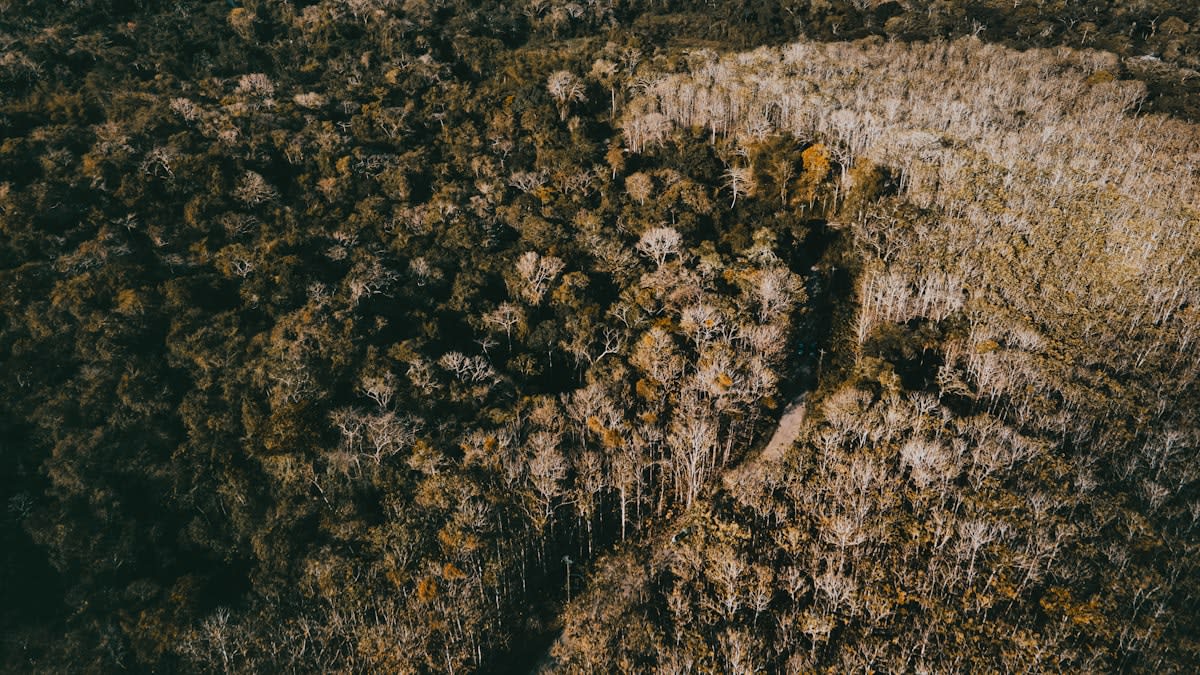
Why does this matter? Because the surface is a lagging indicator. By the time a satellite detects a browning canopy in a boreal forest in Canada or Siberia, the systemic collapse has already occurred underground. The mycorrhizal network, however, reacts in real-time. It senses moisture deficits, nutrient shifts, and pathogen incursions long before they manifest as visible decay. If we want to move from reactive crisis management to proactive planetary stewardship, we must stop looking at the trees and start listening to the fungi.
The scale of this network is staggering. In a single teaspoon of healthy forest soil, there can be up to seven miles of fungal mycelium. This isn't just a biological curiosity; it is a massive, decentralized sensor array. Approximately 90% of all land plants form these symbiotic associations, trading carbon—the currency of the plant world—for phosphorus and nitrogen mined by the fungi. This trade isn't just a transaction; it is a data exchange. Every pulse of carbon and every molecule of phosphorus carries information about the state of the surrounding environment.
"The forest is not a collection of individual trees competing for light, but a single, integrated intelligence managed by a fungal motherboard."— Strategic Analysis of Bio-Systems
The Architecture of Planetary Intelligence
To understand the mycorrhizal network as a sensor, one must view it as a chemical telegraph. When a tree in a temperate forest in Japan is attacked by aphids, it doesn't just suffer in silence. It releases specific volatile organic compounds and chemical signals into the mycorrhizal network. These signals travel through the mycelium to neighboring trees, which then preemptively activate their own immune responses. This is a distributed defense system that operates with a level of coordination we are only beginning to quantify. We aren't looking at a passive biological process; we are looking at an active, adaptive intelligence.
This systemic shift in perspective transforms the soil from a medium of growth into a medium of information. If we can decode these chemical pulses, we gain a window into the planetary health that no sensor probe can provide. Imagine a monitoring system that tells us a forest is stressed three months before the first leaf turns yellow. That is the difference between managing a resource and partnering with an ecosystem. The potential for resilience is baked into the biology; we simply lack the interface to read it.
| Metric | Satellite Monitoring | Mycorrhizal Monitoring |
|---|---|---|
| Data Latency | Lagging (Weeks/Months) | Real-time (Immediate) |
| Resolution | Macro (Meters/Kilometers) | Micro (Millimeters/Molecules) |
| Primary Variable | Spectral Reflectance | Chemical/Nutrient Flux |
| Systemic View | Surface-level/Visual | Sub-surface/Functional |
| Cost per Data Point | High (Launch/Maintenance) | Low (Biological/In-situ) |
The economic implications are equally disruptive. Currently, the global carbon market relies on crude estimates of biomass. But fungi move roughly 13 gigatonnes of carbon annually, sequestering it deep in the soil where it remains stable for centuries. By monitoring the mycorrhizal flux, we can move from guessing carbon sequestration to measuring it with molecular precision. This turns the soil into a verifiable asset, shifting the financial incentive from mere 'tree planting' to 'network preservation'.
The Translation Gap
The critical bottleneck is not the existence of the data, but the translation. We are attempting to read a chemical language using digital tools. The shift from binary logic to biochemical logic is the next great leap in environmental science.
Across the globe, different networks offer different insights. In the nutrient-poor soils of the Australian outback, mycorrhizal networks act as the primary survival mechanism, redistributing scarce phosphorus across vast distances. In the dense rainforests of Brazil, they manage the complex competition and cooperation of thousands of species in a tight space. Each region provides a different 'dialect' of the same biological language. A global monitoring network based on these fungi would allow us to compare ecosystem health across continents without the distortion of atmospheric interference.

The Strategic Pivot: From Conservation to Integration
Most environmentalists advocate for conservation—the act of keeping things as they are. But a strategic analyst sees a different path: integration. We should not just protect these networks; we should integrate their data streams into our planetary management systems. This isn't about 'saving the trees' in a sentimental sense. It is about recognizing that the mycorrhizal network is the most efficient sensor array ever developed. To ignore it is to attempt to fly a plane while ignoring the cockpit instruments.
The transition to bio-digital monitoring requires a fundamental rethink of our technology stack. We need sensors that don't just measure moisture or pH, but sensors that can detect the specific chemical signatures of fungal communication. This is where the frontier lies. When we can plug a digital interface into a mycorrhizal hub, we will have a real-time dashboard of the planet's metabolic state. We will see the drought coming before the clouds disappear; we will sense the pestilence before the first leaf falls.
- Early Warning Systems: Detecting stress signals weeks before physical manifestations appear.
- Carbon Verification: Precise measurement of subterranean carbon sequestration flux.
- Biodiversity Mapping: Using fungal diversity as a proxy for overall ecosystem resilience.
- Nutrient Optimization: Reducing chemical fertilizer reliance by optimizing existing fungal transport paths.
This is a shift from the era of observation to the era of participation. We have spent centuries treating nature as a backdrop or a resource to be extracted. By treating the mycorrhizal network as a partner in monitoring, we acknowledge that the planet has its own internal reporting system. The question is no longer whether the Earth is changing—we know it is—but whether we are humble enough to let the Earth tell us how it is coping.
Ultimately, the mycorrhizal frontier represents the ultimate contrarian bet. While the world invests in AI and silicon, the real intelligence is biological and carbon-based. The networks that have managed the planet's stability for 450 million years are far more resilient than any server farm. By aligning our monitoring strategies with these ancient systems, we don't just gain data; we gain a blueprint for survival in an era of systemic instability.