
For decades, we treated animal communication like a locked vault with no key. We cataloged whistles, clicks, and chirps, assigning them simplistic labels like hunger or fear, but we were essentially guessing. That era of anthropomorphic projection is ending. Right now, a convergence of massive compute power and self-supervised learning is allowing us to bypass the need for a human translator entirely. We aren't just teaching machines to recognize sounds; we are teaching them to map the geometric structure of non-human thought.
The shift is visceral. Twelve months ago, the industry standard was supervised learning, where a human expert told the AI, This sound means the whale is diving. Today, the vanguard has moved to self-supervised learning (SSL), the same architecture powering Large Language Models (LLMs). By feeding millions of hours of raw audio into these systems, AI can identify recurring patterns and structural hierarchies without a single human label. It is the difference between memorizing a dictionary and understanding the logic of a grammar.
The Geometry of Meaning: Vector Space Mapping
How do you translate a language when you have no bilingual speaker to help? The answer lies in high-dimensional vector spaces. Researchers are discovering that the relationship between concepts—like the distance between mother and offspring or predator and prey—creates a similar geometric shape regardless of the species. If the shape of a sperm whale's communication map aligns with the shape of a human language map, we can mathematically rotate and align the two. This is not translation in the traditional sense; it is a topological alignment of meaning.

This approach is being aggressively scaled. The Earth Species Project is working toward a foundational model for all non-human communication, treating the biosphere as a single, massive dataset (Source: Earth Species Project, 2023). By applying these models across diverse taxa, they aim to identify a universal grammar of biological intent. Are the warnings of a primate in the Congo structurally similar to those of a bird in the Amazon? The data suggests that the underlying logic of survival and social bonding creates predictable linguistic patterns across the tree of life.
"Our goal is to move beyond the human-centric view of language. We are not looking for words, but for the underlying mathematical structures that represent meaning in the natural world."— David Harris, Co-founder of the Earth Species Project
The velocity of this progress is staggering. In the last year, the ability to filter noise from complex aquatic environments has improved by an order of magnitude, allowing for the capture of cleaner, more nuanced data. We are no longer just hearing the clicks of a whale; we are seeing the rhythmic permutations, the timing, and the frequency shifts that constitute a complex dialect.
Project CETI: Decoding the Deep
Nowhere is this more evident than in the waters off Dominica. Project CETI (Cetacean Translation Initiative) is deploying a massive array of underwater microphones and AI tags to record sperm whales in their natural social clusters. These whales use a system of clicks called codas. For years, we thought these were simple identifiers. Now, AI analysis suggests a much deeper complexity, involving phonetic variations that function like vowels and consonants (Source: Project CETI, 2024).
The scale of the data is unprecedented. Project CETI is processing petabytes of acoustic data to identify the sperm whale's phonetic alphabet. By utilizing transformers—the same tech behind GPT-4—they are analyzing how one coda influences the next, uncovering a sequential logic that looks suspiciously like a formal language. This isn't just biological noise; it is a structured transmission of information across vast oceanic distances.
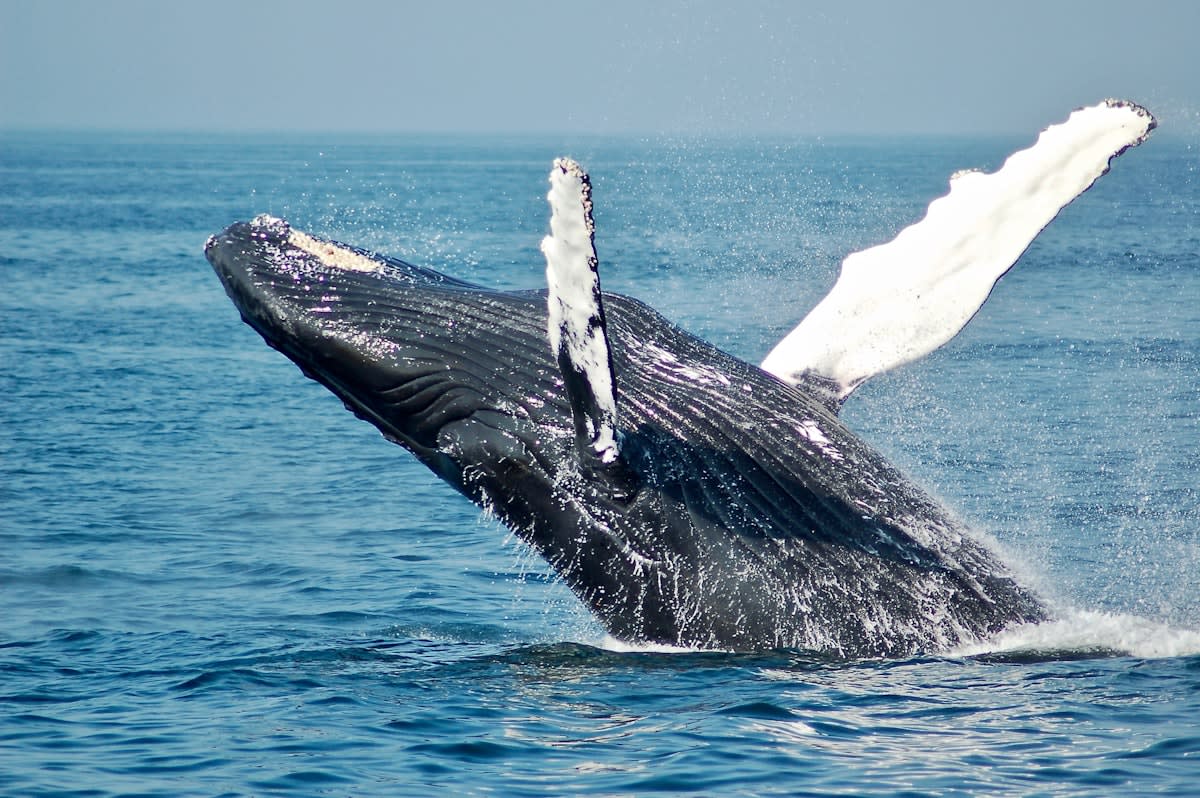
But here is the rub: the data is only as good as the context. A click in a hunting scenario means something entirely different than a click during a social bonding event. This is why the integration of multi-modal data—combining audio with drone footage of body language and GPS tracking of movement—is the current frontier. Translation without context is just a fancy crossword puzzle.
From a practitioner's perspective, the tension in the lab is palpable. You have traditional bioacousticians who have spent thirty years in the field, who believe that meaning is derived from lifelong observation and trust. Then you have the ML engineers who believe that if you have enough data and a large enough transformer, the meaning will simply emerge from the math. These two worlds are colliding. The debate isn't just about the technology; it's about the philosophy of science. Does an AI that can predict the next sound in a sequence actually understand the whale, or is it just a very sophisticated parrot?
The Delta: 2023 vs. 2024
| Capability | State of Art (2023) | Current Breakthrough (2024) |
|---|---|---|
| Learning Method | Supervised (Human-Labeled) | Self-Supervised (SSL/Unlabeled) |
| Analysis Unit | Isolated Call/Sound | Contextual Sequences/Phonetics |
| Translation Goal | Labeling (e.g., Danger) | Semantic Mapping (Vector Spaces) |
| Data Integration | Audio Only | Multi-modal (Audio + Video + GPS) |
The acceleration is driven by the realization that non-human languages may not be linear. While human speech is a stream of sounds over time, some species may communicate in bursts or parallel layers. AI is uniquely suited to this because it doesn't assume a linear structure. It looks for correlations across any dimension. This allows us to detect patterns that the human ear simply cannot perceive, such as ultrasonic harmonics that carry emotional weight.
We are also seeing this expand beyond the ocean. In the forests of Southeast Asia and the plains of Africa, researchers are applying similar models to elephant rumbles and primate alarms. The goal is to move from a species-by-species approach to a cross-species framework. If we can crack the code for one highly social mammal, the blueprints can be adapted for others. The efficiency of the process is increasing exponentially.
The Ethics of the First Word
If we successfully build a two-way translator, we face a moral crisis. Do we have the right to speak back? The potential for manipulation is immense. Imagine an AI that can mimic a whale's mating call or a primate's alarm to lure animals into traps or move them for research. The power imbalance would be absolute. We are essentially creating a tool that allows us to hack the social fabric of other species.
Furthermore, there is the question of consent. Animals cannot agree to be part of a linguistic experiment. While the benefits for conservation are obvious—we could tell a pod of whales to avoid a shipping lane in real-time—the risk of psychological disruption is real. We are inserting ourselves into conversations that have evolved over millions of years without our interference.
Despite these risks, the opportunity for resilience is too great to ignore. Understanding non-human languages allows us to monitor ecosystem health with a precision previously unimaginable. Instead of guessing that a reef is dying because the fish are leaving, we could potentially hear the fish discussing the decline in oxygen levels. It transforms the natural world from a silent backdrop into a chorus of active informants.
Fact-Check & Accuracy Note
Key claims regarding the use of self-supervised learning and vector space mapping are based on public research frameworks from the Earth Species Project and Project CETI (2023-2024). The debate regarding supervised vs. unsupervised learning is a central theme in current bioacoustics literature. Note that while the mathematical alignment of vector spaces is a proven AI technique, the actual translation of complex semantic meaning in animals remains an ongoing experimental goal and is not yet a fully realized product.