
The Gravity Tax
Gravity is a tax. Terrestrial manufacturing fights a losing war against sedimentation and convection in every single batch. NASA is currently fighting this physical reality by partnering with an American startup to prevent an aging orbital telescope from incinerating upon re-entry. This desperation highlights a critical failure in our current material lifecycle where assets are built to fail.
Failure is expensive. When a telescope falls, the loss is not just hardware but an entire window of scientific observation. Such orbital decay forces a realization that maintaining assets in space is more viable than constant replacement from the ground. We are seeing a migration toward active orbital intervention as the only way to sustain complex instrumentation.
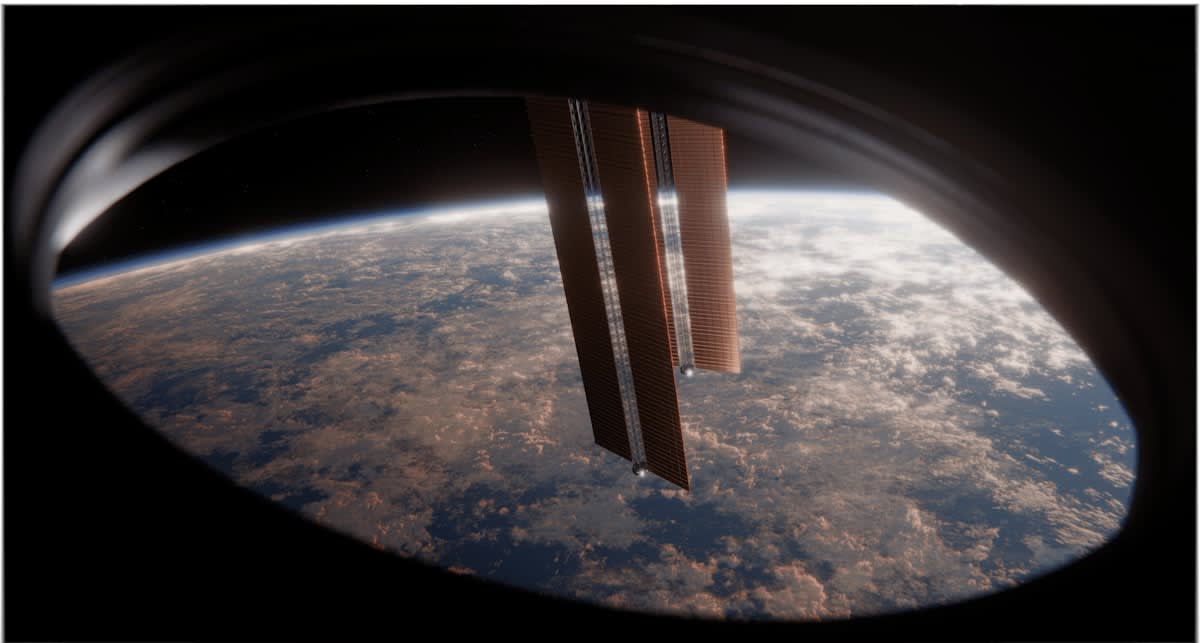
Japan is feeling this tension through the two-speed challenge. Jupitor Corporation identifies a widening gap where 30-year aerospace platforms are being forced to integrate 5-year chip cycles. This disparity creates a hardware mismatch that cannot be solved with traditional engineering. Components simply degrade faster than the platforms they support.
Materials must change. Standard terrestrial alloys and polymers cannot keep pace with the rapid iteration of AI-driven electronics. If a chip evolves every five years, the chassis housing it must possess a modularity or a durability that Earth-bound physics cannot provide. The result is a bottleneck in aerospace reliability.
Intelligence Brief
The two-speed challenge describes the lethal gap between the lifespan of a heavy aerospace platform (30 years) and the lifecycle of the semiconductors powering it (5 years).
Liquidation of legacy assets is already underway. MacroGenics recently completed the sale of its GMP drug substance manufacturing operations to Bora Pharmaceuticals for 122.5 million dollars. This transfer of 140 employees and multiple sites in Rockville and Frederick signals a consolidation of old-world manufacturing. Companies are offloading the heavy overhead of terrestrial GMP to lean into more specialized platforms.
Bora Pharmaceuticals now assumes the responsibility for clinical and commercial manufacturing. Such deals suggest that the cost of maintaining internal GMP facilities is becoming prohibitive. The market is moving toward a model where manufacturing is a utility rather than a core competency.
| Metric | Legacy GMP (Bora/MacroGenics) | AI-Infrastructure (Corning/NVIDIA) |
|---|---|---|
| Capital Flow | $122.5M Sale | 3,000 New Jobs |
| Focus | Drug Substance Production | Optical Fiber Backbone |
| Constraint | Physical Facility Overhead | AI Infrastructure Demand |
Specialization is the only survival strategy. BioSapien is utilizing ISO-7 cleanroom spaces at the Roswell Park GMP Engineering and Cell Manufacturing facility for its MediChip platform. This localized cancer drug delivery system requires a level of purity that typical factories cannot maintain. By leasing external cleanroom space, BioSapien avoids the massive capital expenditure of building its own.
Purity is the ultimate goal. Even an ISO-7 environment on Earth is subject to atmospheric contaminants and gravitational settling. These imperfections are acceptable for MediChips in a clinical trial, but they are unacceptable for orbital hardware. The next step is removing the atmosphere and gravity entirely from the equation.
"30-year platforms are now often built around five-year chips, a disparity known as the two-speed challenge."— Tom Asano, President of Jupitor Corporation
Infrastructure is the hidden engine of this change. Inside Corning's North Carolina factory, workers are producing the optical fiber required to power the AI boom. This fiber acts as the backbone for the high-speed networks that NVIDIA's chips rely on. The partnership is creating 3,000 jobs across two states to meet this surge.
Data speeds are now the primary constraint of industrial growth. Without the optical fiber produced by Corning, the AI revolution hits a physical wall. We are seeing a direct link between the capacity to manufacture high-purity glass and the ability to scale artificial intelligence. This is the terrestrial prerequisite for orbital control.
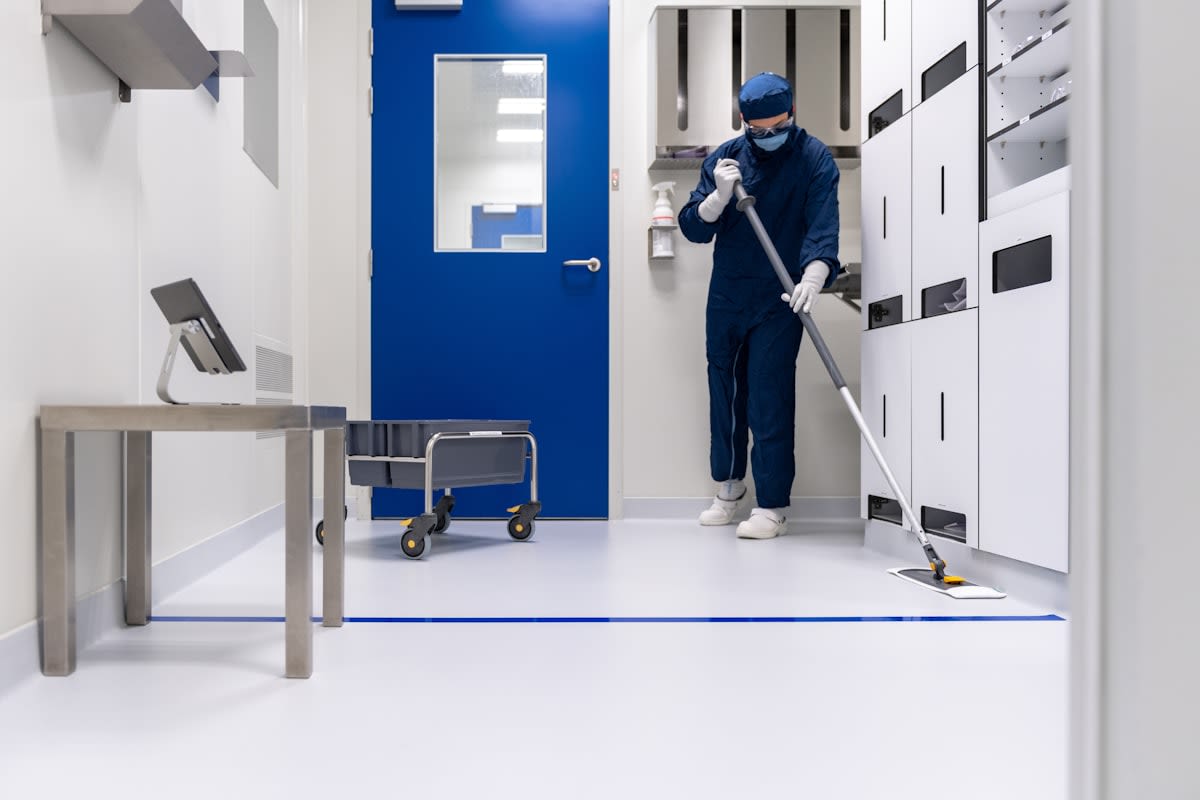
Biotechnology is mirroring this trajectory. Permeasis Therapeutics and The Ohio State University have published research on the Membrane Translocation Domain platform. Their goal is to deliver therapeutic proteins directly into cells, overcoming one of biotechnology's most persistent barriers. This requires a level of molecular precision that pushes the limits of current chemistry.
Molecular engineering cannot ignore the environment. If we can transport peptides into cells on Earth, we can theoretically manufacture those peptides in zero-G to avoid aggregation. The data from Permeasis suggests that the barrier is no longer the theory, but the delivery mechanism.
Orbital presence is becoming a manufacturing requirement. NASA's Artemis III crew is not just about exploration; it is about establishing a footprint. Once a permanent presence is established, the transition from saving falling telescopes to building new ones in orbit becomes inevitable. This removes the risk of atmospheric incineration during launch.
Economics are finally aligning. The 122.5 million dollar sale of MacroGenics' operations shows that the market is bored with traditional drug plants. Investors are looking for the high-signal growth found in AI-infrastructure and orbital logistics. The delta is clear: we are moving from the era of the factory to the era of the platform.
Physical constraints will always dictate the winner. Those who solve the two-speed challenge by manufacturing in orbit will dominate the next century of aerospace. Earth-bound GMP is a legacy system. The future is a vacuum.