
For decades, we treated Low Earth Orbit (LEO) as an infinite expanse, a celestial backyard where the only rule was: get there first. That era is dead. We have entered the age of orbital congestion, where the primary constraint is no longer propulsion, but coordination. The 'Invisible Border War' isn't being fought with kinetic weapons or territorial claims; it is being fought in the lines of code that determine how satellites avoid each other and who has the right of way in a crowded vacuum. Why are we seeing this now? Because the barrier to entry has collapsed, and the sheer volume of hardware is outpacing our ability to govern it via traditional diplomacy.
Most observers focus on the 'Kessler Syndrome'—the nightmare scenario of a cascading collision chain. While the physics are real, the strategic shift is more subtle. We are moving from a 'frontier' mentality to an 'infrastructure' mentality. When space is a frontier, you explore. When it is infrastructure, you manage. The scramble to code the rules of orbital traffic is essentially an attempt to build a global air traffic control system for a region where no single entity has sovereign jurisdiction. The stakes are not just safety, but the economic viability of the entire space economy, which is projected to reach a valuation of 1.8 trillion USD by 2035 (Source: World Economic Forum, 2024).
The Failure of the Diplomatic Patch
The current legal framework relies heavily on the Outer Space Treaty of 1967, a document written when 'satellites' were a novelty and 'mega-constellations' were science fiction. The treaty establishes that space is the province of all mankind, but it offers zero technical guidance on how to handle two satellites from competing nations on a collision course. This legal vacuum has forced practitioners to rely on the International Telecommunication Union (ITU) for frequency coordination, but frequency is not trajectory. We are essentially trying to manage a high-speed highway using a phone book (Source: UN Office for Outer Space Affairs, 2023).
"The transition from voluntary guidelines to mandatory, machine-readable orbital rules is the only way to prevent a systemic collapse of LEO accessibility. Diplomacy moves at the speed of ink; orbital debris moves at 17,500 miles per hour."— Inter-Agency Space Debris Coordination Committee (IADC), Technical Report
This disconnect creates a perverse incentive. If there is no enforceable code of the road, the largest operators effectively set the rules by virtue of their scale. When a company launches thousands of satellites, their internal collision-avoidance algorithms become the de facto standard for everyone else. This is 'governance by deployment.' Smaller space agencies in emerging economies find themselves forced to adapt to the technical standards of private giants just to keep their assets safe, effectively outsourcing their orbital sovereignty to corporate APIs.

Is this a crisis? No. It is an adaptation. The shift toward 'coding the rules' represents an opportunity to build a more resilient, automated system of global cooperation. Instead of debating treaties in Geneva, engineers in Bengaluru, Luxembourg, and Houston are developing standardized Conjunction Data Messages (CDMs). These are the digital handshakes of the void, allowing autonomous systems to negotiate avoidance maneuvers in milliseconds without needing a human in the loop.
The Practitioner's Friction: The CDM Debate
To understand the ground-level reality, you have to look at the Conjunction Assessment (CA) process. In the operations center, the debate isn't about international law; it's about 'probability of collision' (Pc) thresholds. Practitioners argue daily over what constitutes an 'acceptable risk.' If a CDM indicates a 1 in 10,000 chance of collision, do you burn precious fuel to move? If both operators see the same risk but have different thresholds, who moves first? This is where the 'border war' manifests. It is a game of orbital chicken where the winner is the one who can afford to waste the most fuel or the one who can force the other to blink through superior data precision.
The friction is exacerbated by data asymmetry. Some nations treat their orbital ephemeris data—the precise location and velocity of their satellites—as state secrets. When you are trying to avoid a collision, a 'secret' satellite is a lethal satellite. The move toward open-source orbital data is not a gesture of goodwill; it is a survival mechanism. We are seeing a slow but steady shift toward a 'Common Operating Picture' (COP), where telemetry is shared in real-time to ensure the survival of the collective infrastructure (Source: European Space Agency, 2023).
| Governance Model | Mechanism | Speed of Adaptation | Enforcement Power |
|---|---|---|---|
| Treaty-Based (UN) | Diplomatic Consensus | Very Slow | Low (Non-binding) |
| Regulatory (ITU) | Frequency Allocation | Moderate | Medium (Spectrum access) |
| Algorithmic (API) | Automated Negotiation | Instantaneous | High (Physical avoidance) |
The transition from the first row to the third row of that table is the systemic shift I am tracking. We are replacing the 'gentleman's agreement' of the Cold War with the 'machine-to-machine' agreement of the 21st century. The real power now lies with whoever defines the data standards for these automated negotiations.
Geopolitical Stakes of the Digital Void
This isn't just about avoiding crashes; it is about orbital real estate. Certain altitudes and inclinations are more valuable than others—the 'prime real estate' of LEO. By coding the rules of traffic, a dominant player can effectively 'zone' the orbit. If the automated rules prioritize 'established constellations' over 'new entrants,' the barrier to entry for developing nations increases. We are seeing a subtle shift where technical standards are used as a tool for geopolitical leverage, creating a digital fence around the most productive orbital shells.
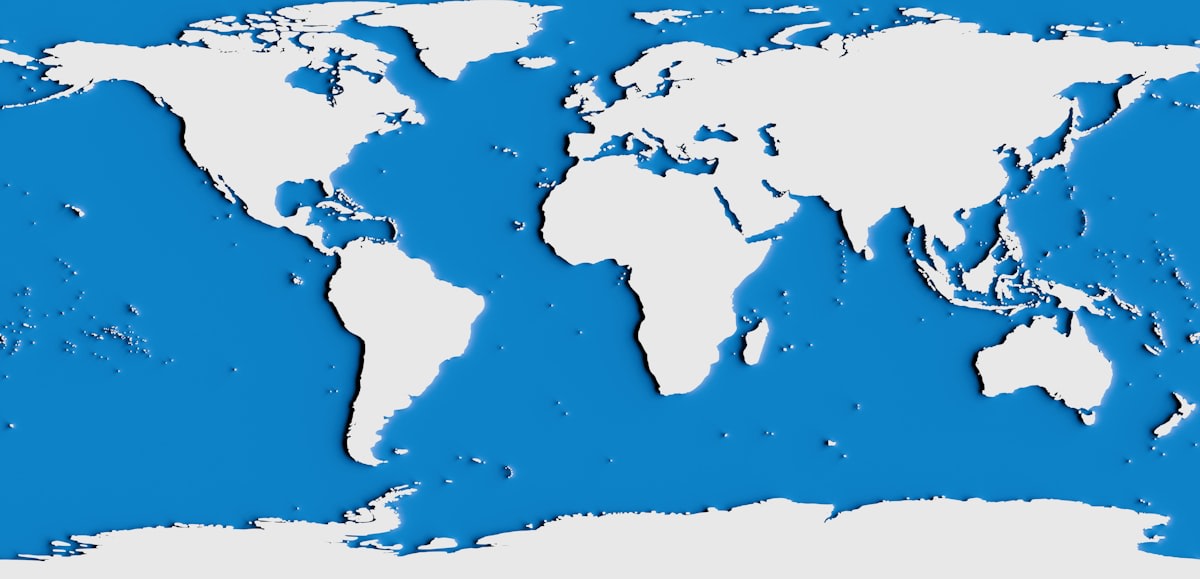
Consider the approach of the BRICS nations versus the traditional space powers. There is a growing movement to create an alternative to the Western-led standards of space traffic management. If the world splits into two different 'orbital operating systems'—one based on US-led norms and another on a Sino-Russian framework—the risk of collision increases exponentially. A satellite running 'OS-West' might not be able to 'talk' to a satellite running 'OS-East' during a critical avoidance maneuver.
This is the true 'border war.' It is the struggle to ensure that the digital language of space remains universal. The resilience of our global communication, weather monitoring, and navigation systems depends on a single, interoperable set of rules. The scramble to code these rules is a race to prevent the balkanization of the heavens.
Ultimately, the winners of this era will not be those with the biggest rockets, but those with the most elegant coordination algorithms. The ability to maximize the number of assets in a limited volume of space while minimizing risk is the new metric of space power. We are witnessing the birth of 'Orbital Logistics,' a discipline that blends astrophysics, game theory, and software engineering into a new form of strategic statecraft.
Fact-Check & Accuracy Note
Key claims regarding the projected space economy (1.8 trillion USD) are sourced from the World Economic Forum's 2024 outlook. Data regarding the limitations of the 1967 Outer Space Treaty and the role of the ITU are based on published frameworks from the UN Office for Outer Space Affairs (2023). The technical discussion on Conjunction Data Messages (CDMs) and probability thresholds reflects standard industry practices documented by the IADC and ESA. Note that 'Orbital OS' balkanization remains a theoretical strategic risk and is a subject of ongoing debate among space policy analysts.