
The era of silicon dominance is facing a biological reckoning. For decades, the industry has chased the ghost of the human brain through symbolic logic and deep learning, yet we remain trapped by the iron triangle of computing power, transport power, and storage power. As of July 2026, the conversation has shifted from how we can better mimic the brain with chips to how we can simply use the brain's own cellular architecture as the hardware. This is the rise of Organoid Intelligence (OI), a paradigm where lab-grown neural structures serve as the actual substrate for computation.
Why does this matter right now? Because the energy cost of traditional AI is becoming unsustainable. While researchers continue to optimize silicon—such as the recent development of AI-driven photonic crystal fiber modulators to reduce insertion loss—these are incremental gains. Organoid Intelligence offers a leapfrog event. By utilizing living neural organoids that possess innate electrical activity and synapse formation, OI provides a level of parallel processing and energy efficiency that no neuromorphic processor has yet matched.
The AI Iron Triangle
The current AI ecosystem relies on four pillars: Computing, Transport, Storage, and Electrical power. OI threatens to disrupt the 'Electrical' pillar by replacing power-hungry GPUs with biological substrates that operate on a fraction of the energy.
The Evolutionary Leap: From Algorithms to Organoids
The journey to OI has been a steady migration toward biology. According to a July 3, 2026, report in Nature, the trajectory began with symbolic logic systems, moved into artificial neural networks (ANNs), and then transitioned to neuromorphic computing. Neuromorphic systems attempted to mirror the signaling behavior of biological neurons, but they were still silicon-based approximations. OI represents the final step: biohybrid computers that incorporate living neural structures. We are moving from 'inspired by' to 'integrated with' biological intelligence.
| Computing Era | Substrate | Core Mechanism | Primary Limitation |
|---|---|---|---|
| Symbolic Logic | Silicon | Hard-coded rules | Inflexibility |
| Deep Learning/ANN | GPU/TPU | Weight optimization | Extreme energy cost |
| Neuromorphic | Specialized Silicon | Spiking neural nets | Hardware complexity |
| Organoid Intelligence | Living Neural Cells | Biological synapses | Biological stability/Ethics |
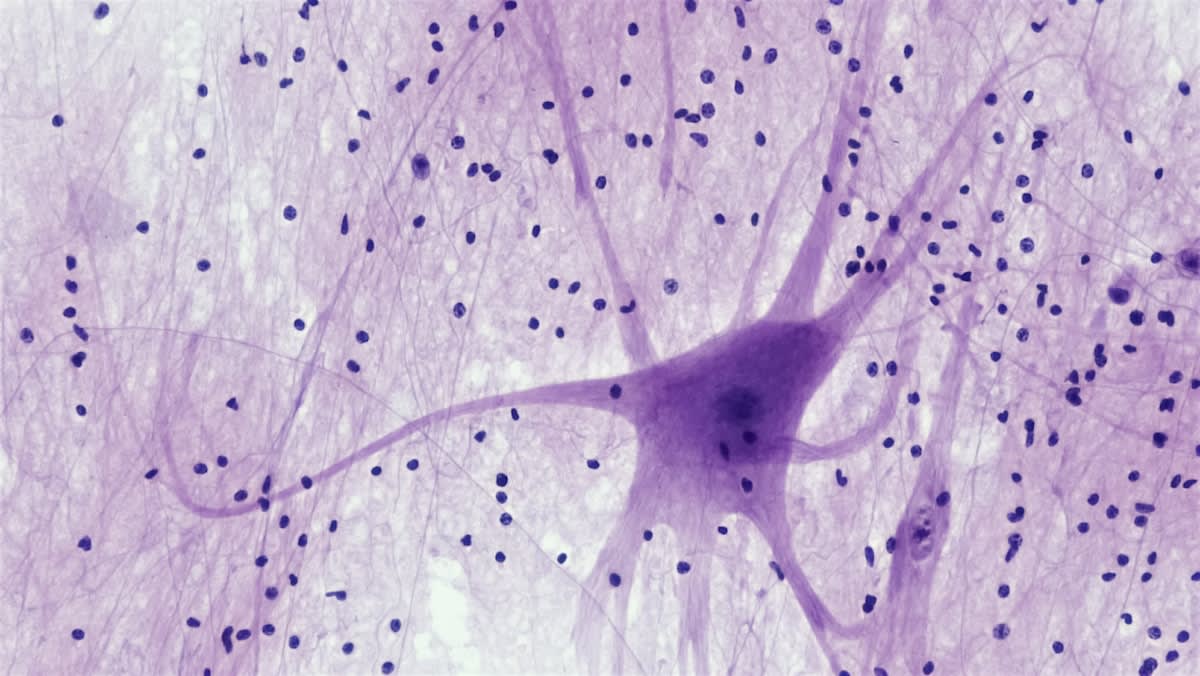
This transition is not merely academic; it is a response to the flexibility gap. Traditional computing systems struggle with the fluid, adaptive nature of human cognition. Living organoids, however, exhibit primitive learning and spontaneous electrical activity. They don't just process data; they adapt their own physical structure—their synapses—in response to input. This is 'intelligence-in-a-dish,' and it fundamentally alters the definition of a processor.
Commercialization: The Taiwan-US Nexus
The movement from the lab to the market is accelerating. At the BIO International Convention 2026 in San Diego, a delegation of Taiwanese biotech startups signaled that organoid technology is entering its commercial phase. Specifically, CancerFree Biotech has been aggressively advancing discussions on the distribution and licensing of its AI-enabled organoid technologies. Their focus on drug development demonstrates the immediate 'so what': using OI to simulate human responses more accurately than any silicon model ever could.
While Taiwan pushes the commercial frontier, US-based research is solving the critical issue of reproducibility. A major hurdle for OI has been the inconsistency of lab-grown tissues. However, researchers at the Keck School of Medicine of USC have recently broken through by using Wnt-secreting 'synthetic organizer' cells to recreate the developmental environment of human kidney organoids. By mapping the developmental axis of nephrons, they have achieved a level of controllable engineering in vitro that is essential for any scalable computing platform.
"It is important that we’re starting to get good reproducibility from organoid models that can lead to robust preclinical models of cell function and disease to benefit patients."— Nils Lindström, PhD, Keck School of Medicine of USC
If we can reproduce the architecture of a kidney, we can reproduce the architecture of a neural circuit. The USC breakthrough proves that biological hardware can be standardized. This removes the 'biological noise' that previously made OI seem impractical for precise computation, paving the way for biohybrid systems that are as reliable as the chips they intend to replace.
The Friction: Ethics and Technical Hurdles
We cannot ignore the friction. Moving computation into living tissue invites a host of ethical dilemmas that silicon never faced. When does a neural organoid stop being a 'substrate' and start being a 'sentient entity'? The Nature report explicitly highlights these substantial ethical challenges. As these biohybrid computers develop more complex synapse formation and primitive learning, the industry will be forced to define the legal and moral status of 'intelligence-in-a-dish.'
Technically, the challenge remains the interface. How do we efficiently translate binary data into biological electrical signals and back again? While the photonic crystal fiber modulators mentioned in recent research are optimizing the speed of light in silicon, OI requires a different kind of interface—one that speaks the language of ions and neurotransmitters. The winner of the next decade will not be the one with the fastest chip, but the one with the most seamless bio-digital bridge.
- Energy Efficiency: Living cells operate on glucose and oxygen, bypassing the massive electrical requirements of GPU clusters.
- Parallelism: Biological neural networks process information across millions of synapses simultaneously, unlike the sequential nature of traditional CPUs.
- Adaptability: OI substrates physically rewire themselves to optimize for specific tasks, a process known as plasticity.
- Reproducibility: The introduction of synthetic organizers is turning biological growth into a predictable engineering process.
The convergence of AI-powered precision health and bio-computing is creating a new class of winners in Asia. Taiwan's strategic push into organoid platforms suggests they are positioning themselves to be the 'foundry' of the biological age. If the last thirty years were about the mastery of the electron, the next thirty will be about the mastery of the cell.