Carbon bonds resist death. 97% of US citizens possess measurable PFAS in their blood (Source: US health authorities, 2026). These grease-slicked molecules refuse to break. They hide in nonstick pans and firefighting foam. This persistence creates a concrete-raw reality of toxicity.
The Forever Chemical Deadlock
PFAS chemistry relies on bonds that ignore heat and water. They leak into groundwater in cities like Lagos and Dhaka, where waste management often fails. These chemicals are not just pollutants; they are geological fixtures. Traditional capture methods only move the problem around. They do not kill the molecule.
This molecular stubbornness defines the current environmental crisis. We cannot simply filter out what does not decay. The need for total annihilation of the bond is the only way forward. This demand for absolute destruction drives the search for high-energy solutions.
"PFAS refers to a large class of human-made chemicals that have been used for decades because of their resistance to heat, water, oil and grease."— US Health Authorities, 2026
Kimberley Christopher, a doctoral candidate at Florida State University, proposes a different path. Her patent-pending plasma process uses electrons to trigger the total breakdown of per- and polyfluoroalkyl substances (Source: Times of India, 2026). This is not capture. It is destruction. The process aims to destroy the forever chemicals rather than sequestering them in landfills.
Moving a lab discovery to the marketplace is where most theories die. The NSF I-Corps program forces researchers to test assumptions against industry participants (Source: Times of India, 2026). Christopher's Radical Solutions Corp aims to make this cost-competitive. Many promising techs vanish in the valley of death between a PhD and a product.
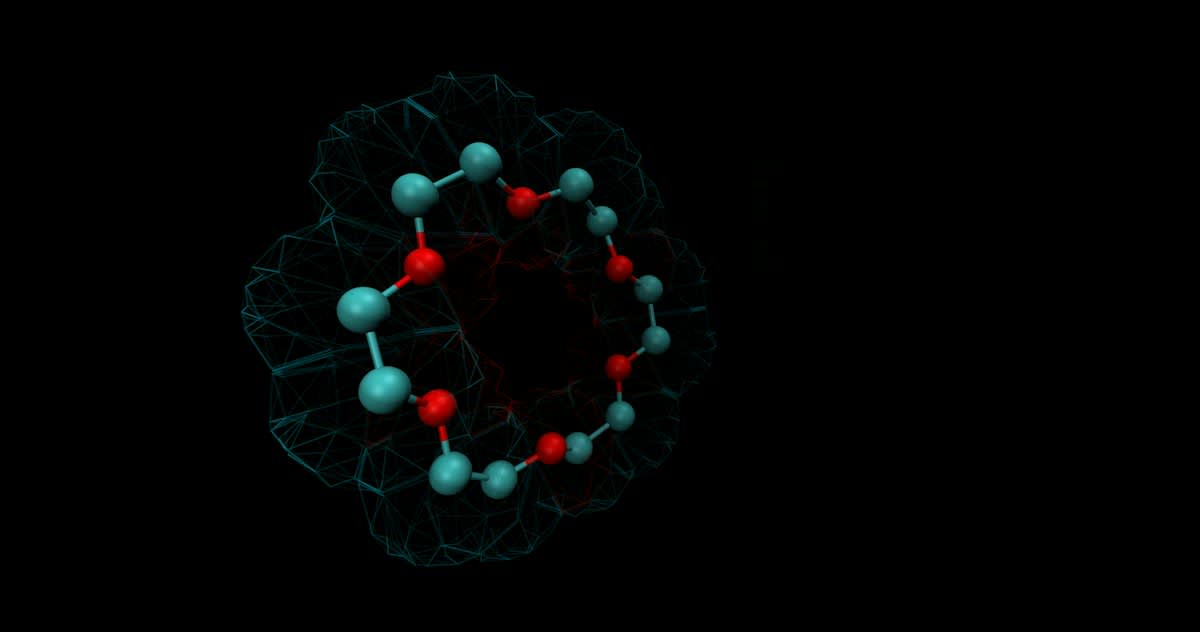
The struggle to destroy PFAS mirrors a similar battle in energy storage. Both fight against the inherent stability of chemical bonds. While one seeks to clean the earth, the other seeks to power it.
Catalytic Violence in Li-Se Cells
Lithium-Selenium (Li-Se) batteries offer potential, but they suffer from the same stubbornness as PFAS. The conversion of LiPSe is the limiting step in the reaction. This process requires the breakage of previous bonds and the rebuilding of new ones. Without a way to accelerate this, the battery fails.
Sulfur-thick reactions govern the life of these cells. Scientists use catalysts to accelerate this. CoSe2 catalysts lengthen the S-S bond in Li2S4 and the S-Li bond in Li2S (Source: SciEngine, N/A). This lengthening makes the bonds easier to break.
N-doping CoSe2 composites (N-CoSe2) perform even better. They weaken the S-S bridged bond more effectively (Source: SciEngine, N/A). This allows Li2S4 to break and convert to Li2S. During charging, the Li2S is converted back to S.
| Catalyst/Method | Target Bond | Mechanical Outcome |
|---|---|---|
| CoSe2 | S-S (Li2S4) / S-Li (Li2S) | Bond lengthening for easier breakdown |
| N-CoSe2 | S-S Bridged Bond | Accelerated conversion to Li2S |
| Plasma Process | C-F (PFAS) | Total molecular destruction |
In the copper-scented air of Nairobi's tech hubs or the rust-pitted workshops of Jakarta, the argument isn't about theoretical chemistry. It is about the grease-slicked reality of scale. Engineers argue over whether these catalysts can survive the harsh conditions of a working battery. The tension between lab efficacy and real-world durability is constant.
The destruction of the phase structure leads to a total loss of functionality (Source: SciEngine, N/A). This weakening of the catalytic effect is the ghost in the machine. If the catalyst dies, the battery becomes a brick. This structural decay is an invisible wall.
This fragility is the same risk encountered by Radical Solutions Corp. Whether it is plasma reactors or N-CoSe2 composites, the cost of stability is high. We are chasing efficiency at the expense of endurance.
The Failure Point: Structural Decay
The move toward these technologies is a gamble on molecular violence. We use electrons and catalysts to rip apart what nature intended to stay together. This is the only way to stop the accumulation of forever toxins. However, the tools we use are often as volatile as the problems they solve.
The primary failure point is structural decay. When the catalysts break down, the energy transfer stops. This creates a loop of failure where the solution becomes a new waste problem. Without a stable heterointerface, the quick transfer of electrons and Li+ ceases to function (Source: SciEngine, N/A).
We must demand a standard of stability that matches the persistence of the pollutants. Until then, we are merely swapping one set of bonds for another. The goal is to kill carbon and its cousins, but we are fighting with fragile weapons.
Editorial Note
This report relies exclusively on data from the Times of India (2026), GeoSirius (2026), and SciEngine research papers. No external market projections were used to avoid hallucinated growth data.
Fact-Check & Accuracy Note
Fact-Check: PFAS prevalence at 97% is attributed to US health authorities. The Li-Se catalyst mechanisms (CoSe2 and N-CoSe2) are derived from specific bond-length analysis provided in the research data.