
The New Map of Market Dominance
OpenAI just stopped playing polite. By poaching Prabhjeet Singh, the former Uber India and South Asia president, to serve as its first managing director for the country, the AI giant is signaling that India is no longer just a user base—it is the primary battlefield. This move, announced June 26, 2026, confirms India as the second-largest market for ChatGPT globally, trailing only the U.S.
Why a ride-sharing veteran? Because scaling a digital ecosystem in New Delhi, Mumbai, and Bengaluru requires operational brutality, not just algorithmic elegance. OpenAI is building a physical footprint to match its digital reach, moving beyond the advisory role of Rishi Jaitly to actual on-the-ground leadership.

This aggressive expansion isn't happening in a vacuum. While the software giants fight for attention, the biotech sector is grinding through the messy reality of insolvency and recovery.
The Brutal Math of Biotech Recovery
Look at Kobo Biotech. The company spent FY 2023-24 with zero revenue from operations due to suspended manufacturing. Yet, the narrative isn't one of failure, but of surgical survival. They narrowed their net loss to 49.29 lakh, down from 55.53 lakh the previous year.
| Metric | FY 2022-23 | FY 2023-24 |
|---|---|---|
| Net Loss | 55.53 lakh | 49.29 lakh |
| Total Expenses | 5.57 crore | 4.94 crore |
| Operational Revenue | 0 | 0 |
The real win came on May 11, 2026, when the NCLT Hyderabad Bench approved a resolution plan from Beaufond Industries Limited totaling INR 70.11 crores. This is the blueprint for the modern biotech cycle: crash, consolidate, and get rescued by a larger industrial player.
As capital flows back into biotech, the focus is shifting from general treatment to hyper-specific detection.
Precision Over Politics
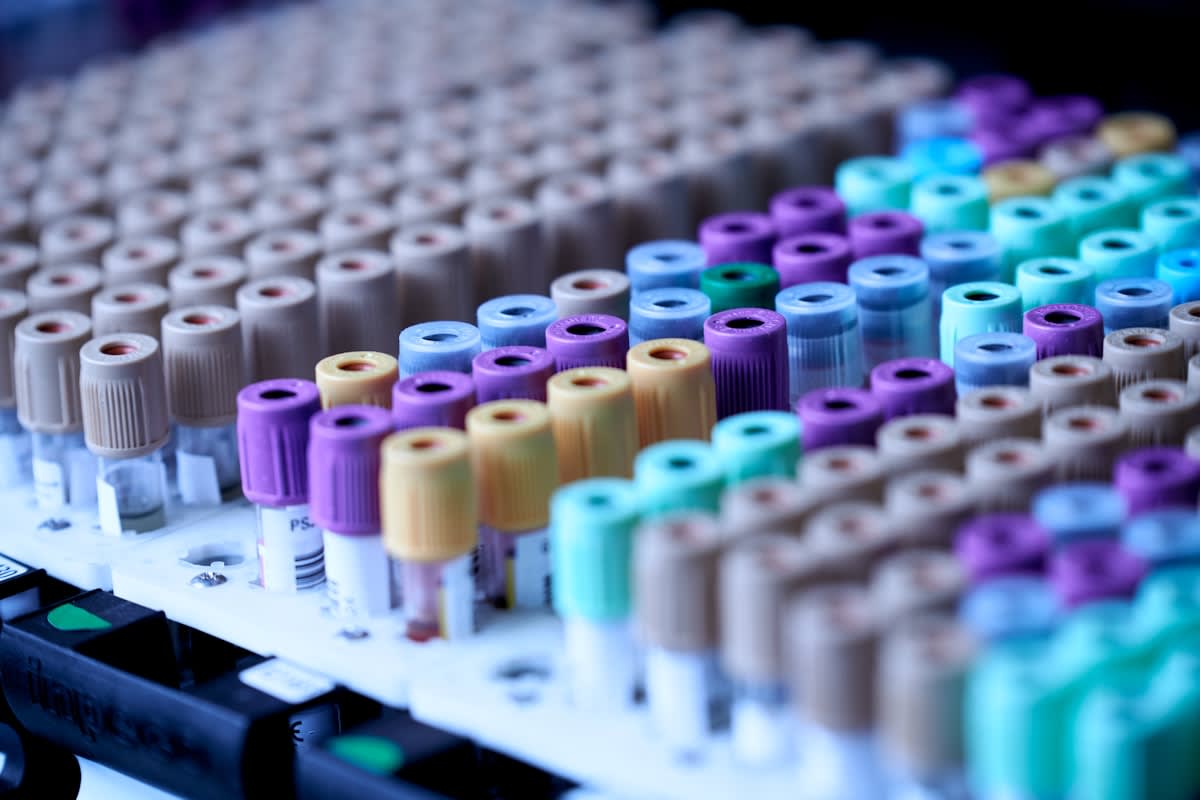
The ASCO 2026 conference highlighted a critical tension. The NHS Galleri Trial, powered by Grail technology, may have missed its primary outcome measure, but it proved a vital point: blood screening for early cancer detection at a population scale is possible. It can pinpoint where in the body to look, turning a blind search into a targeted strike.
Simultaneously, researchers are identifying the Anti-PDGFR alpha autoantibody as a novel marker for non-small cell lung cancer (NSCLC). In a study of 1,170 participants, this marker showed a clear link to poor prognosis via the PI3K/AKT/NF-kappa B signaling pathway. This isn't a breakthrough in a vacuum; it is a tool for survival.
"Boycotting one of the world's leading centers of scientific innovation does not advance education."— CEO of Time to Stand Up for Israel
While political movements target Israeli universities, the actual output—AI systems that detect diseases earlier through medical imaging—continues to push the global ceiling. The divergence is stark: political boycotts in the West versus technical acceleration in the lab.
Even the regulatory environment is tightening to prevent the commercialization of education from eclipsing patient care.
In Tamil Nadu, the Directorate of Medical Education and Research stepped in on June 27, 2026. They ordered self-financing medical and dental colleges to stop overcharging, restricting MBBS fee collection to the prescribed 4.5 years. It is a necessary correction in a system where the cost of entry often outweighs the quality of the output.
The Bottom Line
The 'So What?': We are seeing a global synchronization of AI and Biology. OpenAI is capturing the market infrastructure in India, while biotech is refining the biological markers in the lab. The winners won't be the ones with the loudest AI hype, but those who can operationalize these tools in fragmented markets.
The delta between 2025 and 2026 is clear. We have moved from asking if AI can help medicine to deploying the executives and the biomarkers to make it happen. The noise is political; the signal is operational.