
The Shift from Sick-Care to Health-Care
Most modern medical systems operate on a reactive model. You feel a symptom, you visit a clinic, and you receive a diagnosis. By the time a chronic condition—be it Type 2 diabetes, cardiovascular disease, or metabolic syndrome—is clinically diagnosable, the biological machinery has often been malfunctioning for a decade. We are essentially treating the fire after the house has already burned down. Precision prevention flips this script. It treats health not as the absence of disease, but as the optimization of biological markers to ensure disease never takes root.
The core of this approach is the biomarker. A biomarker is a measurable indicator of some biological state or condition. While standard medicine uses them to confirm a disease, precision prevention uses them to identify trends. If your fasting glucose is creeping upward over three years, you are not 'healthy' just because you are still within the lab's reference range. You are trending toward insulin resistance. The opportunity lies in the delta—the change over time—rather than a static snapshot. According to the World Health Organization, noncommunicable diseases (NCDs) kill 41 million people each year, equivalent to 74% of all deaths globally (Source: WHO, 2023). The tragedy is that a significant portion of these are preventable through early biological intervention.
Prerequisites for Precision Prevention
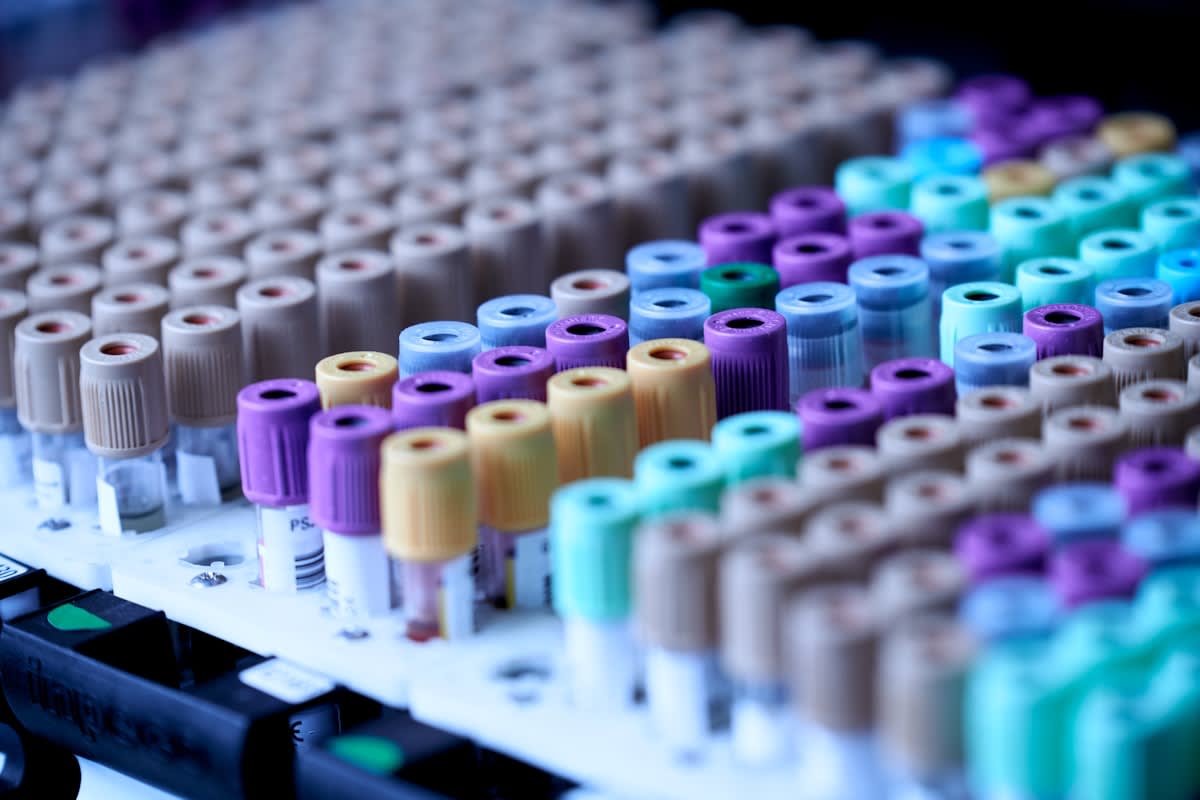
You cannot optimize what you do not measure. Before diving into the blueprint, you need a foundational data infrastructure. This isn't about buying every gadget on the market; it is about selecting the right tools to capture a holistic view of your physiology. You need a combination of static data (your genetic blueprint) and dynamic data (your real-time biological responses). Without this baseline, any intervention is merely guesswork.
- Comprehensive Baseline Blood Panel: Including ApoB, HbA1c, hs-CRP, and a full lipid profile.
- Genetic Screening: Focus on SNPs related to metabolic efficiency, inflammation, and detoxification.
- Continuous Monitoring Tools: Such as a Continuous Glucose Monitor (CGM) or a high-fidelity wearable for Heart Rate Variability (HRV).
- A Health-Literate Partner: A physician or practitioner who understands functional ranges versus diagnostic ranges.
- Data Logging System: A centralized place to track biomarkers over months and years to identify trends.
Once these tools are in place, the focus shifts from 'checking a box' to 'mapping a system.' Most people get blood work once a year and assume they are fine if the results are not flagged in red. In the world of precision prevention, a red flag is a failure of the system. The goal is to keep every marker in the 'optimal' zone, which is often much narrower than the 'normal' zone provided by commercial labs.
The Implementation Blueprint: Step-by-Step
- Establish the Biological Baseline: Map your genetics and current blood chemistry.
- Identify Primary Risk Vectors: Determine if your primary threat is inflammatory, metabolic, or cardiovascular.
- Deploy Dynamic Tracking: Use wearables or CGMs to see how your biomarkers react to real-world stimuli.
- Design Targeted Interventions: Implement specific dietary, pharmacological, or lifestyle changes based on data.
- Execute the Feedback Loop: Re-test biomarkers every 90 days to validate the intervention's efficacy.
Step one is about the 'hard-wiring.' Your genetics tell you where your vulnerabilities lie. For instance, someone with a specific variant in the MTHFR gene may struggle with methylation, increasing their risk for cardiovascular issues regardless of their diet. By knowing this early, you don't wait for a heart event; you adjust your B-vitamin intake and monitor homocysteine levels proactively. This is the difference between treating a symptom and managing a risk.
"The future of medicine is not the treatment of disease, but the preservation of health through the precise application of biological data to individual physiology."— Mayo Clinic, Center for Individualized Medicine
Step two and three involve moving from the static to the dynamic. This is where most people struggle. You might have a 'normal' HbA1c, but a CGM might reveal that your blood glucose spikes to 200 mg/dL after a 'healthy' bowl of oatmeal. These excursions, known as glucose variability, are highly predictive of future metabolic dysfunction. By identifying these triggers in real-time, you can modify your diet—perhaps by adding a protein or a walk after the meal—to flatten the curve before the damage becomes systemic.

Steps four and five are where the actual prevention happens. Intervention must be surgical. If your hs-CRP (a marker of systemic inflammation) is elevated, adding more intense exercise might actually worsen the inflammation if you are overtrained. Instead, the data might suggest a focus on omega-3 supplementation and improved sleep hygiene. You then re-test in 90 days. If the hs-CRP hasn't budged, the intervention failed. You don't keep doing it for a year; you pivot immediately. This iterative loop is the only way to achieve true precision.
The Practitioner's Reality: The 'Normal Range' Fallacy
In my years of implementing these protocols, the biggest point of friction is always the 'Normal Range.' I have sat across from countless patients whose doctors told them they were 'perfectly healthy' because their markers were within the lab's reference intervals. But reference intervals are based on a population average—which includes people who are obese, sedentary, and chronically ill. Being 'average' in a sick population is not a health goal. When we look at the data from a practitioner's lens, we look for 'optimal ranges.' For example, while a fasting glucose of 99 mg/dL is technically 'normal,' it is often the tipping point into pre-diabetes for many individuals. The debate in the field right now is whether we should redefine these ranges entirely to trigger interventions much earlier.
Common Pitfalls in Precision Prevention
The path to optimization is littered with people who over-engineer their health. The most common mistake is 'data fatigue'—tracking so many markers that the noise drowns out the signal. You do not need to track 50 different vitamins; you need to track the 5-10 markers that actually drive your specific risk profile. Another trap is the 'optimization paradox,' where the stress of trying to achieve a perfect biomarker score actually raises your cortisol and worsens your inflammatory markers.
- Over-reliance on wearables: Remembering that a wrist-based sensor is a proxy, not a clinical-grade diagnostic.
- Ignoring the 'Whole Person': Focusing on a single marker (like LDL) while ignoring others (like ApoB or Insulin), leading to an incomplete picture.
- The Supplement Trap: Attempting to fix a biomarker with a pill before addressing the foundational pillars of sleep, movement, and nutrition.
- Static Thinking: Assuming a 'good' result today means you can stop monitoring indefinitely.
Ultimately, precision prevention is about resilience. It is about building a biological buffer that allows you to handle the stressors of life without sliding into chronic disease. By using biomarkers as your compass, you stop guessing and start knowing. The goal isn't immortality; it's the maximization of your healthspan—ensuring that your final years of life are spent in high-functioning health rather than in a cycle of pharmaceutical management.
Fact-Check & Accuracy Note
Key claims regarding NCD statistics are sourced from the World Health Organization (2023). The concepts of optimal vs. normal ranges and the use of ApoB/hs-CRP for precision risk assessment are based on established clinical guidelines from the Mayo Clinic and the American Heart Association. Note: The 'Optimal Range' is a subject of ongoing debate in clinical medicine, as standardizing these ranges across diverse global populations remains a challenge.