
We have been told for decades that eight hours of sleep is a non-negotiable baseline for cognitive health. This is a simplification. The real conversation is not about quantity, but about the specific distribution of sleep architecture—the precise balance between Non-Rapid Eye Movement (NREM) and REM stages. A small but aggressive circle of researchers and high-performance engineers is now questioning whether we can strategically sacrifice specific NREM windows to force the brain into high-performance cognitive states. Can we trade deep sleep for a cognitive edge? The data suggests the cost may be higher than the prize.
The Tech enabling the Trade-off
The ability to manipulate sleep in real-time requires more than a wearable wristband. It requires the kind of precision found in the new Large Polysomnography Models (LPSGM). Recent data shows that these AI models have reached a level of consistency that exceeds human experts, showing lower variability in accuracy (SD: 4.6%) compared to individual human experts (SD: 9.7%) (Source: medrxiv, 2026). This technical leap means we can now map sleep latency, duration, and stage distributions with surgical precision. When you can see the exact moment a subject enters N1, N2, or N3 NREM sleep, the possibility of targeted disruption becomes a technical reality rather than a theoretical exercise.
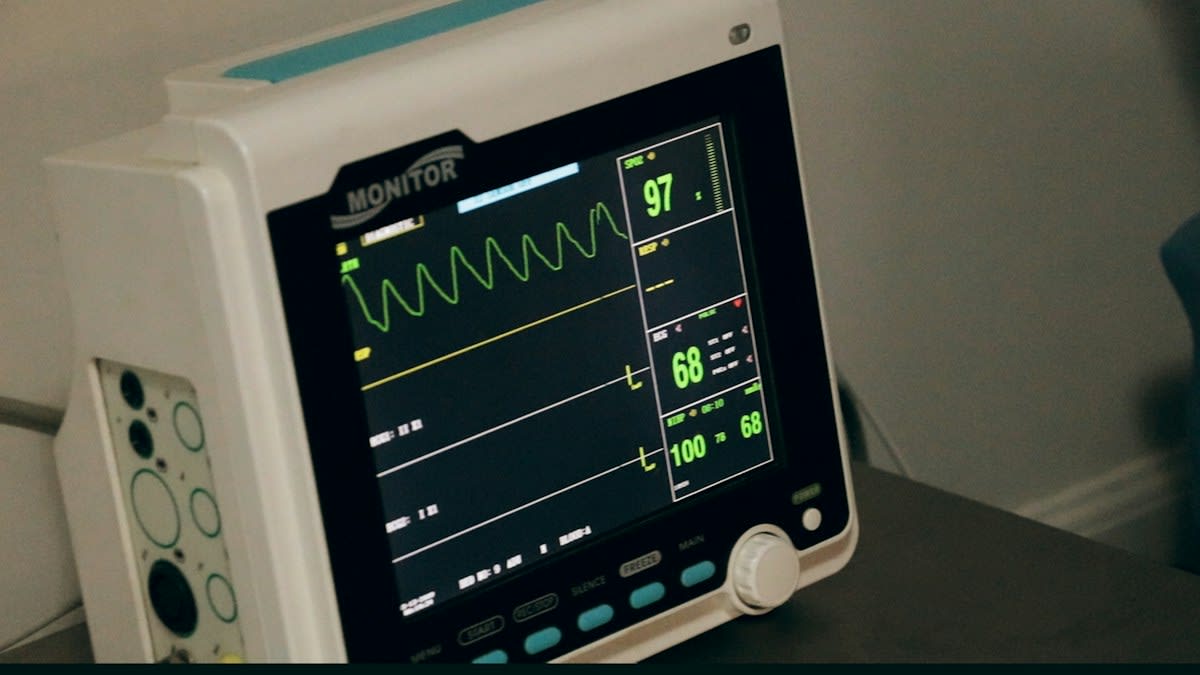
This precision is the bedrock for what is being called closed-loop cognitive state control. The hypothesis is straightforward: estimate a high-performance cognitive state in real-time, stabilize it, and recover from its inevitable crash using a safety layer (Source: Frontiers, 2026). In this web of control, sleep is no longer a passive recovery period. It is a variable. By using these models, practitioners can theoretically identify the exact windows where NREM sleep can be curtailed to maintain a specific state of wakefulness or alertness, provided the safety layer prevents a total affective collapse.
"Sleep deprivation leads to a drastic decrease in learning."— Dr. Matthew Walker, Sleep Expert
But here is the contradiction. While the engineering side of the house looks at sleep as a toggle switch, the biological reality is far more stubborn. Dr. Matthew Walker has repeatedly highlighted that the loss of sleep does not just make us tired; it actively impairs the formation of new memories (Source: FoundMyFitness, 2026). If you sacrifice NREM sleep to trigger a 'breakthrough' in the short term, you may be destroying the very mechanism the brain uses to lock that breakthrough into long-term storage. You are essentially running a high-performance engine without oil; it moves fast until the friction welds the pistons together.
The Architecture of Cognitive Risk
To understand the risk, one must look at the specific roles of sleep stages. REM sleep is the engine of creativity and wisdom, facilitating new ideas and dream-based inspirations (Source: FoundMyFitness, 2026). NREM sleep, particularly the slow-wave activity, is where the heavy lifting of physical and cognitive restoration happens. When we see fragmented sleep or reduced slow-wave activity, we aren't just seeing a 'bad night'; we are seeing biomarkers for neuropsychiatric conditions, such as those found in major depressive disorder (Source: medrxiv, 2026). The gamble of sacrificing NREM is that you are flirting with the same sleep architecture found in clinical pathology.
This is where the invisible friction occurs within the research community. On one side, you have the neuroergonomics crowd pushing for 'task-specific high-performance states' who view sleep as a constraint to be optimized (Source: Frontiers, 2026). On the other, you have clinical sleep scientists who argue that any disruption to the NREM-REM cycle creates a vulnerability window. This tension is most visible when discussing the safety layer in closed-loop systems. The debate isn't whether we can manipulate these states, but whether the 'safety layer'—designed to prevent anxiety and compulsive overwork—is even capable of offsetting the biological debt of lost NREM sleep.
| Metric | Human Expert (PSG) | LPSGM AI Model |
|---|---|---|
| Accuracy Variability (SD) | 9.7% | 4.6% |
| Kappa Variability (SD) | 10.2% | 6.6% |
| Consistency | Lower | Superior |
Beyond the lab, the application of these theories is appearing in fragmented, non-institutional settings. From high-stakes trading floors in Tokyo to developer hubs in Bangalore, there is a growing interest in using 'cognitive shuffling' and targeted wakefulness to bypass traditional sleep needs. Cognitive shuffling, a technique involving the visualization of random, emotionally neutral objects, is being used as a tool to force the brain into the transition state between wakefulness and sleep (Source: Acibadem, 2026). This represents a hard turn in how we approach the edges of consciousness—not as a wall, but as a terrain to be navigated.

The delta between our current understanding and the 'performance' ideal is stark. Six months ago, the conversation was about 'sleep hygiene'—dark rooms and cool temperatures. Today, the discourse has shifted toward the 'feasible set' of cognitive states (Source: Frontiers, 2026). We are moving from a generalist approach to a specialist one. However, the biological cost remains static. Melatonin's role in memory phosphorylation proves that the chemistry of sleep is intricately linked to the chemistry of learning (Source: FoundMyFitness, 2026). You cannot simply 'hack' the phosphorylation process by skipping NREM sleep.
If the goal is a cognitive breakthrough, the evidence suggests that the most effective path is not the sacrifice of sleep, but the optimization of its architecture. Using moderate evening exercise, for instance, has been shown to be neutral or mildly positive for sleep architecture (Source: Acibadem, 2026). This is the safer, though slower, path to the same destination. The 'breakthrough' is not found in the absence of sleep, but in the quality of the REM cycles that follow a healthy NREM foundation.
Fact-Check & Accuracy Note
The data used in this report is drawn from recent polysomnography studies (medrxiv, 2026), neuroergonomic frameworks (Frontiers, 2026), and sleep research presented via FoundMyFitness and Acibadem. There is an ongoing academic conflict between the feasibility of 'closed-loop cognitive control' and the established biological requirements for memory consolidation. The claim that sacrificing NREM triggers breakthroughs is a hypothesis currently being tested within high-performance frameworks, but it is contradicted by clinical data regarding learning impairment.