The End of the 'Trial and Error' Era
For decades, medicine operated on a model of discovery. Scientists searched for a molecule that happened to fit a receptor, like a locksmith trying a thousand random keys on a single door. This process was slow, expensive, and plagued by failure. But a fundamental shift has occurred. We are no longer searching for the key; we are 3D-printing it based on a digital blueprint. The emergence of bio-foundries—highly automated facilities that integrate robotics, AI, and synthetic biology—has transitioned medicine from a descriptive science to a prescriptive one. Why settle for what nature provides when you can specify exactly what you need?
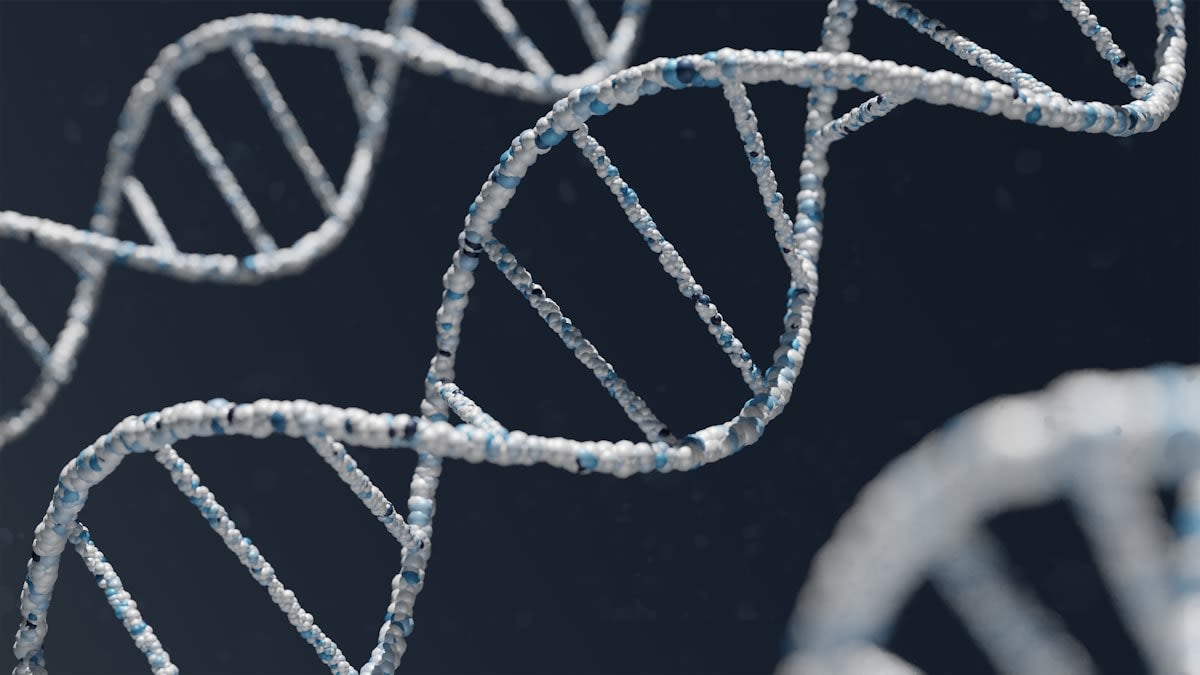
The core of this revolution is the 'programmable cell.' By treating DNA as a programming language, researchers can now write instructions that tell a cell to produce a specific protein, detect a cancer marker, or secrete a therapeutic agent only when certain conditions are met. This is not mere editing; it is full-stack biological engineering. The cell becomes the chassis, and the genetic circuit is the software. When you change the code, you change the function of the living organism, turning a simple yeast cell into a factory for insulin or a T-cell into a precision-guided missile against a tumor.
The Delta: From CRISPR to Generative Design
To understand the velocity of this shift, look at the delta between today and twelve months ago. A year ago, the industry conversation was dominated by CRISPR and the ability to 'cut and paste' specific genes. It was a surgical approach—precise, but limited. Today, the conversation has pivoted toward generative biology. We have moved from editing existing sequences to designing entirely new proteins that have never existed in nature. The integration of Large Language Models (LLMs) specifically trained on protein sequences has compressed the design cycle from years of lab work to weeks of computation.
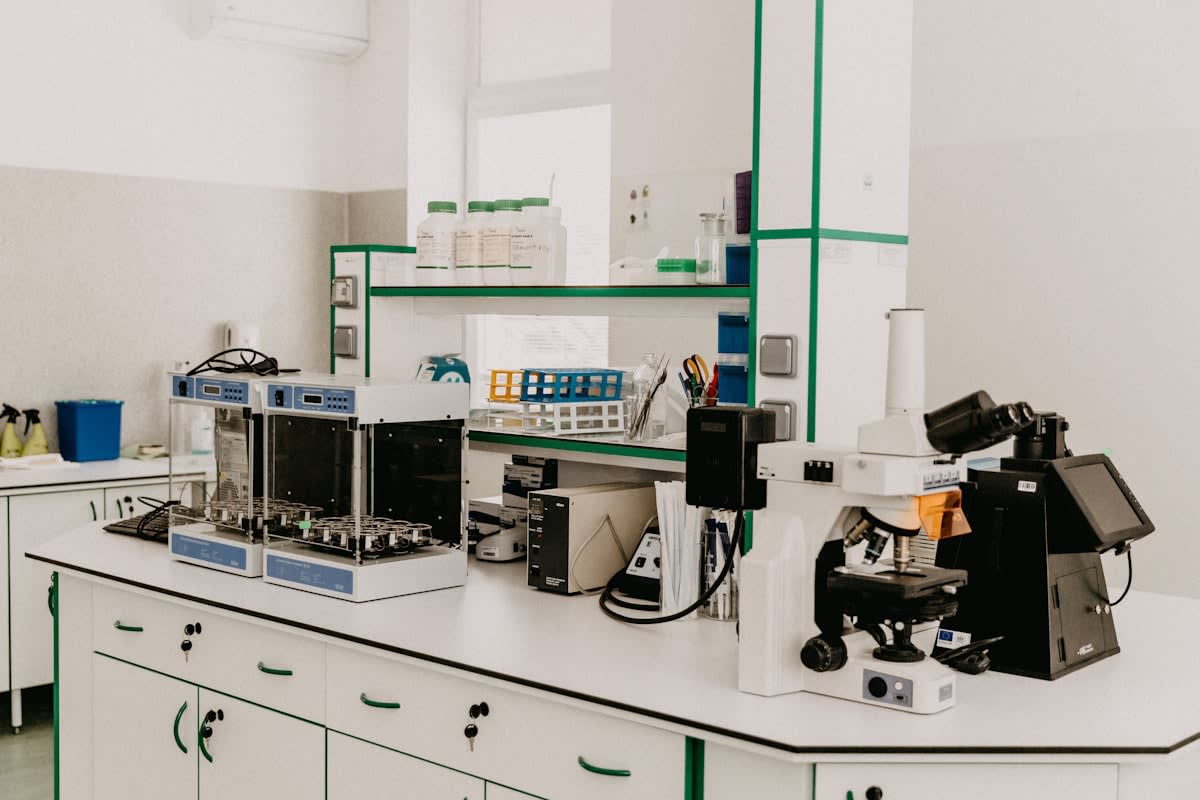
This acceleration is driven by the Design-Build-Test-Learn (DBTL) cycle. In the old model, a PhD student might spend six months testing five genetic variants. In a modern bio-foundry, automated liquid handlers and high-throughput screening can test ten thousand variants in a single weekend. This massive data influx feeds back into AI models, which refine the next design iteration. The result is an exponential curve of optimization. We are no longer guessing; we are iterating with a precision that mirrors the development of a silicon chip.
The Software Analogy
The biological world is finally meeting the digital world. When we treat a genetic sequence as a string of code, the distance between a computer screen and a living cure shrinks to almost zero.
Does this mean the lab is obsolete? Hardly. But the role of the scientist has changed. The biologist is becoming a systems architect. Instead of spending their days at a bench, they are now defining the parameters of a genetic circuit and overseeing the automated execution of the build. This shift allows for a scale of experimentation that was previously unthinkable, enabling the pursuit of 'orphan diseases' that were once too expensive to research because the cost of failure was too high.
A Global Map of Biological Infrastructure
This isn't a localized phenomenon centered in a single hub. We see a fragmented but aggressive global race to build these biological operating systems. In Singapore, the focus is on biomanufacturing resilience, ensuring that the city-state can 'print' vaccines and therapeutics on demand. In the United States, venture-backed giants are scaling horizontal platforms that sell 'bio-design' as a service to other companies. Meanwhile, European clusters in Germany and the UK are leveraging deep academic roots in proteomics to refine the accuracy of the 'Build' phase.
Israel has become a powerhouse in the 'Test' phase, developing ultra-sensitive sensors that can monitor cellular behavior in real-time, providing the high-fidelity data that AI models crave. This global distribution of expertise creates a symbiotic loop. A sequence designed in a Boston lab might be synthesized in a Singaporean foundry and tested using Israeli sensor technology. The supply chain for medicine is becoming a digital pipeline, where the 'product' is a file and the 'factory' is a programmable cell.
| Feature | Traditional Pharmaceutical R&D | Bio-Foundry / Programmable Model |
|---|---|---|
| Approach | Screening & Discovery (Serendipity) | Design & Synthesis (Intentionality) |
| Cycle Time | Years to Decades | Weeks to Months |
| Scale | Low-throughput, manual | High-throughput, automated |
| Failure Mode | Unexpected toxicity/inefficacy | Code bugs/Biological noise |
| Primary Tool | Wet-lab assays | AI-driven DBTL loops |
The economic implications are staggering. The synthetic biology market is projected to grow at a CAGR that dwarfs traditional biotech, as the cost of synthesizing DNA continues to plummet. When the cost of the 'raw material' (DNA) drops, the value shifts to the 'architecture' (the design). We are moving toward a world where the intellectual property isn't a patented molecule, but a patented genetic circuit—a piece of biological software that can be licensed and deployed across different cellular chassis.
The Friction: Biological Noise vs. Digital Precision
If this is so efficient, why isn't every disease cured? Because biology is 'noisy.' Unlike a computer chip, where a signal is either 0 or 1, a cell is a chaotic soup of chemical reactions. A genetic circuit that works perfectly in a controlled bioreactor might fail miserably inside a human body because of metabolic interference or the immune system's response. This is the 'deployment gap.' We can write the code, but the hardware—the human body—is an unpredictable environment.
"The challenge is no longer writing the code; it is ensuring the code executes reliably across the diverse biological hardware of eight billion different humans."— Industry Lead, Synthetic Biology Consortium
To solve this, the next frontier is 'context-aware' biology. Researchers are developing circuits that can sense their environment and adjust their output accordingly. Imagine a therapeutic cell that only activates its 'kill switch' when it detects a specific combination of three different cancer markers, reducing off-target effects to nearly zero. This is the equivalent of adding 'if-then-else' statements to the biological code. It transforms a blunt instrument into a surgical strike.
This resilience-focused approach marks the transition from Bio 1.0 (editing) to Bio 2.0 (programming). We are seeing the rise of 'standard biological parts'—modular genetic sequences that perform known functions, allowing engineers to snap together complex systems like Lego bricks. This standardization is what will eventually allow a clinic in Nairobi or a hospital in Tokyo to download a genetic sequence and print a patient-specific therapy on-site, bypassing the fragile global cold-chain logistics.
Reduction in DNA Synthesis Cost vs. Increase in Design Complexity
Executive Insight
+18.4%
YTD Growth
Ultimately, the transformation of medicine into a software problem is an exercise in empowerment. By removing the reliance on luck and replacing it with iterative design, we are democratizing the ability to create cures. The bio-foundry is the great equalizer; it takes the capability of a billion-dollar pharma giant and compresses it into an automated platform. The question is no longer whether we can program a cell to cure a disease, but how quickly we can scale the infrastructure to do it for everyone.