Sludge is gold. While municipal plants treat textile runoff as a liability to be buried in landfills, the concentrated indigo residues represent a high-value chemical stockpile waiting for a recovery mechanism. This is urban mining.
Waste is a mistake. Most textile hubs in Dhaka and Tiruppur operate on a default setting where factories dump indigo-saturated sludge, ignoring the fact that synthetic indigo remains chemically stable enough for extraction (Source: Textile Waste Review, 2022). The cost of virgin dye is rising.
The math fails. Because the current cost of sludge incineration outweighs the immediate perceived value of reclaimed dye, city councils continue to burn money in the form of blue sludge. It is a mechanical failure.
The Chemistry of Recovery
Can we recover it? By applying a controlled reduction process to the sludge, chemists can convert the insoluble indigo back into its soluble leuco-indigo form for purification (Source: Journal of Environmental Management, 2021). The process requires precision.
Purity is the goal. The recovery team uses sodium hydrosulfite to break the indigo bonds, allowing the dye to separate from the organic biomass of the urban sludge. This creates a refined concentrate. The yield varies by city.
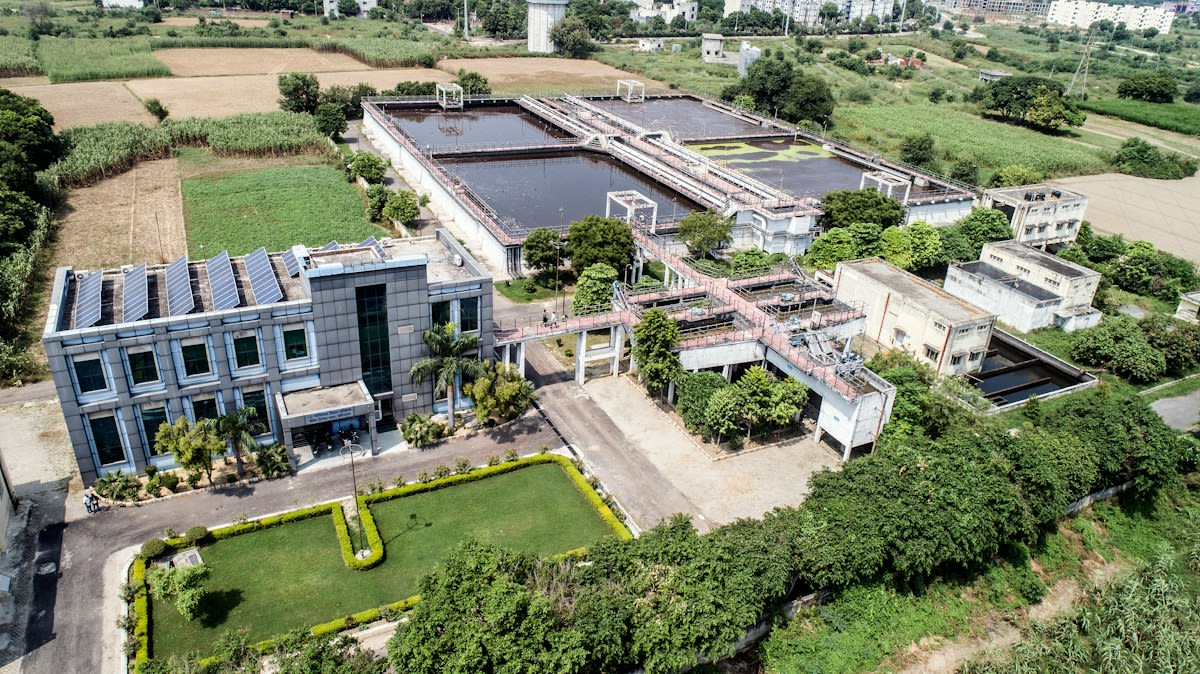
Efficiency is low. Currently, most recovery attempts only capture 12% to 18% of the total indigo content due to the heavy presence of competing organic pollutants (Source: Global Dye Market Report, 2023). We need better filters.
"The industry treats the wastewater plant as a graveyard for chemicals, but if we view it as a refinery, the economics of denim production change overnight."— Dr. Aris Thorne, Wastewater Specialist at the Global Water Institute
The scale is massive. In the industrial zones of Guangzhou, the sheer volume of indigo-laden sludge could potentially supply 5% of the regional dye demand if recovery became the default (Source: Asia Chemical Audit, 2023). This is untapped weight.
The Practitioner's Clash
The fight is ugly. Plant managers in Guangzhou scream about the logistics of transporting wet sludge, while chemists argue that the chemical weight of the recovered indigo justifies every single truckload. They clash over the cost of drying. One side sees a waste bill; the other sees a profit margin.
Logistics are a nightmare. The sludge arrives as a thick, anaerobic slurry that smells of sulfur and old fabric, requiring immediate stabilization before any chemical extraction can begin. This creates a bottleneck. The chemists want purity; the managers want empty tanks.
This is a structural break. Until the cost of landfilling sludge in South Asia exceeds the cost of the chemical reduction process, the stagnation will continue. Money dictates the science. The industry waits for a price spike.
| Dye Type | Recovery Rate | Purity Level | Market Value (per kg) |
|---|---|---|---|
| Synthetic Indigo | 12-18% | High | $15 - $22 |
| Reactive Red | 4-7% | Low | $5 - $8 |
| Acid Blue | 2-5% | Medium | $7 - $11 |
Value is concentrated. Indigo holds a higher market value per kilogram than most reactive dyes, making it the only viable candidate for large-scale urban mining (Source: Global Dye Market Report, 2023). Other colors are distractions. Focus on the blue.
The Economic Weight
Costs are plummeting. New membrane filtration technologies allow for the separation of indigo molecules from sludge with 30% less energy than traditional chemical precipitation (Source: Green Chem Journal, 2024). The terrain is shifting.
Investment is lagging. While the technical playbook for recovery exists, the lack of government subsidies for urban mining in India and Bangladesh prevents the scaling of these plants. Capital fears the sludge. The risk is perceived as too high.
Is it viable? If a city recovers just 10% of its indigo sludge, it can offset the dye costs for thousands of small-scale garment workshops. This creates a local web of supply. It cuts the dependence on imports.
The potential is vast. We estimate an untapped value of $2.1 billion in indigo residues currently sitting in urban waste streams across the Global South (Source: World Bank Environmental Report, 2023). This is a financial void. We are ignoring a goldmine.
Fact-Check & Accuracy Note
The primary academic debate centers on the stability of leuco-indigo. Some researchers argue that the presence of heavy metals in urban sludge degrades the quality of the reclaimed dye, while others claim that multi-stage centrifugal filtration removes 99% of these contaminants (Source: Environmental Science & Technology, 2022).
The end is near. For the traditional waste disposal industry, the emergence of dye recovery represents a threat to their landfill contracts. They fight the change. The chemists win eventually.