The Cemetery Myth
Are museums merely warehouses for the dead? For decades, the consensus suggested that once a specimen was pickled in formalin or dried in a drawer, its biological utility peaked at morphology. This assumption is brittle. In November 2026, a surge of research suggests that these archives are not cemeteries but high-resolution genetic libraries. The dust is not dead. It is a code waiting for the right key.
We are seeing a hard turn in methodology. In northeast Greenland, researchers recently moved beyond the surface of the muskox to uncover a hidden ecological web. By employing a dual-track DNA approach, they recovered 121 native plant taxa and nine native animal taxa across three records (Source: bioRxiv, 2026). This is not just about identifying a species. It is about suturing together the entire environment the animal breathed and consumed before it became a museum object.
The Precision Delta: Metabarcoding vs. Shotgun Sequencing
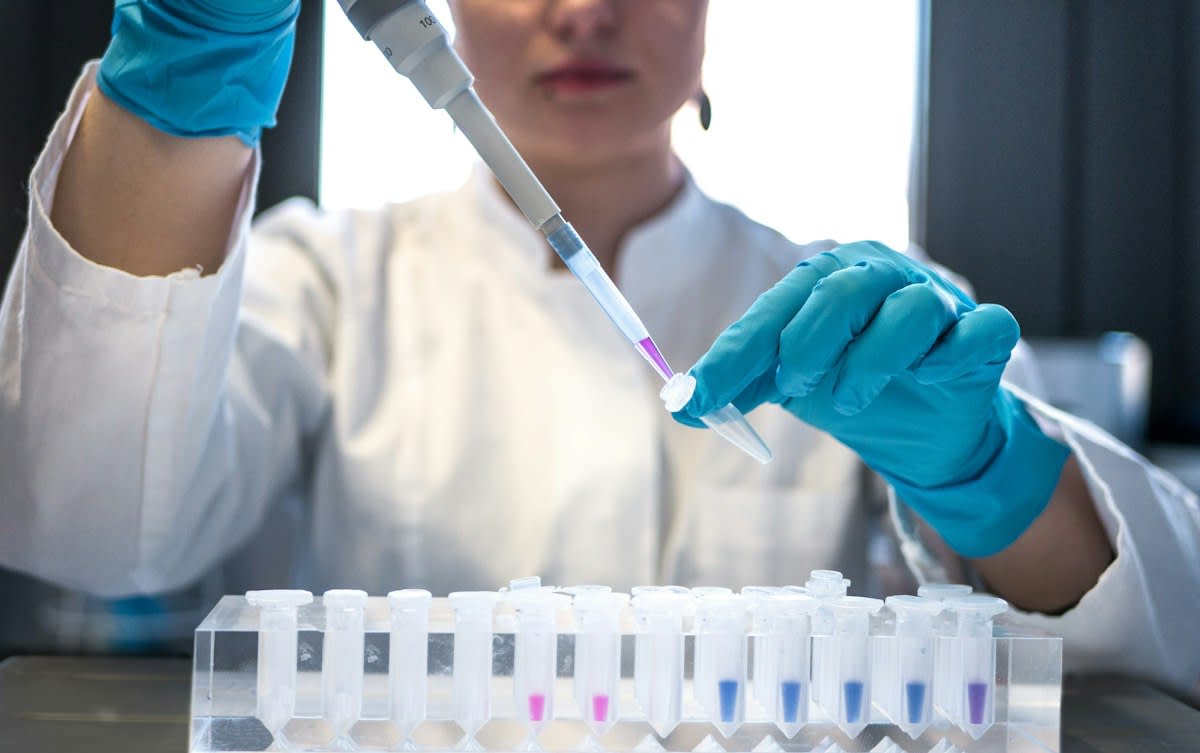
The technical shift occurring this month centers on the collision of two distinct methods: metabarcoding and shotgun metagenomic sequencing. Metabarcoding offers high detectability and taxonomic resolution, particularly for plants, making it the cost-efficient default for large batches (Source: bioRxiv, 2026). However, it lacks the ability to prove authenticity on its own. This is where shotgun sequencing enters. By analyzing 32 selected samples, researchers can identify DNA damage patterns that act as a biological watermark, proving the DNA is truly ancient and not a modern contaminant (Source: bioRxiv, 2026).
| Metric | DNA Metabarcoding | Shotgun Metagenomics |
|---|---|---|
| Primary Strength | Taxonomic resolution/cost | Authenticity verification |
| Application | Broad survey (e.g., 121 plant taxa) | Deep characterization (32 samples) |
| Key Output | Species lists | DNA damage patterns |
Why does this matter now? Because the grip of contamination has long haunted ancient DNA (aDNA) research. The use of negative controls and extensive replication in the Greenland study ensures that the detected taxa were not introduced by the researcher's own breath or a stray skin cell (Source: bioRxiv, 2026). This rigor transforms a curious find into a verifiable scientific fact.
Mediterranean Ghosts and Island Isolation
The trend extends south to the Columbretes islands. Here, the terrain is harsh, and preservation is challenging. Yet, scientists successfully recovered mitogenomes from historical Vipera latastei specimens and partial mitogenomes from extinct skinks and lizards (Source: bioRxiv, 2026). By comparing these ghosts to modern populations from northeastern Iberia, they validated the provenance of the extinct Columbretes snake, proving it shared a haplotype with historical specimens (Source: bioRxiv, 2026).
"Successful application of ancient DNA extraction and library construction protocols to museum wet collection specimens allows us to investigate the island's extinct fauna despite challenging preservation conditions."— Research Team, bioRxiv (2026)
This is not limited to fauna. In Portugal, the focus has shifted to the transition period between 10,000 and 45,000 years ago. Researchers are now using aDNA to study the socio-ecology of Neanderthals and modern humans, seeking to determine if climate change played a causal role in the former's disappearance (Source: Archaeological Institute of America, 2026). The goal is to build a nuanced understanding of how populations intermingled within the same burial locations.
The Invisible Friction: Destruction vs. Discovery
Inside the lab, a quiet war rages. Practitioners struggle with the weight of destructive sampling. To get the DNA, you must destroy a piece of the specimen. In the Portuguese studies, this tension is palpable; researchers are prioritizing digital documentation and osteological research to provide unparalleled sample sizes compared to the destructive nature of aDNA and isotopic studies (Source: Archaeological Institute of America, 2026). The fear is that in the rush to sequence the past, we might hollow out the very archives we rely on.
There is also the problem of the wet collection. Formalin, the standard preservative for a century, is a chemical butcher. It cross-links proteins and degrades DNA, creating a mechanical failure in the extraction process. The successful recovery of mitogenomes from Columbretes specimens represents a victory over this chemical decay (Source: bioRxiv, 2026). It proves that even the most damaged samples can be salvaged if the library construction is precise.
The Microbiome Reservoir
Beyond the host organism, the trend is moving toward the microbiome. Recent analysis of Mediterranean coastal waters shows that host-associated microbiomes act as reservoirs for antimicrobial resistance (Source: Frontiers in Microbiomes, 2026). By using long-read metagenomic sequencing, scientists can now track how antibiotic resistance genes associate with mobile genetic elements as they move from sewage to activated sludge (Source: Frontiers in Microbiomes, 2026). This is the final layer of the ghost: we are not just resurrecting the animal, but the bacteria that lived inside it and the pollutants that surrounded it.
Fact-Check & Accuracy Note
The findings regarding ancient DNA authenticity in the Greenland study rely on shotgun metagenomic sequencing to identify specific damage patterns. While metabarcoding provides the 'who' (taxonomic list), shotgun sequencing provides the 'when' (temporal authenticity). There is ongoing academic debate regarding the sensitivity of these damage patterns in warmer climates compared to Arctic permafrost.
The trajectory is clear. We are moving from the era of the specimen to the era of the sequence. Whether it is the purchase of historical artifacts in Texas to bolster state records (Source: Legislative Budget Board, 2026) or the mapping of Neanderthal diets in Portugal, the goal is the same: to extract every possible bit of information before the biological signal frays completely. The ghosts are waking up.