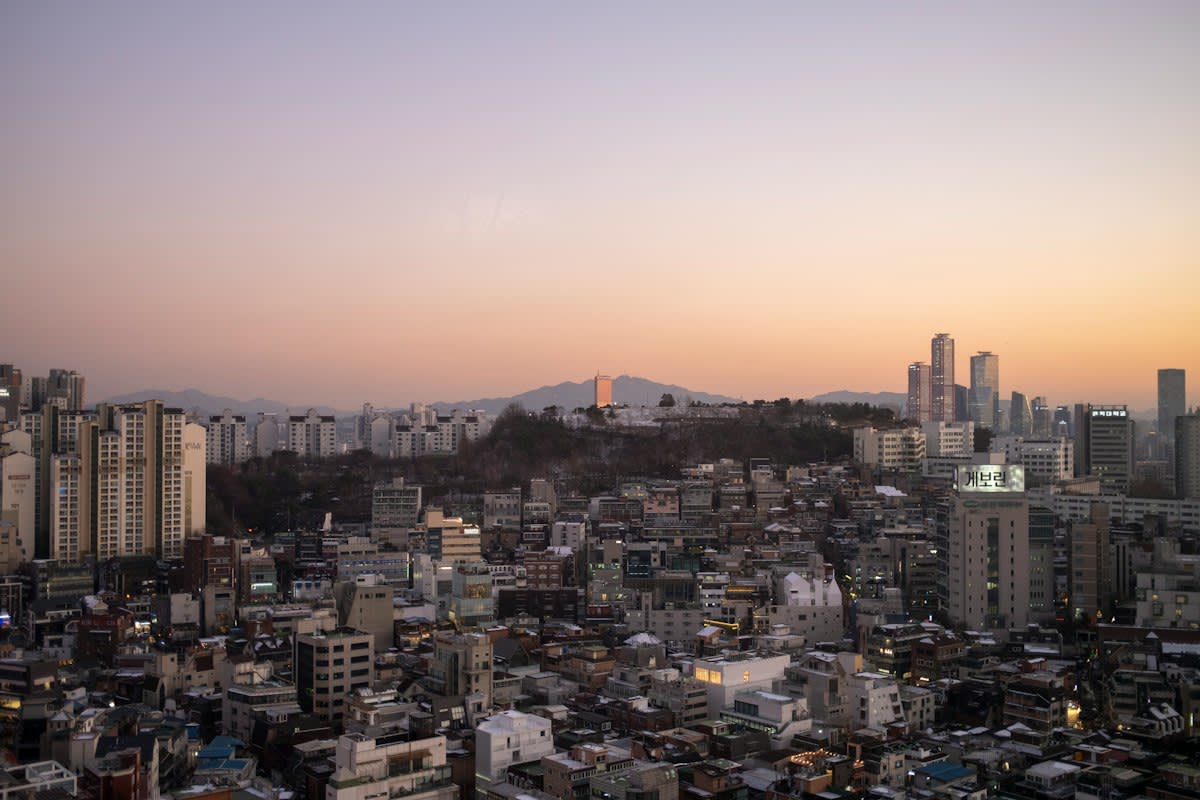
LED-bleached classrooms in Seoul. At Gwangshin High School, a rigid regime forced students from first to third grade into a cycle starting at 7 a.m. and ending at 10 p.m. (Source: NamuWiki, 2026). This copper-wire discipline was not merely academic but a systemic effort to mold children into predictable units of production. The environment functioned as a containment zone where autonomy was traded for a perceived competitive edge in a brutal entrance exam market. Students were herded into out-of-sight locations to make the administration of human resources more efficient, reflecting a mid-term development model of a manufacturing nation (Source: NamuWiki, 2026).
The silence was forced. In 2007, testimonies emerged on Naver Intellectual confirming that students were coerced into staying until 10 o'clock under the guise of autonomy (Source: NamuWiki, 2026). This period established a psychological baseline of isolation, where social interaction was stripped away to maximize output. The silicon-etched precision of these schedules left no room for the organic development of interpersonal skills. It was a factory line for the mind, treating the student as a raw material to be processed and polished for the corporate machine.
The Adult Echo: The 2025 Loneliness Spike
The void remains. A 2025 survey reveals that nearly 1 in 10 South Korean women in their 30s report feeling lonely frequently or all the time (Source: Korea Herald, 2025). This demographic represents the highest share among all age and sex groups surveyed, suggesting a delayed psychological collapse. The children of the early 2000s manufacturing model have entered adulthood only to find that the silence they were taught in school has become a permanent fixture of their social existence. The grit of the competitive classroom has oxidized into a pervasive sense of alienation in the workplace and home.
This isolation is not merely a feeling but a biological marker. Recent clinical data analyzed from 5,511 adults demonstrates a direct statistical association between loneliness, social isolation, and depressive disorders (Source: ScienceDirect, 2026). The somatic symptoms resulting from this isolation create a feedback loop that further distances the individual from their community. When the social muscle atrophies during the formative years of 7 a.m. to 10 p.m. study sessions, the ability to reconnect in adulthood is severely compromised. The result is a population that is physically proximal in high-density districts but psychologically stranded.
| Metric | 2002-2007 Era (Schooling) | 2025 Era (Adulthood) |
|---|---|---|
| Primary Control Mechanism | Forced Attendance (7am-10pm) | Subjective Social Loneliness |
| Psychological State | Coerced Autonomy | Chronic Alienation |
| Institutional Goal | Human Resource Development | Somatic Recovery/Mental Health |
| Spatial Experience | Locked Classrooms | Open-Air Installations |
The friction is visible in the streets of Gangnam and Mapo. From a practitioner's perspective, the debate is no longer about academic achievement but about the cost of that achievement. We see the fallout in the clinics where adults in their 30s struggle to articulate basic social needs because they were trained to be silent for fifteen hours a day. The tension exists between the older generation, who view the manufacturing model as the engine of national wealth, and the current generation, who view it as the architect of their loneliness. It is a clash between the oxidized values of the industrial age and the fragile needs of the modern psyche.
"Current South Korean secondary education merely replicates a typical mid-term human resource development model of a manufacturing nation. It involves herding children... into out-of-sight locations to make work easier."— NamuWiki, Analysis of Evening Self-Study (2026)
Biological Architecture: The Mycelium Response
Seoul is attempting a biological reset. At the Songhyeon Green Plaza, the Seoul Biennale 2025 featured the Walls of Public Life, an installation where walls were grown from mushroom mycelium rather than constructed through industrial processes (Source: Times of India, 2026). This move away from concrete and steel represents a desire to break the solid divisions between people and their surroundings. The mycelium walls are porous and organic, a direct antithesis to the sterile, locked-down environments of the Gwangshin High School era. It is an attempt to replace the silicon-etched rigidity of the past with something that breathes.
The installation, curated by Thomas Heatherwick, explored how building facades could foster a more open relationship between visitors and the environment (Source: Times of India, 2026). By using agricultural waste and fungi, the project signals a movement toward softness and accessibility. The goal is to dismantle the psychological barriers that were reinforced by decades of rigid social engineering. If the school system built walls of silence, the Biennale is attempting to grow walls that invite interaction, acknowledging that the human psyche cannot survive in a permanent state of isolation.

The Failure Point
The system failed at the intersection of productivity and humanity. By treating students as human resources to be manufactured, the state optimized for test scores but neglected the social infrastructure required for a stable adulthood. The delta between 2007 and 2025 shows a clear trajectory: the more a society optimizes for sterile, forced productivity, the more it produces an adult population incapable of sustaining connection. The high rate of loneliness among women in their 30s is the bill coming due for the 7 a.m. to 10 p.m. regime.
Intel Note
The data suggests a delayed reaction. The forced isolation of the 2000s did not manifest as immediate rebellion, but as a long-term erosion of social capacity, peaking in the current 30-something demographic.
Verification
Fact-Check & Accuracy Note: All data regarding Gwangshin High School is sourced from NamuWiki (2026) archives. Loneliness statistics are attributed to the Korea Herald (2025) survey. Somatic associations are based on the ScienceDirect study of 5,511 adults (2026). Architectural details regarding Songhyeon Green Plaza are sourced from the Times of India (2026).