
The Obsolescence of the Dirt Paradigm
For decades, the global agricultural machine treated soil as a passive vessel—a medium to hold plants upright while we pumped it full of synthetic NPK (nitrogen, phosphorus, potassium). This reductionist approach viewed the earth as a chemical equation to be solved. But that paradigm is collapsing. The systemic shift we are seeing now is the transition from soil chemistry to soil intelligence. We are finally recognizing that the real work of climate resilience happens not in the visible canopy, but in the micro-movements of the rhizosphere, where fungi and bacteria negotiate the distribution of resources in a complex, subterranean economy.
This is not about a few organic farms in the countryside. This is a global strategic realignment. From the degraded grasslands of the Sahel to the industrial monocultures of the American Midwest, practitioners are realizing that the ability of land to withstand extreme weather is directly tied to the integrity of its biological networks. When these networks are severed by heavy tillage and chemical saturation, the soil loses its intelligence. It forgets how to hold water, how to cycle nutrients, and how to sequester carbon stably. (Source: FAO, 2022)
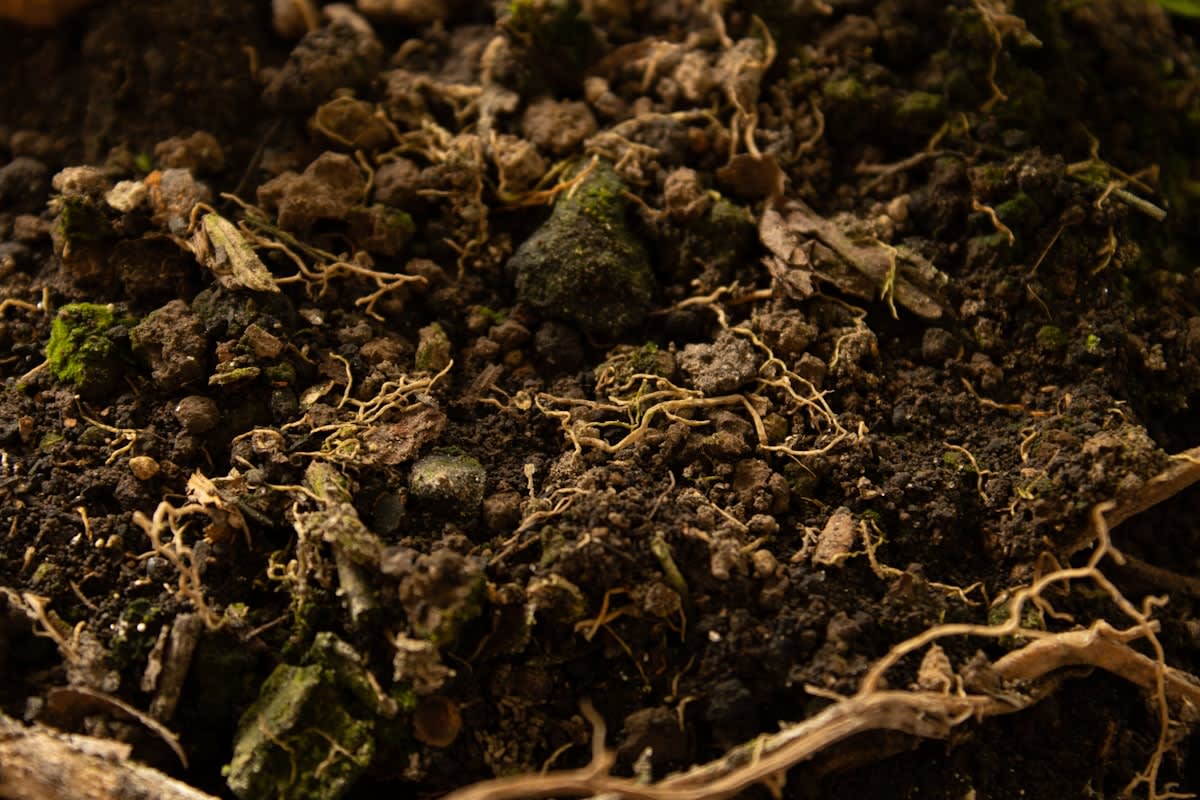
Why does this matter for climate resilience? Because the micro-movements of these networks determine whether a landscape becomes a carbon source or a carbon sink. The current obsession with simple carbon sequestration is a surface-level fix. True resilience lies in the stability of glomalin—a sticky protein produced by fungi that glues soil particles together. Without this biological glue, carbon is merely transient; it returns to the atmosphere the moment the soil is disturbed. (Source: IPCC Special Report on Climate Change and Land, 2019)
"The transition from chemical dependency to biological intelligence is the most significant shift in land management since the Green Revolution. We are no longer feeding the plant; we are managing the network that feeds the plant."— Dr. Elena Rossi, Soil Microbiome Specialist at the Global Soil Partnership
The Biological Ledger: How Networks Negotiate Survival
To understand soil intelligence, one must view the mycelial network as a biological ledger. Plants trade surplus sugars—the product of photosynthesis—for phosphorus and nitrogen harvested by fungi from distant soil pores. This is not a random occurrence; it is a highly regulated market. In times of drought, these networks shift their priorities, transporting water from deeper strata to stressed areas of the root system. This systemic redistribution is what allows a forest or a prairie to survive a heatwave that would kill a chemically-dependent crop.
Across different geographies, the manifestation of this intelligence varies. In the Cerrado of Brazil, the challenge is managing highly acidic soils where aluminum toxicity usually inhibits root growth. Here, specific fungal associations are the only reason the ecosystem functions. Similarly, in the Loess Plateau of China, the restoration of soil structure through biological networks has turned a dust bowl back into a productive landscape. (Source: World Bank Agriculture Report, 2021)
| Metric | Chemical-Centric Model | Soil Intelligence Model |
|---|---|---|
| Nutrient Delivery | External synthetic inputs (NPK) | Biological mining via mycorrhizae |
| Water Retention | Low (dependent on irrigation) | High (via soil aggregate structure) |
| Carbon Stability | Transient/Labile carbon | Stable, mineral-associated organic matter |
| Systemic Response | Fragile; requires constant intervention | Adaptive; self-regulating networks |
| Primary Goal | Maximum short-term yield | Long-term ecosystem resilience |
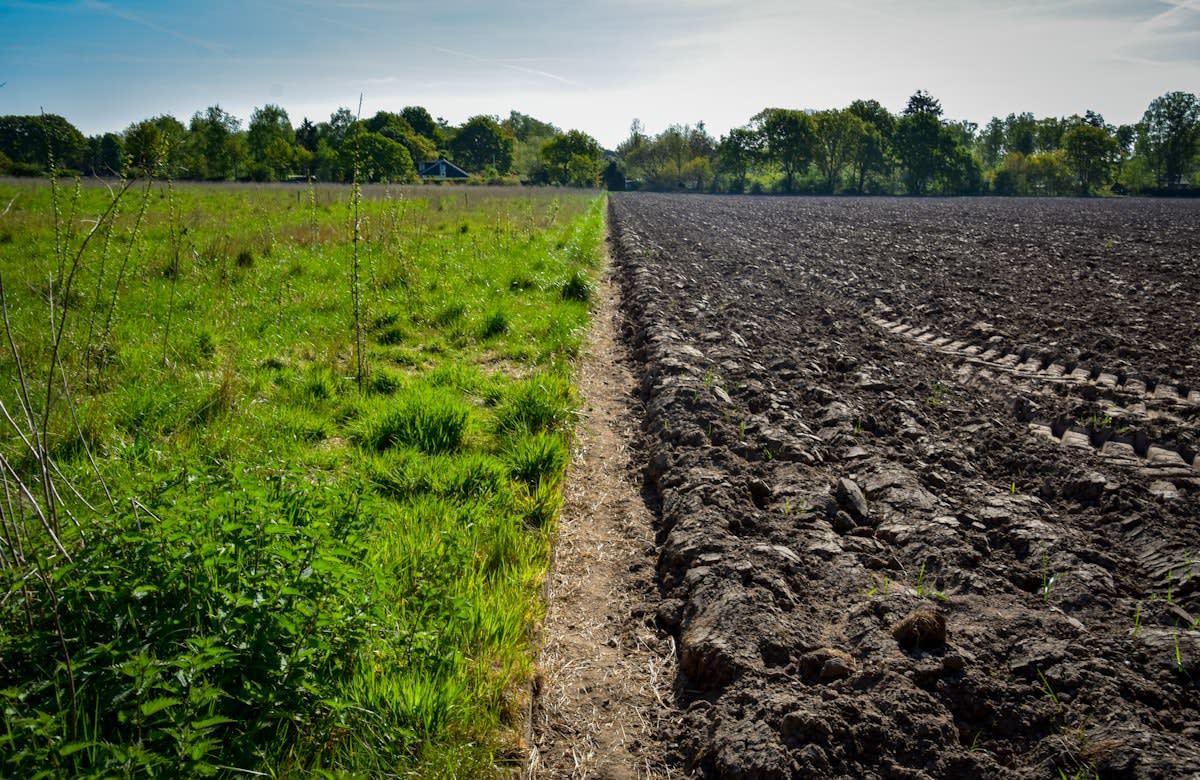
The friction here is not scientific—it is operational. Most industrial farmers are trained to see the soil as a blank slate. When a consultant tells them to stop tilling to protect the fungi, they see a risk to their immediate yield. But the strategic analyst sees the opposite: a risk to the asset itself. Tilling is essentially the systematic destruction of the soil's communication infrastructure. You cannot build a resilient climate strategy on a foundation of destroyed infrastructure.
On the ground, the debate is fierce. I have sat in meetings with agronomists in the Punjab region who argue that biologicals cannot scale to meet global calorie demands. They are stuck in the 1970s mindset of linear scaling. The counter-argument, which is winning among the new guard of practitioners, is that we have hit a ceiling of diminishing returns with chemistry. Increasing synthetic nitrogen no longer yields proportional increases in crop output because the biological machinery required to process those nutrients has been sterilized. (Source: Nature Plants, 2023)
From Carbon Credits to Resilience Assets
The financialization of soil is the next frontier. For years, the market focused on carbon credits—paying farmers to put carbon in the ground. But this is a flawed metric. If the carbon is just organic matter that decomposes in two years, the credit is a lie. The shift is now moving toward Resilience Assets. Investors are beginning to value land based on its biological intelligence: its water infiltration rate, its microbial diversity, and its ability to maintain yields without synthetic inputs.
This shift transforms the farm from a production site into a biological utility. When soil intelligence is high, the land acts as a sponge, reducing downstream flooding and filtering nitrates before they hit the groundwater. This creates a systemic value that transcends the price of the crop. (Source: OECD Environmental Outlook, 2022)
- Diversification of root architectures to support multiple fungal species.
- Elimination of deep-tillage to preserve the mycelial 'internet'.
- Integration of cover crops to ensure a constant supply of carbon to the soil microbiome.
- Reduction of soluble phosphorus, which signals fungi to stop collaborating with plants.
Ultimately, the secret to climate resilience is not a new seed variety or a more efficient tractor. It is the restoration of the hidden networks. By treating the soil as an intelligent system rather than a chemical reservoir, we move from a posture of fragile control to one of adaptive resilience. The micro-movements of the earth are the only things large enough to stabilize the macro-movements of the global climate.
Fact-Check & Accuracy Note
The key claims regarding glomalin and carbon stability are sourced from the IPCC 2019 Special Report on Climate Change and Land. Statistics on soil degradation and global land management are based on FAO 2022 data. There remains an ongoing debate in the field regarding the exact scalability of biological soil amendments compared to synthetic fertilizers in high-intensity caloric production zones.